Preserving history, heritage and culture, or resorting to current economic needs?
By Albert Fenech
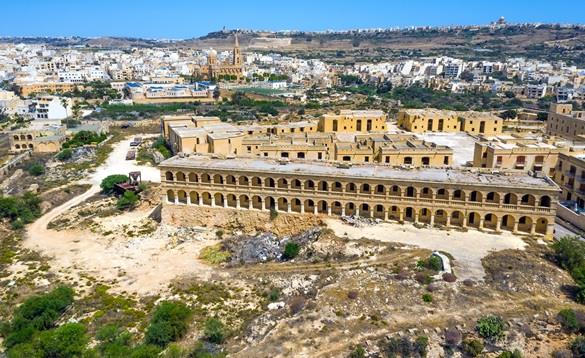
Plans to develop the historic British barracks of Fort Chambray in Gozo into a luxury hotel and apartments have been met with great outrage.
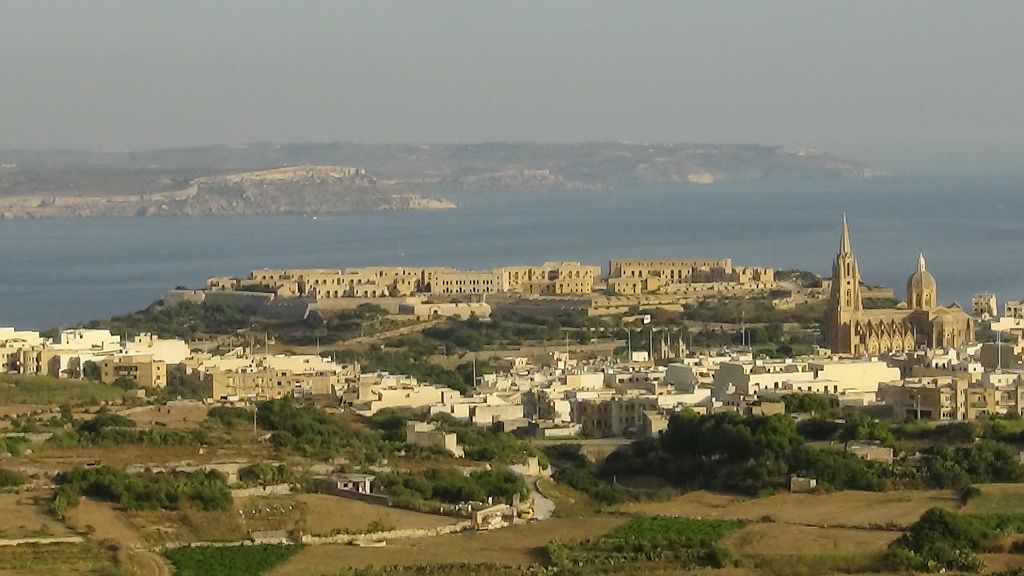
The buildings of the barracks offer the first resplendent view of Gozo when entering Mgarr Harbour, the main port of call.
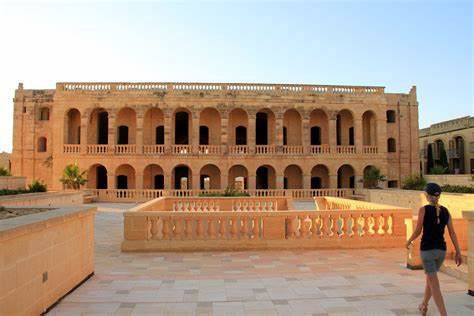
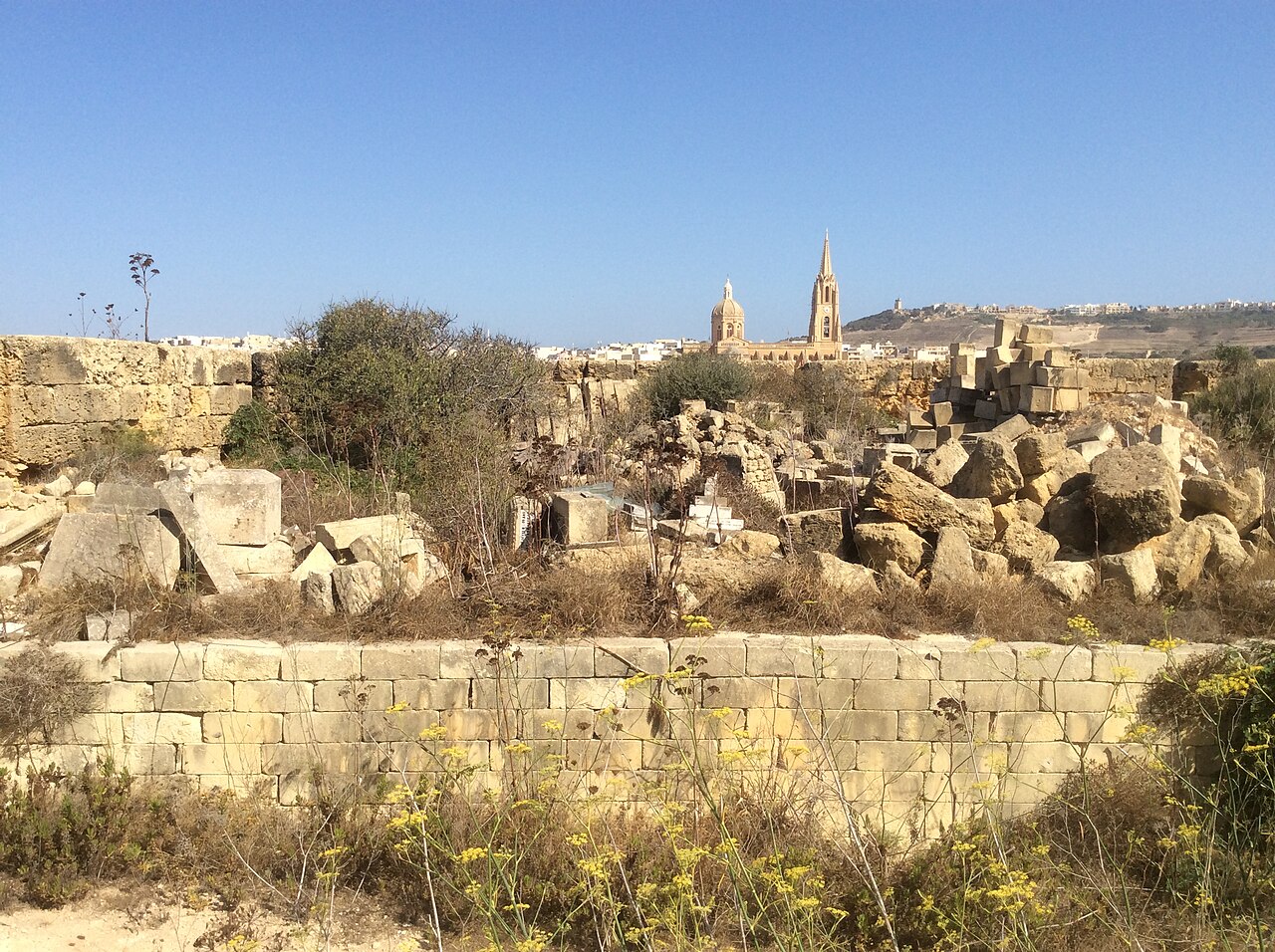
A coalition of heritage groups in Gozo are fighting to save the 19th-century sandstone barracks from development, demanding an emergency conservation order to protect it and demanding conservation works from the deteriorating shambles it has been allowed to degenerate into.
The surrounding area has seen an increase in developments in recent years, and economic developers want to demolish most of the two-storey building, which would see its sandstone facade then moved to a different position within the fort and this converted into a hotel.
Andre Callus from Moviment Graffiti, one of the civil society organisations that are trying to block the development, said “the barracks are part of Fort Chambray, a stunning place which is brimming with history.”
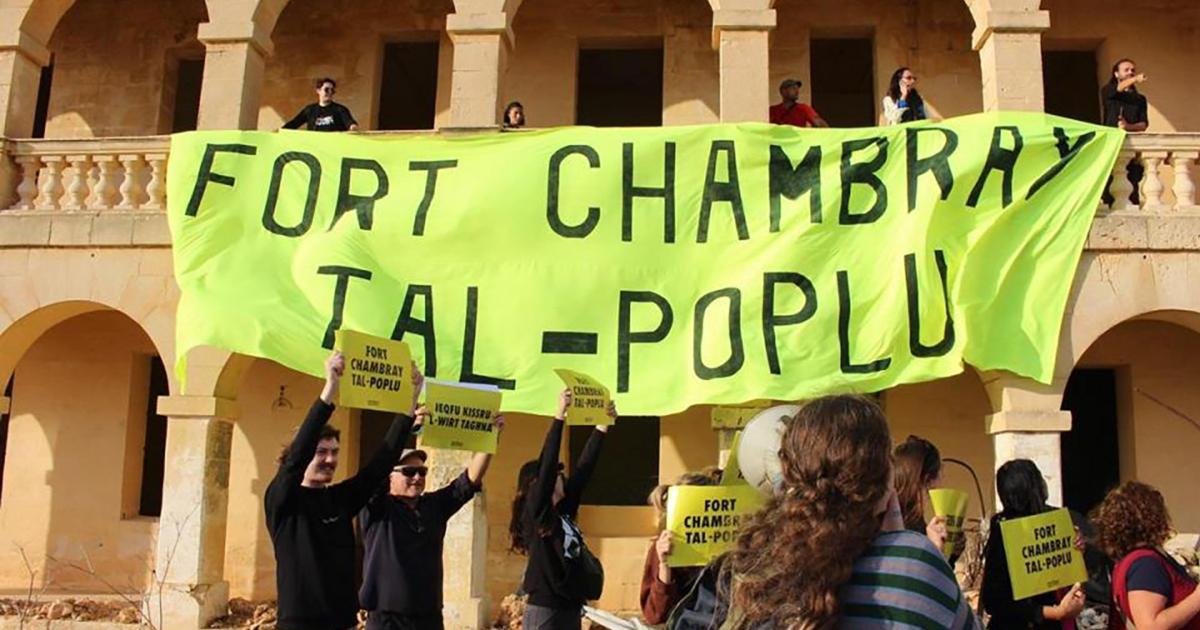
Group organisations The Coalition for Gozo, Moviment Graffitti, and Din l-Art Ħelwa have staged direct actions to highlight the urgent threat facing Fort Chambray, a historic British barracks, due to irregular planning permits.
Since pre-history, Malta has been embroiled in the international development of Europe and at a wider stretch throughout the world, not as a military power but because of its geophysical location in the very middle of the Mediterranean Sea.

Before the development of aerial power, most movement was sea-bound, and Malta and Gozo provided shelter and restocking of provisions for the militarily strong.
Hence, the two small islands are proliferated by a legacy of military forts, barracks and watch towers erected by the Knights of St John to monitor and repel frequent Moslem invasions and then the British to monitor their superiority over the Mediterranean region.
During the Middle-ages, the Knights constructed Fort Chambray in Gozo, Fort Manoel, Fort Ricasoli, Fort St Elmo, For St Angelo, Fort St Michael, Fort San Salvatore, and Fort Tigne.
These were essential and highly fortified forts to look-out and monitor Moorish invasions, provide immediate resistance to landings and to signify an invasion by setting fire alerts to watch towers throughout the islands.
During the British era lasting 150 years, the British built Fort Benghajsa, Fort Bingemma, Fort Campbell, Fort Delimara, Fort Leonardo, Fort Madalena, Fort Madliena, Fort Mellieha, Fort Mosta, Fort Pembroke, Fort St Lucian, Fort St Rocco, Fort tas-Silg, and Fort Verdala.
Fort Pembroke housed the Sussex Regiment when it was in Malta.
Through all these fortifications, per square metre, Malta became one of the most fortified places in the world!
The organisations filed two appeals against the Planning Authority’s decision, requesting a suspension of construction works, together with public calls and over 800 signatories supporting the protection of the site, the Planning Authority has ignored requests for scheduling protection, and the Government has approved land consolidation and restoration funds for private developers.
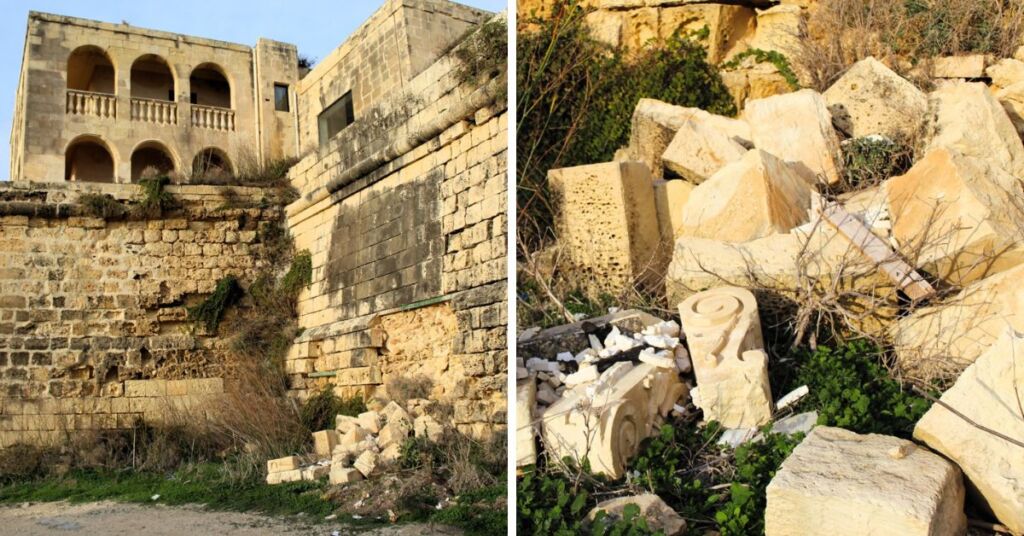
This funding, paid for by taxpayers, would benefit the development of Fort Chambray into a private residential and commercial complex without guaranteeing public access.
Fort Chambray was built in the mid- 18th century by the Knights on Gozo in the area known Ras it-Tafal, overlooking the port of Mgarr. The fort was meant to be the cradle of a new city which to replace the Cittadella in the Gozitan capital in Victoria, Rabat, but this never materialised.
The fort saw use during the French invasion of Malta in 1798, and was subsequently used as a military hospital and mental institution.
Malta and Gozo came under British rule in the beginning of the 19th century, and as a result Fort Chambray was taken over by a British garrison. By 1830, a small military hospital of four wards had been established within the fort.
The hospital was expanded during Crimean War and hundreds of wounded soldiers were treated there. The hospital was subsequently used by both the British military and Maltese civilians when there were fever epidemics.
Subsequently, Fort Chambray underwent many, many changes relevant to the events of the day and has an enormous history which will die with re-development and a hateful policy of destroying history and culture to make way for economic development.
ALBERT FENECH


