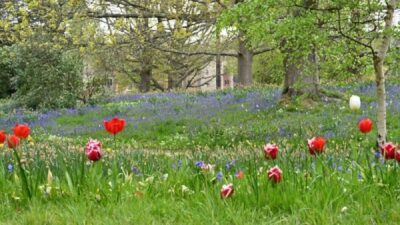
While Hever Castle is best known as the childhood home of Anne Boleyn, the second of Henry VIII’s wives, there’s so much more to experience once you step beyond those impressive stone walls.
As a regular visitor and keen photographer, I enjoy visiting Hever throughout the year to witness the changing seasons and moods. As Spring brings a burst of energy, it’s the plants and flowers I look forward to seeing.
And one plant in particular …
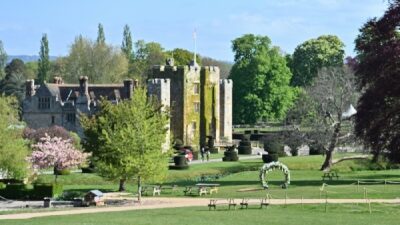
The first hint of what awaits you comes when you stop at the top of the grassy slopes that sweep down to the majestic castle, nestled among mature trees. Built of stone, it rises from the moat like a sentinel, overlooking the gentle landscape beyond.
The paths that weave through the sweeping lawns suggest journeys and destinations waiting to be explored.
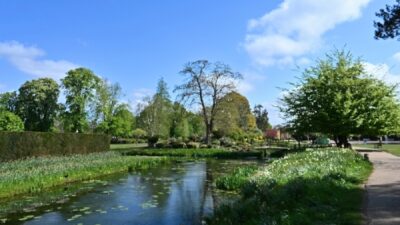
As a nature lover and keen gardener, it’s these quieter areas that draw me in, whatever the season.
When you first approach the castle, the topiary animals give you a clue to the care and attention given to the garden. Beyond, the path runs alongside a stream to take you to the Italian Gardens, designed and created to show off William Waldorf Astor’s collection of statues.
The rich American purchased Hever Castle in 1903 and set about restoring it. He also created the gardens and the lake.
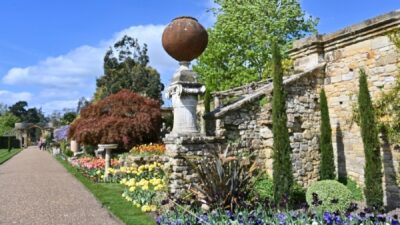
In April, the Italian Gardens are bursting with vibrant flowers and shrubs, lining either side of the grassed areas. As you approach the lake, the architecture looks like something the Romans might have built. It provides a stunning platform to take in the tranquil waters and surrounding countryside.
From here, you can escape the bustling gardens for a leisurely stroll around the lake, savouring the wildlife, woodland and pockets of colour from rhododendrons, azaleas and spring bulbs.
But for me, it’s the woodland walk that’s the main draw at this time of year.
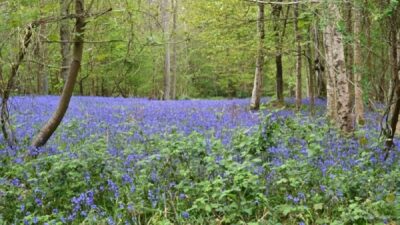
On the opposite side of the lake from the pagoda, a sign and a rough path lead you into a woodland area. Within a couple of minutes, accompanied only by the sound of birdsong, you drift past swathes of bluebells, bursting with colour and scent. The flowers seem to float on the woodland floor, gliding past the trees as far as the eye can see.
And the further you walk, the more intense the bluebells become.
In Part Two, you can read more about the wildlife and some of the newer and brighter garden areas.


It’s amazing how much history is hidden just outside the main attractions. I’ve always been fascinated by the grounds and gardens – they must have been incredible in Tudor times.
I imagine they were. There’s always so much to do at Hever.