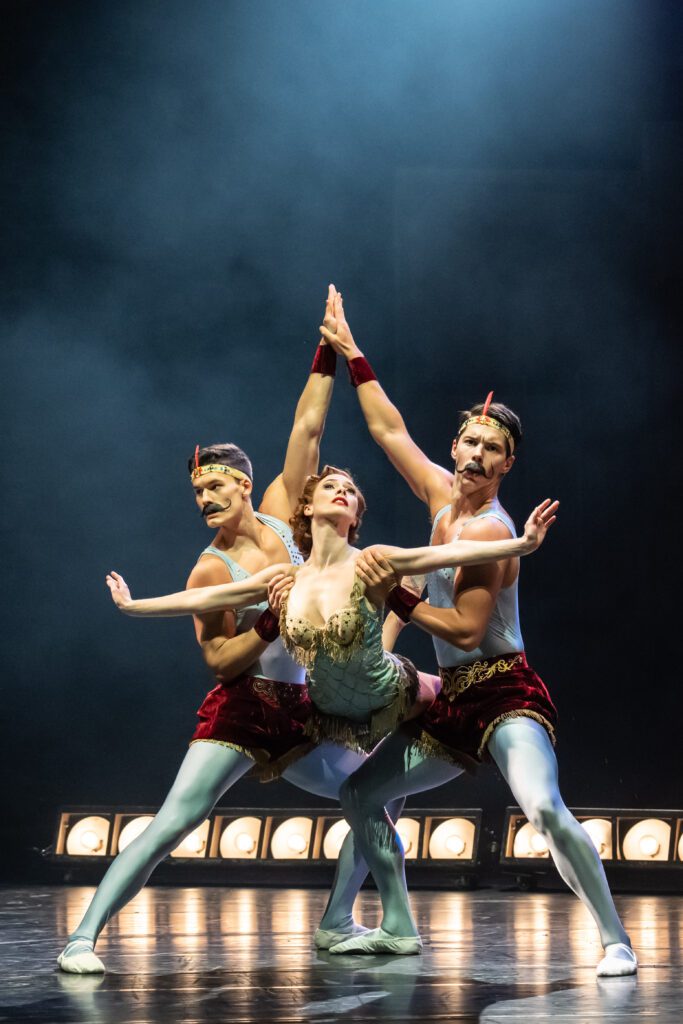
I travelled to Edinburgh by train, direct from Uckfield, to attend Matthew Bourne’s interpretation of The Red Shoes, a New Adventures production. Based on the iconic 1948 film by Michael Powell and Emeric Pressburger, itself inspired by Hans Christian Andersen’s dark fairy tale, this production leans heavily into theatrical spectacle while retaining an emotional core that resonates long after the curtain falls.
For anyone who is unaware, the story revolves around a young dancer torn between her love and her ambition and the dire consequences she suffers as a result of her choices. Like many of Hans Christian Andersen’s yarns, it’s actually quite horrific and I’m sure many a young ‘um suffered nightmares after watching it. Of course, it’s this ravaging of the emotions that makes The Red Shoes iconic after almost 80 years since it first appeared on screen. Those who have been influenced by the original film include directors, Wes Anderson, Martin Scorsese and Ken Russell, novelist Margaret Atwood and singers Kate Bush and Courtney Love. If you haven’t seen the movie, find it, watch it and you’ll understand why. Better still, see the ballet.
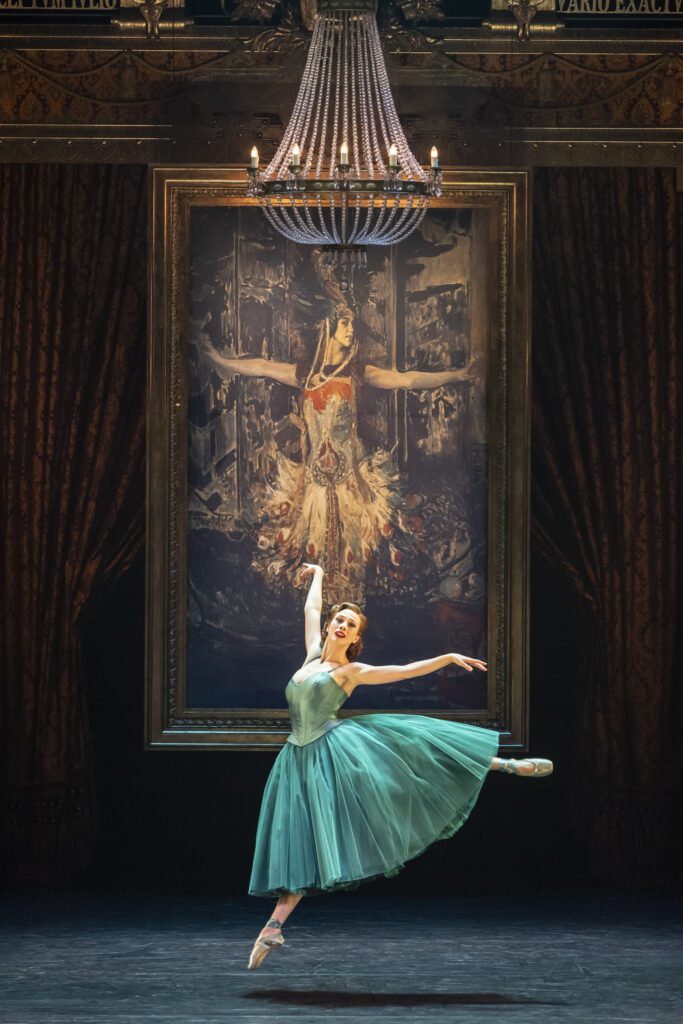
From the outset, the visual design is arresting. The stage seems to breathe with colour and texture, shifting effortlessly between backstage realism and dreamlike fantasy. Rich, painterly backdrops and fluid set transitions create a cinematic quality, echoing the film’s lush aesthetic without feeling derivative. The titular ballet within the ballet – the “Red Shoes” sequence – is the production’s undeniable centrepiece: surreal, seductive, and increasingly unsettling as it spirals into psychological turmoil.
Matthew Bourne’s choreography is both technically demanding and narratively driven, striking a careful balance between classical form and expressive storytelling. The role of Victoria Page, the young dancer torn between love and career, requires not just precision but emotional transparency. In this matinee performance, Principal Dancer, Cordelia Braithwaite captured that duality beautifully – her dancing light and expansive in moments of triumph, tightening into something almost frantic as the character’s inner conflict deepened.
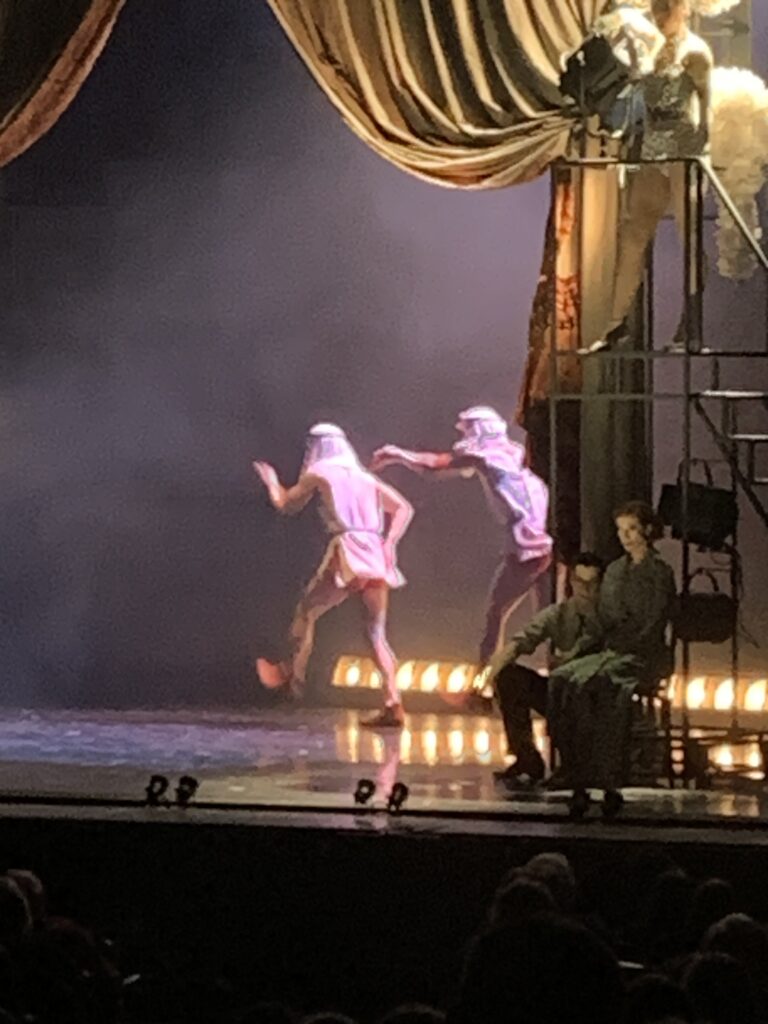
The mood was lightened by the East End Music Hall performances in Act Two, particularly that of the Egyptian dancers – took me right back to childhood – very Max Wall!
The costumes were wonderful with the deterioration in Victoria Page’s dress illustrating the passage of time and the raggedness of her nerves and energies as the Red Shoes danced her to exhaustion.
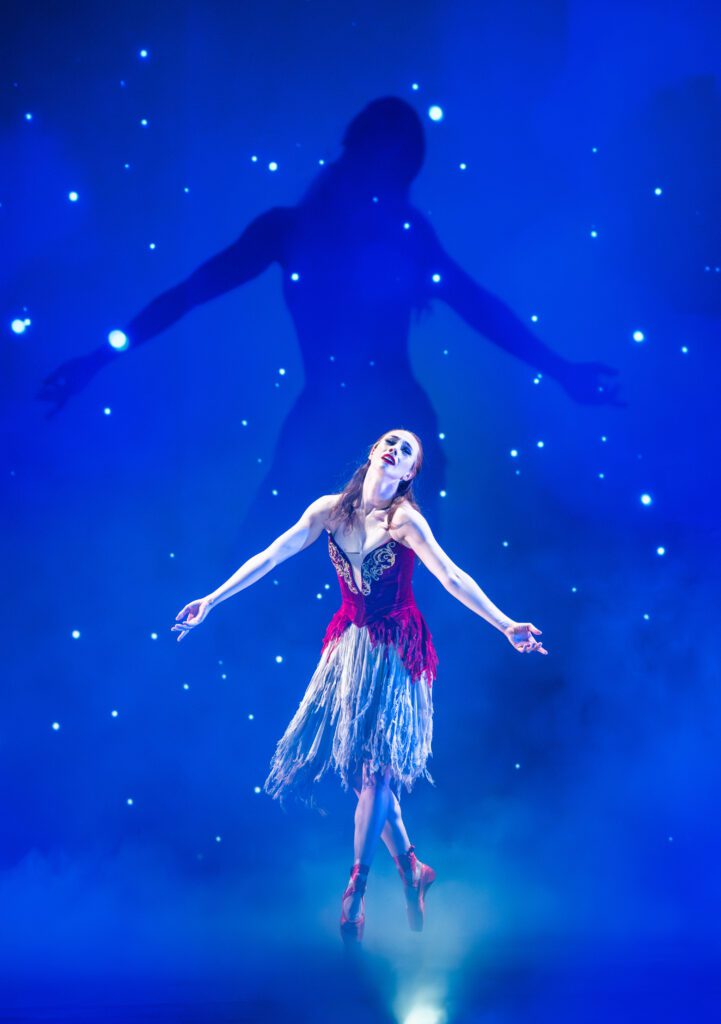
For both set and costume design, Lez Brotherston deserves a commendation.
What elevates this production beyond visual spectacle is its understanding of pace and tension. The first act builds deliberately, introducing the competing forces in Victoria’s life – the domineering impresario, the passionate composer and the intoxicating lure of success. By the time the second act unfolds, the emotional stakes feel earned rather than imposed, allowing the tragedy to land with genuine weight.
The supporting cast deserves equal recognition. The impresario figure – cool, controlled, and quietly menacing – anchors the narrative with a performance that never tips into caricature. Meanwhile, the ensemble work is consistently strong, particularly in the company scenes where the energy feels collective and immersive, drawing the audience into the world behind the curtain.
Musically, the score (adapted from Bernard Herrmann’s film work) is lush and cinematic, performed with sensitivity and sweep. It underscores the emotional arc without overwhelming it, allowing moments of stillness to speak just as powerfully as the more dramatic crescendos.
The final tragedy was exceptionally well executed – more fabulous scenic props – and by the final curtain, The Red Shoes leaves its audience with a familiar but still potent question: what are we willing to sacrifice for greatness? Judging by the hushed, reflective atmosphere in the theatre as the applause subsided, it’s a question that hit its mark.
In short, this was a richly rewarding show – visually dazzling, emotionally engaging, and a reminder that great ballet doesn’t just move the body (and the feet), but also the soul.
And finally, my mother, who remembers the film and the ballet in which her beloved elder sister danced, was moved to tears, so clearly the team involved more than hit their mark.


That sounds like a fantastic trip. I’ve always been fascinated by Matthew Bourne’s choreography, it’s really clever how he adapts classic stories.