By Albert Fenech
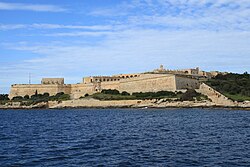
The Sliema suburb of Gzira (literally meaning Island, a name given it by virtue of an adjacent small island known as Manoel Island to which it is connected by a small stone bridge) has a notorious past because together with Valletta’s Strait Street and the Marsa Waterfront, it was one of Malta’s main Red Light districts.
The sole face-saver was the old Empire Stadium which for many years was the home of Maltese football and Malta’s main stadium and therefore a magnet for thousands of spectators every week-end. The stadium is still there but in complete ruins, the vacant ground worth a fortune to its owners.
Between 1930 and the late 1960s, Sliema Creek was continually jam-packed with the bulk of Britain’s Mediterranean Royal Navy Fleet and consequently teemed with thousands of sailors. Inland, Gzira became a natural overspill of an ever-growing Sliema, but its waterfront automatically spawned scores of bars, restaurants and clubs, ever-ready to nightly unburden drunken sailors of their hard-earned pay.
Local ferrymen plied their boats day and night, ferrying voracious and thirsty sailors from their ships to shore and had to be tough to deal with returning drunken seamen who often wreaked havoc by vandalising local sea craft. The bars themselves teemed with “barmaids” (in Maltese understanding this is another word for prostitute) and the inhabitants of Gzira had to suffer the common derogatory description of being “the offsprings of barmaids”.
Some bars bore exotic names like “Flamingo Bar”, “The Snake Pit Bar” and “The Cafe’ de Paris” but others like the “King George VI Bar”, “The Lord Nelson Bar” and “The Prince of Wales Bar” were obvious British national attractions aimed at giving a homely feeling.
Brawls and scrapes were never-ending and in the midst of these a local priest from the Lady of Mount Carmel Parish Church of Gzira was outstanding. This was Dun Anton Calleja whose more famous brother was Joseph Calleja, a popular Maltese Hollywood film star in the 30s, 40s and 50s who played a great number of secondary roles in the popular films of those eras.
Dun Anton was a massive man, standing over six feet and a composite combination of muscle and brawn with a shock of long and silvery-white hair and a booming voice that could resurrect the dead. He always wore a jet-black cassock.
Additionally he was an accomplished amateur boxer. He would often do an evening tour of the bars, bawling out the barmaids with cries of “shame” and threats of everlasting fire and brimstone. Any sailor who had the drunken temerity to interfere or intervene would get a good tongue-lashing followed by a black eye and a cut lip.
My personal experience of him is not a pleasant one. It was the height of stifling summer and as a 12 year-old boy in 1958 I piously approached the altar to take Communion. The officiating priest was Dun Anton. I was wearing a white, short-sleeved t-shirt and a pair of skimpy khaki shorts.
As he approached me with the Communion host he derisively appraised my apparel.
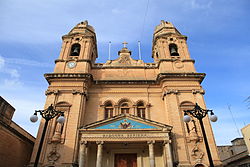
“How dare you come to God’s altar to take Communion when you are half naked?” he boomed. “Have you no shame? Clear off at once”. I gingerly backed away, crimson-faced and with his stinging words reverberating in my ears. The church was packed and his rant had been heard in every corner.
Those were the days but now it has all gone. The Red Light has changed to Green and almost the entire Gzira Seafront is crowded with restaurants, cafes and reputable bars. The wealth of different culinary fare is extensive ranging from a number of Turkish kebab outlets, Lebanese, Syrian, Moroccan, Italian, Indian and Chinese restaurants.
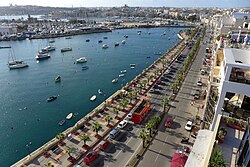
These jostle for custom with ice-cream parlours, pizza joints, “pastizzi” outlets (savoury Maltese pastries stuffed with cottage cheese or peas and onions) and an amazing number of takeaway cafes.
Many advertise their menu fare in multi-lingual English, German, Italian and Russian.
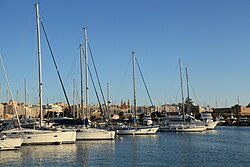
A stone’s throw away the Ta’ Xbiex Yacht Marina is crowded with berthed yachts and sea-craft (some in the millionaire class) and the main road linking Gzira to nearby Msida is packed with the offices of leading insurance companies, brokers, agents and general finance consultants not to mention a great number of medical clinics.
It’s all a long way from the days when the inhabitants of Gzira were mocked and derided and undoubtedly the ghost of Dun Anton Calleja nowadays hovers with satisfaction over what once was his understanding of the portal of hell.
ALBERT FENECH
salina46@gmail.com


