I am always fascinated with people who start their life’s journey from a small corner of the world and eventually leave a trail of their footmarks as they walk across the globe. One such personality was Mr. Charles. Correa (1930-2015), whose art & craft spread across the globe.
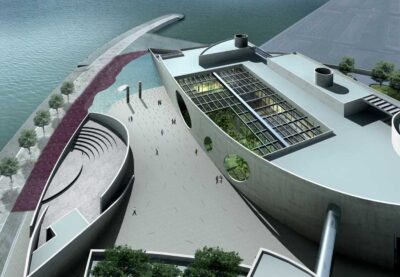
Charles. Carlos Correa, was a world renowned architect who beautifully blended the architectural science with contemporary art! Though born in Secundarabad in 1930, Charles was raised by his maternal grandfather in Mumbai. His early college education was completed at Mumbai’s prestigious St. Xavier’s College. Young Charles witnessed the pre-independent era Mumbai (then called Bombay) of the 1940s,which was thinly populated in those times. He then left for U.S.A to pursue a degree in architecture. After graduating from University of Michigan and the Massachusetts Institute of Technology (MIT) he returned back to India. In 1958 he established his own practise at Mumbai and since then dedicated his life to decorate urban spaces that reflected quality, art and a classy appeal.
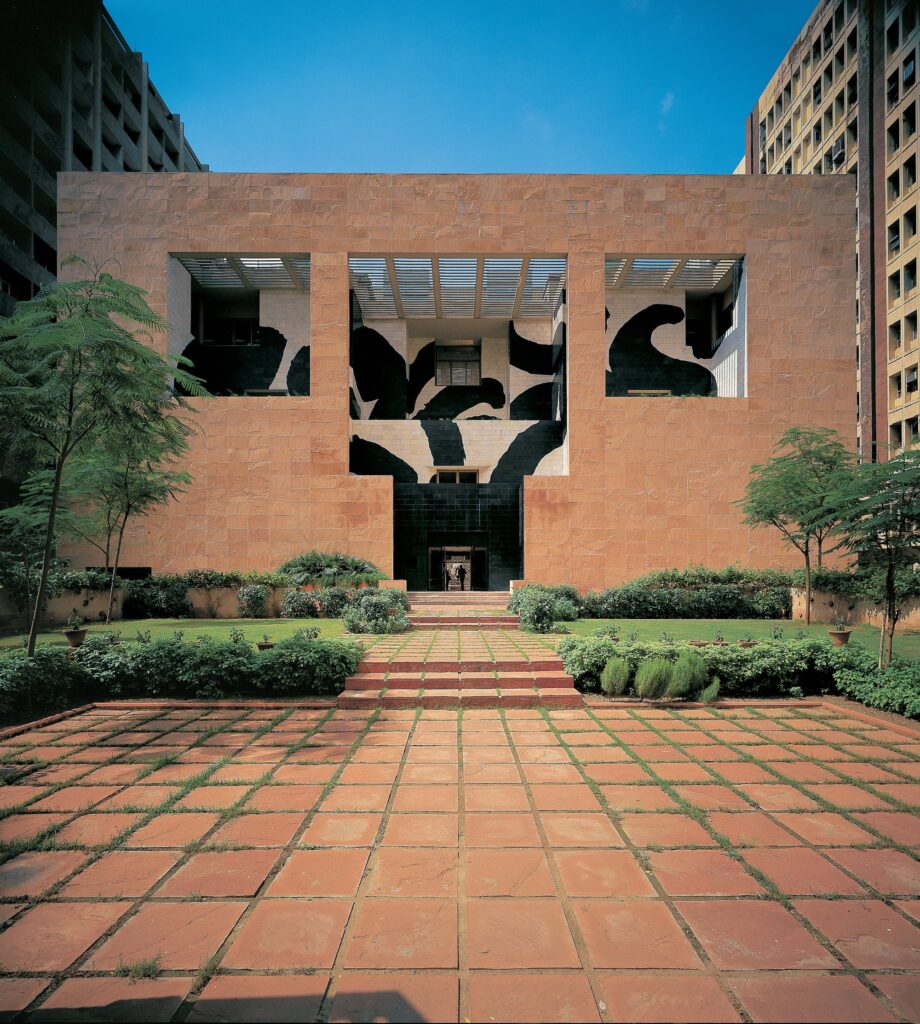
Charles was a man of futuristic vision regarding his version of architectural structures. The pre-independence building in Mumbai city were build by British architects and were on the similar lines of buildings built in London. After independence Soviet influence was seen in most of the government architectural projects and the private projects were mostly based on American style. Charles was an original thinker and didn’t like to copy from already created styles, rather he liked to research the site, the personality of its human occupants and the culture of the place, after which he would present his design. In his entire career Charles just has two Mumbai-based architectural structures to his credits. The Kanchenjunga building at Kemps Corner, and Salvacao Church (Portuguese Church) at Dadar, Mumbai are the only two buildings that Charles has created in his hometown. His vision for Mumbai was holistic development where he wanted to create opportunities for all sections of the society to live in spaces that would help each other grow. But the politicians, bureaucrats and builders lobby of post-colonial Mumbai were not in favour of Charles ambitious and generous vision.
Living in a metropolis like Mumbai can have its own pros and cons. ‘Fitting in’ has always been a struggle for many visionaries. Inspite of the city buzzing with more than a million people, one may feel lonely if one fails to find people who share their vibe. Unfortunately Charles could not vibe with similar minded people in the realty business, as a result he could not actualize his design ideas into reality. Charles realized that Mumbai had its own problems to sort and that it could not afford his ideology regarding space development. Thus, Charles Correa looked beyond Mumbai and continued his journey of creating awesome architectural designs where he felt he could intellectually ‘fit in’!He was selected as the chief architect of Navi Mumbai, a new city on the outskirts of Mumbai. Its obvious today that the spacious roads and well -organized sectors of Navi Mumbai has added value to the life of its citizens.
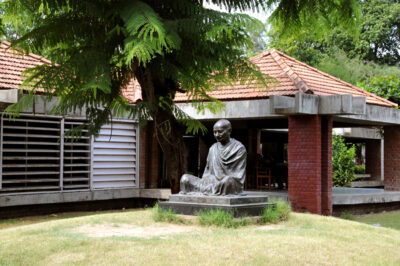
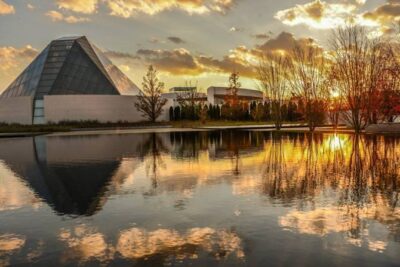
Charles’s signature work is just not seen in and around Mumbai, but has made its mark all over India and abroad too. His nationally acclaimed work mainly, Mahatma Gandhi Memorial at Sabarmati Ashram, The City Centre, Salt Lake City, Kolkata, the British Council, New Delhi and Kala Academy in Panjim, Goa speaks volumes of his architectural genius. His designs are simplistic yet full of artistic character. Internationally, ‘The Brain and Cognitive Science Centre’ at MIT, Boston that sprawls over 4,00000 sq ft is designed by Charles. Besides this, Lisbon’s picturesque Champalimaud Centre, the building complex of permanent ‘Mission of India’ to the United Nations, New York and ‘The Ismaili Centre’ building in Toronto are few of Correa’s global landmarks. His international creations thus have earned him the title ‘India’s Greatest Architect’!
In 2013, with a philanthropical mindset, Charles donated his entire archive of 6000 architectural drawings and other materials to Royal Institute of British Architecture (RIBA), London. This was the largest gift ever given by a non-British architect to a British institute. Besides receiving India’s highest civilian award, the Padma Shri and Padma Vibhushan, Charles received the royal gold medal from RIBA, The Aga Khan award and the UIA Gold Medal by the International Union of Architect.
Charles was a man ahead of his times and having realized that Mumbai was still struggling to cope up with post colonial administrative blues, he channelized his energies where it would be received the way he wanted it to be. He always quoted that “buildings must seek to express the true essence and culture of the places where they are located and must reflect the essence of the building’s ultimate purpose in order to create the perfect symbiosis between function and form”. He himself incorporated and also promoted his idea to ‘hear to one’s inner voice’ and stand by it when you create something meaningful. Every city will have its limitations, which will hinder one’s growth, but people like Charles Correa know how to go beyond those limitations and reach out to the world and create an impact!


