
Dover, Kent in the United Kingdom and Dover, Kent County in Delaware, United States, are more than just transatlantic namesakes. Their shared heritage speaks to a larger story of colonisation, cultural continuity, and the enduring influence of British place-naming in the early American colonies. Though separated by thousands of miles, both Dovers reveal compelling insights into the historical and architectural development of their respective nations.

The original Dover, perched dramatically on England’s southeastern coast, has been a sentinel between Britain and the Continent for over two millennia. Its white chalk cliffs have become an icon of English identity, greeting travellers for generations and warning would-be invaders from Julius Caesar to Hitler. Popular wartime singer, Vera Lynn’s famous 1942 song “The White Cliffs of Dover” immortalised the cliffs as the sight every British soldier longed to see again as it meant they’d made it back to Blighty.

But beyond its towering natural defences lies a rich human story. A standout site is the Maison Dieu, a medieval building founded in 1203 as a pilgrims’ hospice. Over the centuries it morphed into a naval supplies depot, town hall, and courtroom. After a major restoration, Maison Dieu reopened earlier this year, offering visitors a unique blend of Gothic architecture, intricate stained glass, and civic history. It’s an unmissable stop for anyone interested in England’s medieval and municipal legacy.

Dover’s strategic significance also lies in its castle—the largest in England—built under the command of William the Conqueror and later expanded by Henry II. With underground tunnels used in World War II, the castle remains a vivid testament to Dover’s role as the “Lock and Key of England.” Beyond its military heritage, the town is dotted with curious corners: from the Fan Bay Deep Shelter to Samphire Hoe, a nature reserve made from Channel Tunnel spoil, which combines ecology with industrial ambition.
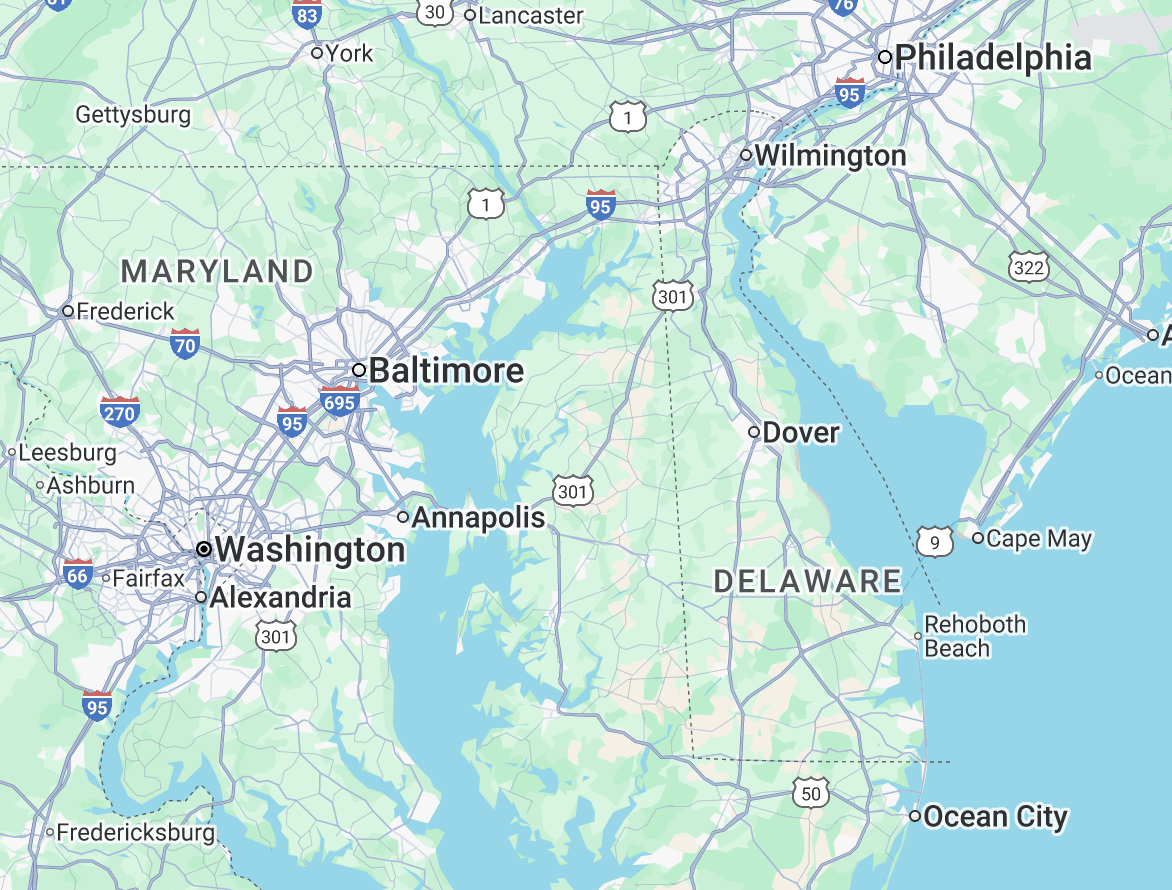
Across the Atlantic, Dover, Delaware traces its origins to 1683, when it was named by William Penn after its English counterpart. Located in Kent County, it was deliberately designed as a seat of government, a safe inland location central to the colony’s administration. In 1777, Dover became the capital of Delaware, a title it retains to this day. While it never needed cliffs or castles to define its presence, the American Dover has cultivated a quiet authority in the story of the United States.

A historic highlight is the Old State House, constructed between 1787 and 1792 in stately Georgian style. Situated on Dover Green, this red-brick landmark served as both the state capitol and the county courthouse. It was here that Delaware ratified the U.S. Constitution, earning its title as “The First State.” The building, lovingly restored and now open as a museum, invites visitors to step into a time when the foundations of American democracy were being debated and defined.
The surrounding Dover Green Historic District offers an immersive walk through American architectural history, from colonial timber-frame houses to Victorian facades. Notable structures include the Eagle Tavern, dating to 1791 (there’s also a 19th Century Eagle Tavern in Dover, UK), and the old Kent County Courthouse. Together they speak to a time when towns were not just settlements, but symbols of a fledgling republic’s ambition.
Despite their differences in size, prominence, and architectural scale, both Dovers serve as symbolic centres of governance—one guarding a nation’s shoreline, the other safeguarding its state’s laws. Their connection is more than nominal. Both were founded with purpose: the English Dover as a defensive stronghold and maritime gateway, the American Dover as an administrative hub for a new society rooted in old-world ideals.
What unites them most, perhaps, is the sense of continuity they offer. In a world of ever-shifting boundaries and rapid change, Dover in both the UK and the US stands as reminders of the enduring legacy of place. Whether you find yourself standing beneath the vaulted arches of Maison Dieu or under the cupola of the Old State House, you are participating in a shared narrative—one that spans oceans and centuries.
Old State House, Kent, Delaware, US


