By Jane Wilson
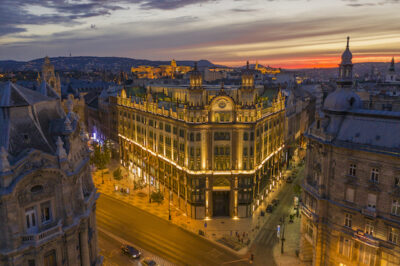
A small group of visitors lingered in front of the entrance, phones poised. It was hard to tell what drew them in – a theatre perhaps or an art gallery. Stepping inside I uncovered the answer. Overhead, a vaulted glass dome filtered daylight into a kaleidoscope of colour, casting shifting patterns across an opulent arcade where guests sipped coffee beneath a canopy of stained glass and carved stone. It felt like wandering into a living piece of Budapest’s past.
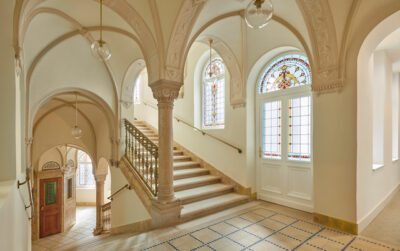
This was my hotel for two nights. Párisi Udvar Hotel makes an immediate impression. It surrounds you, a place where ceramics glint, arches curve, and decorative flourishes unfold in every direction. The effect is theatrical yet intimate, like inhabiting a jewel box.
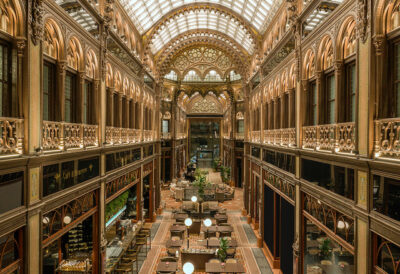
The story of the building stretches back to 1817 when architect Mihály Pollack, celebrated for the Hungarian National Museum, created the original structure for Baron József Brudern. Inspired by Parisian shopping passages, it became one of Budapest’s earliest modern arcades, lined with boutiques offering handmade fashions and accessories for the city’s well-heeled clientele. By the early twentieth century the building had been reborn as the headquarters of the Central Savings Bank, redesigned in a lavish Beaux Arts style.
However, severe damage during the Second World War left the structure diminished, its grandeur faded through decades of neglect. Its renaissance began in 2014 with a painstaking restoration that spanned five years. Original details were revived rather than replaced, allowing Gothic, Moorish and Art Nouveau influences to re-emerge. Today, heritage protection ensures that Párisi Udvar functions not simply as accommodation but as a restored architectural landmark. Among the most captivating spaces is the Polygon Court, once an entrance to residential apartments and now an elegant executive lounge. The original elevators remain a charming nod to early twentieth century engineering. Throughout the interiors, craftsmanship takes centre stage.
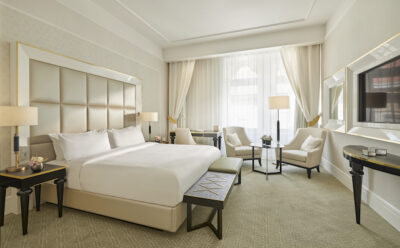
The hotel offers 110 generously proportioned rooms, including 20 suites. The design balances classic elegance with contemporary comfort: high thread count linens and marble bathrooms that feel quietly indulgent. For restorative downtime, the Zafír Spa provides Finnish and infrared saunas, relaxation areas and a wellness pool. The Presidential Suites crown the sixth floor, complete with expansive terraces and rooftop views that sweep across the city.
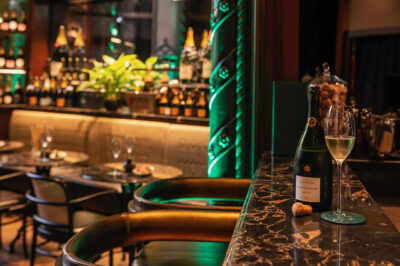
Dining in the Párisi Passage Restaurant serves Hungarian cuisine with a refined modern touch. The Étoile Cocktail and Champagne Bar offers inventive drinks inspired by the building’s heritage.
What distinguishes Párisi Udvar is its dual identity. It is both hotel and destination, a place where guests share space with curious visitors drawn by the architecture. Rather than feeling intrusive, this quiet flow of admirers reinforces the sense that the building belongs to Budapest’s cultural fabric.
Exploring Budapest
Budapest unfolds across two halves divided by the Danube: elegant Pest and hilly Buda. Together they offer a rich tapestry of architecture, history and thermal culture.
The Hungarian Parliament stands as the city’s defining silhouette. Illuminated at night, it is best admired from the river during an evening cruise.
Great Market Hall provides a vibrant immersion into local life, its Neo Gothic structure sheltering stalls laden with paprika, wines and regional delicacies.
St Stephen’s Basilica impresses with its Neo-Classical symmetry and richly decorated interior.
Dohány Street Synagogue, the largest in Europe, is striking for its Moorish Revival design and profound historical significance.
Budapest’s thermal heritage is legendary. Széchenyi Baths in City Park combine grand Neo Baroque architecture with outdoor pools that steam even in winter. Gellért Baths, often described as the Palace of Baths, offer Art Nouveau splendour alongside mineral rich waters.
Across the river from Pest, the Castle District rewards exploration. The funicular ride to Castle Hill leads to Buda Castle and the fairytale terraces of Fisherman’s Bastion.
For a contemporary cultural interlude, the Madách Theatre stages major musical productions within walking distance of the hotel. Nearby, Cinema Mystica offers a strikingly modern contrast: an immersive world of light, sound and digital art installations.
Párisi Udvar Hotel encapsulates Budapest’s enduring romance with grandeur and reinvention. For travellers seeking more than a place to sleep, it offers something rarer: the chance to inhabit the city’s golden age while standing firmly in the present.
Jane Wilson is a freelance travel and wellness writer and editor of The Wellness Traveller. She was a guest of Párisi Udvar Hotel.


