 By Seren Charrington-Hollins
In my humble opinion, there is nothing quite as decadent and naughty as a really good chocolate brownie. When it comes to describing the perfect chocolate brownie the world splits into two camps on the brownie issues: crumbly and cake-like or dense and fudgey and there are a whole range of recipes to accommodate both sets of brownie devotees.
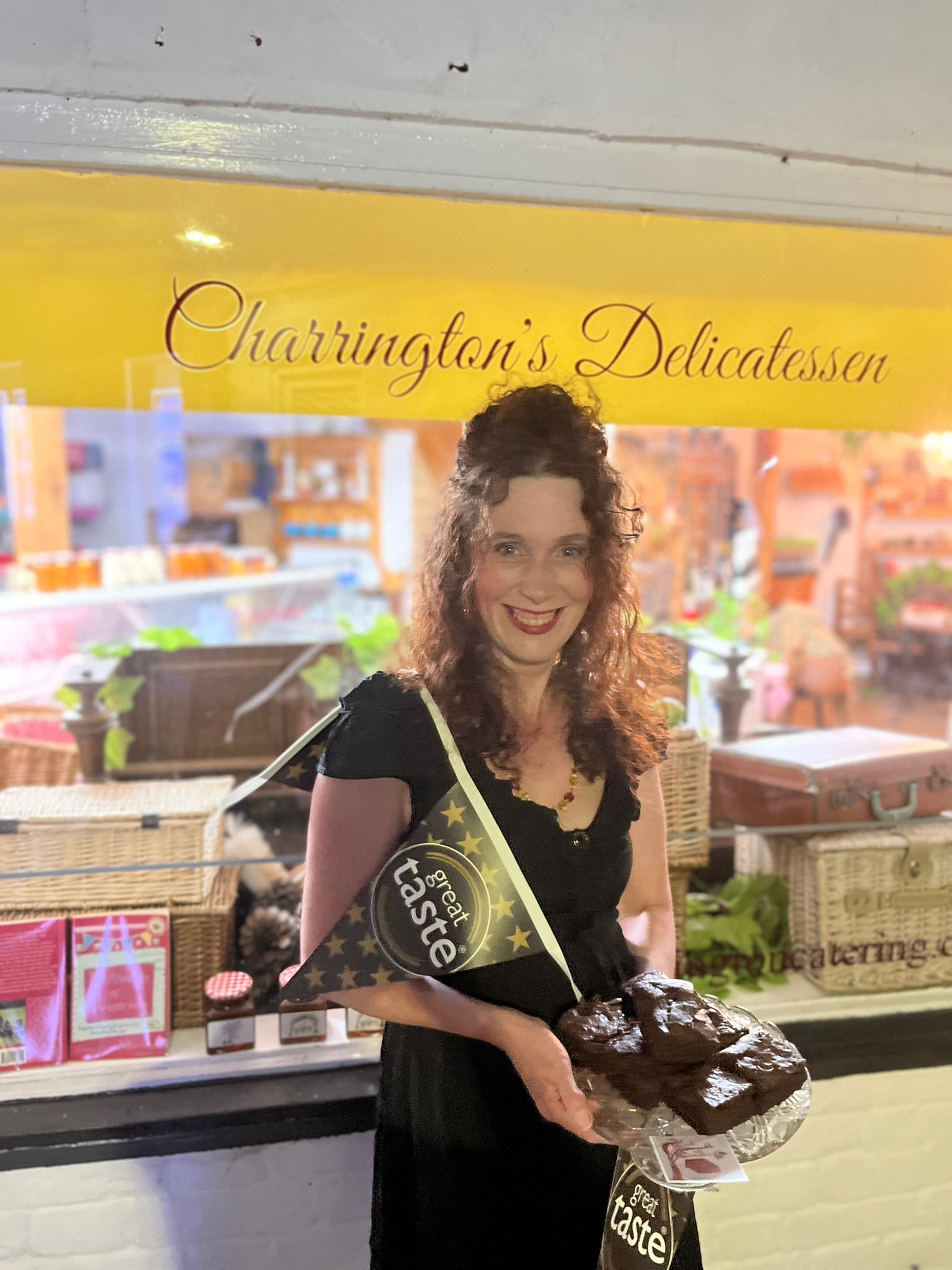
Last year I was honoured to receive a Great Taste Award for my Decadent Chocolate Brownies and I was delighted to read that the judges had enjoyed my entry. Recently my focus has been increasingly directed towards the subject of what makes a truly wonderful brownie and makes it stand out amongst all other brownies as award winning? The Great Taste Awards 2024 are now open for entry and I am wondering which brownies from my range I should enter this year, decisions, decisions!
My thoughts on what makes for a perfect brownie are that they should always be on the dense and fudgey side, they should be a scrumptiously, rich treat that you enjoy in small portions. A crisp layer of chocolatey goodness should hide a rich, fudgey inner layer and this is how I like to bake mine.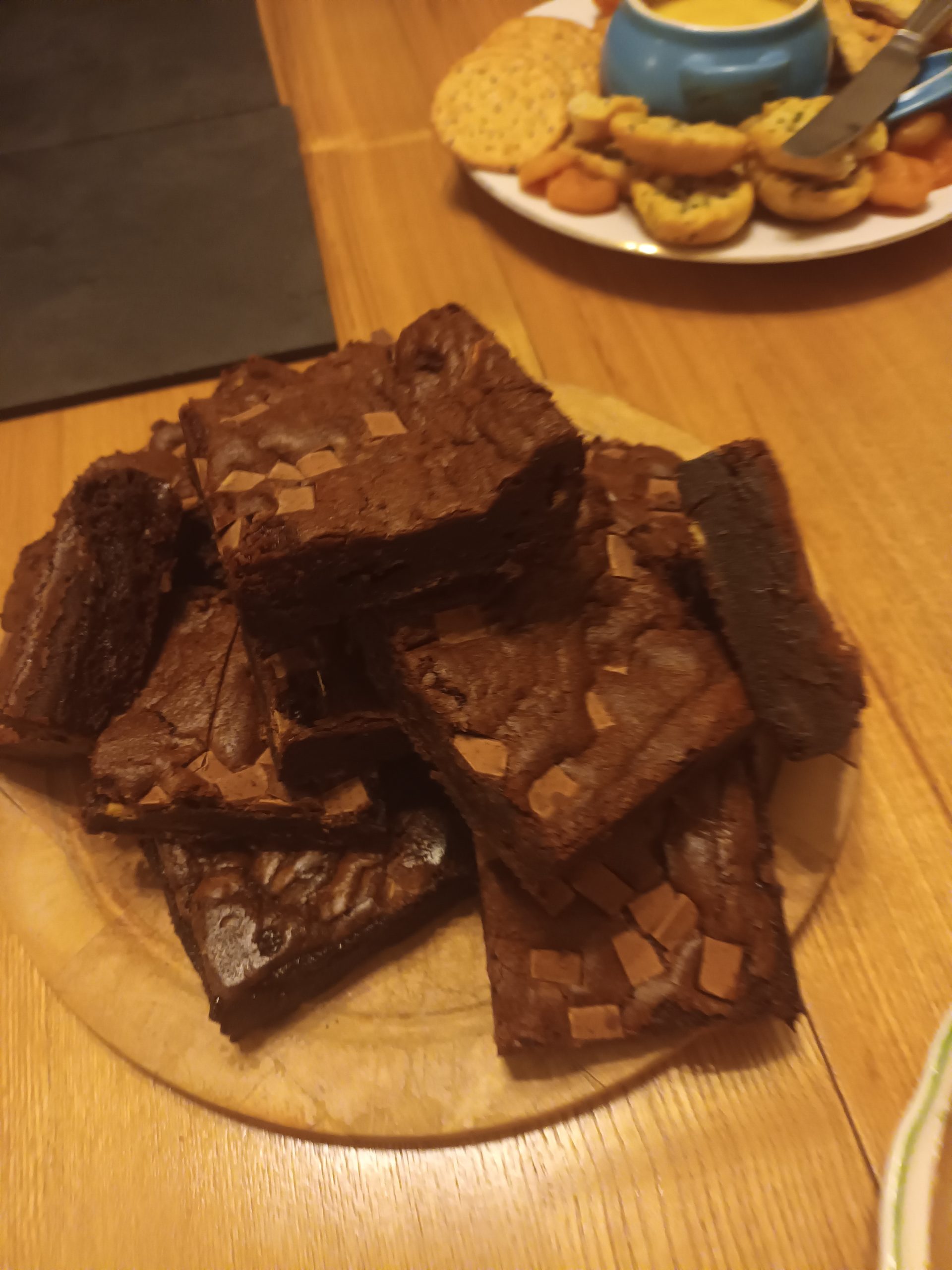
My perfect brownies demands a mixture of cocoa powder and chocolate, for ultimate richness of flavour without heaviness, and intensive beating. Indeed the classic brownie consists of just a few ingredients: butter, sugar, chocolate, eggs, and flour; yet with such a simple recipe comes variable results. Indeed a batch of brownie mix can turn out cake-like, chewy, fudgy, dry or under-baked in the centre; bearing testimony to the fact that baking truly is a form of alchemy. Just a fractional change in the ingredients used can make a huge difference to the finished article – indeed it’s all in the mix. It is certain that whilst chocolate brownies are often a recipe that we attempt early on in life, getting the perfect chocolate brownie is far from child’s play and getting the recipe right is a problem that has been with us bakers for generations.
A true American- Brownie should be dense and fudgy, indeed a real Brownie is a far cry from a chocolate sponge cake; it is divinely dark, seductively moreish and very much for grown-ups. With its distinctly cracked top the chocolate Brownie is moist, gooey and a shrine to decadence.
As we sit down with a frothy coffee and a chocolate brownie it is easy to think that we are enjoying a modern treat, yet we have the Victorians to thank for this classic bakery delight. There is no doubt that whilst the brownie is now a part of modern all-American culture, it has its origins steeped in history and is filled with European influences.
The exact history of the Brownie is difficult to reconstruct for there are many conflicting stories on how they came to be, indeed the name itself is even a subject of debate. Whilst some will say that the name Brownies is most simply derived from their brown colour, others will insist that the name is derived from the mythical pixie-like characters common in children’s stories from the same era. Indeed the latter explanation does carry some probability. Back in 1887 the author Palmer Cox released his humorous series, ‘The Brownies’ , which was all about mischievous fairy-like sprites and really popularised the name “Brownie.” Palmer’s book was a renowned success and it wasn’t long before savvy commercial businesses seized on the advertising opportunities presented by this hit; developing advertising tie-ins to the name. Kodak even named its popular box camera the “Brownie,” and a host of confectionary companies loaning the name for their sweet treats, so in light of all this it is fair to say that perhaps the name of our beloved American Brownie is steeped in the land of the fairies.
Whilst the Brownie itself boasts a Victorian heritage, no one can dispute that a Brownie is not a Brownie without the addition of chocolate and so it could be argued that the humble Brownie has a longer culinary lineage than initially recognised. In 1670, Dorothy Jones and Jane Barnard each successfully petitioned the city of Boston “to keepe a house of publique Entertainment for the sellinge of Coffee and Chucalettoe .”( 1) and the record of their petitions is one of the earliest documentations of the presence of chocolate in the British American colonies. As in Europe, chocolate was the source of mixed reactions, it was considered so addictively delicious by the elite who got to sample it that its popularity soared, but the more conservative members of society considered it to be a decadent indulgence that was sinful. Chocolate was not destined to be stopped by a few killjoys though and its popularity soared seeing it gradually filter from being the preserve of the gentry’s classes to being the universally enjoyed treat of today.
The nineteenth century brought with it changes in chocolate taste and from that encouraged and allowed for experimentation in cooking and baking. It was during this century that the face of chocolate changed forever, as the first chocolate bar was produced in Britain, it wasn’t long before America developed its own chocolate bar and indeed use of chocolate in baking increased dramatically in the late nineteenth and early twentieth centuries, due to the more consumer friendly price and form of chocolate as well as a wave of chocolate manufacturers creating recipe booklets encouraging cooking with chocolate. Without these developments in chocolate we may never have tasted the soft and indulgent flavour of the brownie!
In baking history the brownie is important in terms of the development of cooking with chocolate. Today there are reams of recipes that call for copious quantities of chocolate to be incorporated into them, but back in 1893 when the first documented evidence of the Brownies existence emerges the significant quantities of chocolate and fats were unusual. The story of the birth of the brownie goes that a wealthy socialite called Mrs. Bertha Potter Palmer made a special culinary request to the chef at The Palmer House Hotel in Chicago, to create a dessert that could be tucked into a box lunch for ladies to eat while attending the Columbian Exposition. The chef diligently obliged and created a rich, indulgent, fudgy-chocolate confection – the brownie was born. The brownie remains on the hotel’s menu today, testimony to their sustained gastronomic appeal. These early brownies were a little different to the popular recipes we enjoy today, being topped with walnuts and an apricot glaze.
Despite their Victorian roots and possibly the earliest published recipe for chocolate brownies appearing in the Boston Daily Globe in 1905; Chocolate brownies didn’t become widely popular until the 1920s, when chocolate became more readily available and chocolate cookery became the height of domestic prowess. It is interesting to reflect on how the recipe for chocolate brownies has changed little in well over a hundred years – which just goes to show that perfection needs no modification.
The wonderful thing about Brownies is that whilst some of their history is unclear their popularity is enduring and multi-generational. There is no doubt that the chocolate Brownie still has a leading role to play in the history of baking and its popularity is now global.
Seren’s Chocolate Brownies
250g 70% cocoa chocolate
250g salted butter
300g caster sugar
3 large eggs, plus 1 extra egg yolk, lightly beaten
60g plain flour
½ tsp baking powder
60g good quality cocoa powder
1tsp orange flower water
- Pre-heat the oven to 180C, and line a 23cm x 23cm baking tin with baking parchment.
- Set a bowl over, but not touching, a pan of simmering water, and add 200g of the chocolate, broken into pieces. Allow to melt, stirring occasionally, and then remove from the heat immediately. Make sure no water gets into the chocolate s it will seize.
- Meanwhile, beat the butter and sugar together until light and fluffy, and break the rest of the chocolate into bite sized chunks.
- With the mixer still running, gradually add the eggs, beating well between each addition to ensure it’s thoroughly incorporated before pouring in any more. If the mixture starts to curdle then simply add a dessert spoon of flour. Leave mixing on a high speed for five minutes until the batter has a silky sheen, and has increased in volume.
- Remove the bowl from the mixer, and gently fold in the melted chocolate and chocolate chips with a metal spoon, followed by the sifted flour, baking powder, cocoa powder and orange flour water.
- Spoon the mixture into the tin, and bake for 30 minutes. Test with a skewer; it should come out sticky, but not coated with raw mixture. If it does, put it back into the oven for another 3 minutes, then test again. Prepare a roasting tin of iced water.
- When the brownies are ready, remove the tin from the oven and place in the cold water bath. Leave to cool for an hour before cutting into squares. Store in an air-tight container; they’re even better the next day and so it’s well worth resisting the temptation to eat them as soon as they come out of the oven.
Enjoy!


