The Seaford Little Theatre is an amateur group of actors who stage four plays a year to professional standard. Their next production 6 – 14 March is an adaptation of The Graduate.
www.seafordlittletheatre.co.uk
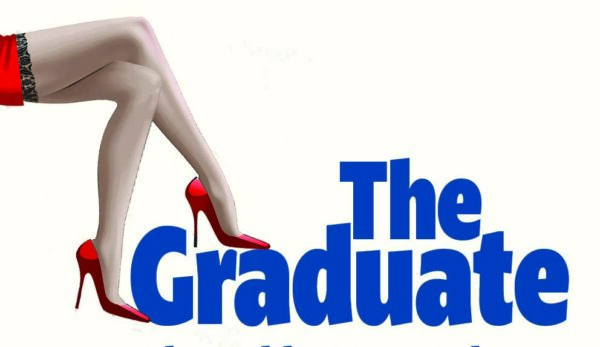
The Graduate was written by American author Charles Richard Webb (1939-2020). The story became one of the most successful films of all time, winning an Oscar, five Baftas and five Golden Globes and propelled the novel to cult status. Webb could have become famous, an admired celebrity, but he didn’t. His life, a tale of hardship and penury that defies rational belief, ended in a seedy hotel in Eastbourne. So what happened?
The film became a cultural milestone. Dustin Hoffmann, then virtually unknown, became an overnight star as graduate Benjamin Braddock, a character portraying Webb’s own delusion with the superficial materialistic values of his parents’ generation. Charles’ parents disapproved of the novel’s narrative and obvious inferences to them, accusing him of bringing public shame upon the family.
Anne Bancroft revitalised her career as the bitchy ‘Mrs Robinson’, bringing to the role a world-weary sadness and cynicism of a real broken marriage. Her film character is an alcoholic, trapped in a sexless marriage, drowning in a pool of bitterness and frustration. Such was the impact of Bancroft’s performance, the term ‘Mrs Robinson’ became a cultural icon synonymous with mature women initiating young men in their rite of passage to manhood.
The film’s music introduced folk troubadours Simon and Garfunkel to a wider public, Mrs Robinson topping the American and British charts.
Webb was a thin gangling man with deep-set eyes and tufty brown hair. His shy demeanour revealed his gentle character and air of fragile vulnerability. The son of an affluent doctor, he inherited substantial wealth and could have made a fortune from his writing but, perversely, insisted that poverty, for all its privations and stresses, was preferable to the gilded luxury that could have been awarded him. He signed away the film rights to his novel and any sequel for a relative pittance and embarked on a peripatetic and insecure life of penury.
He found a kindred spirit in artist Eve Rudd. They married and agreed to rid themselves of all material possessions. He gave away his inheritance: money, two houses and valuable paintings. He donated the royalties from his million-seller novel to a bird charity.
Caroline Downay, briefly Webb’s agent, said: ‘He had a very odd relationship with money. He never wanted any. He never felt comfortable with the attention the film brought him because he felt it distracted from his status as a serious artist.’
To survive, they lived in a VW camper van, doing a variety of menial jobs – fruit picking, cleaning, cooking – and at one point hosted a nudist colony. Eve was a reactionary and as a feminist statement shaved her head, ‘to shed the oppressive demands of feminine adornment.’ She presented a one-woman art exhibition in the nude. Her son David, a performance artist, once cooked and ate a paperback copy of The Graduate laced with cranberry sauce.
In the late 1990s they decided to move to England; Charles wanted to conduct research for a new novel. They eventually settled in Eastbourne with help from Social Services. Eve suffered a nervous breakdown and died in 2019. A year later, aged eighty-one, Charles passed away. He left virtually no belongings save for one change of clothes.
Charles Webb was an educated man with a degree in American history and literature, wrote nine novels, three of which were made into films. He could have lived a comfortable, even affluent, life but chose deprivation and dislocation from society in an obsessive quest for anonymity.


