It was 1975 and we’d travelled, en famille, to visit an old work colleague of my Dad’s. They lived in a town close to Wigan and had a daughter – Ann – roughly my age. As it was a Saturday night, it was agreed that we would attend the evening’s disco at the local church hall.
Living in the countryside outside a small town in the north-east of Scotland hadn’t exposed me to much in the way of wild nights out and the only music with which I was familiar came via Radio 1’s Sunday evening chart show. I thought the song Footsee by Wigan’s Chosen Few that had been played on the top twenty show earlier that year was representative of Northern Soul. As it happened, that release was merely a bastardisation of the R&B heart of the music. I had no clue about the wider reach of the Northern Soul movement, a phenomenon that had its nucleus only a couple of miles away from the church hall we visited that Saturday night. That only became apparent over the ensuing years.
And so it was that I found myself, along with a mere handful of similar 1970s refugees, settled into Screen 1 of the Uckfield Picture House on a dull Wednesday afternoon to watch Northern Soul: Still Burning, the film retrospective on Wigan’s Northern Soul scene You see, Northern Soul wasn’t simply a style of music, for those in the thick of it, it was a passion that consumed weekends, pay packets and countless hours spent searching for the next great record.
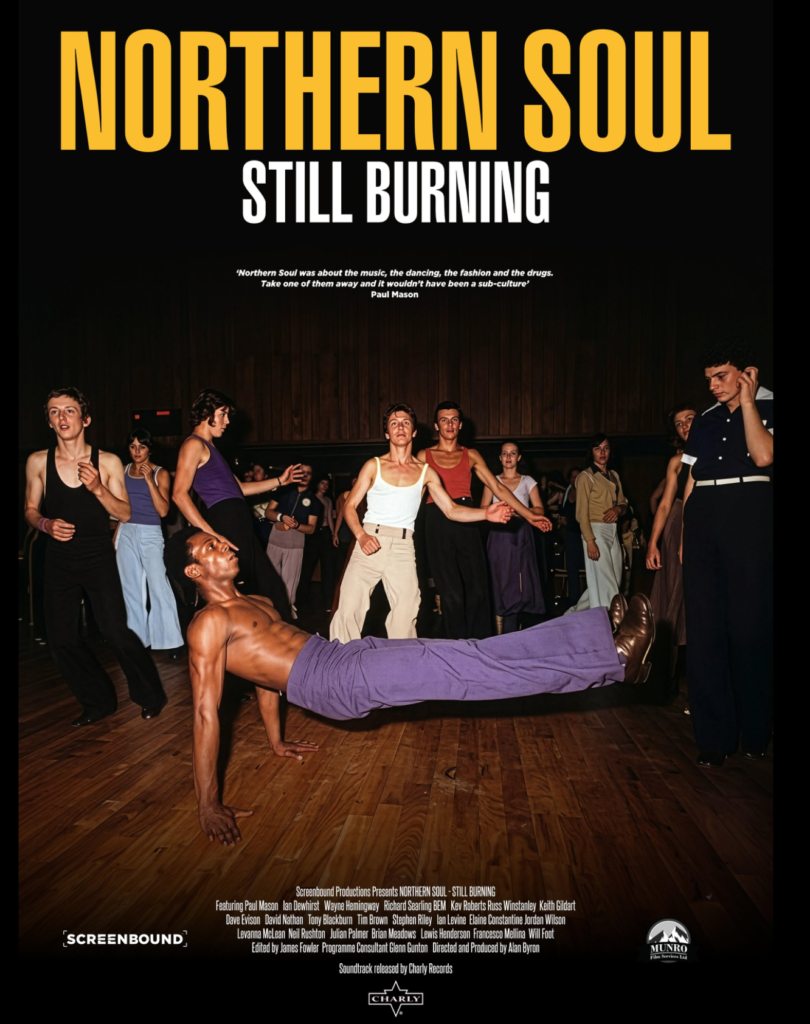
The documentary explores how the movement emerged from the industrial towns of Northern England during the late 1960s and early 1970s. While much of Britain was listening to chart hits and glam rock, (myself included) a dedicated group of enthusiasts were seeking out forgotten American soul records, particularly obscure releases from small labels in Detroit, Chicago and other US cities. The faster the beat and the more uplifting the sound, the better.
At the heart of the movement stood the Wigan Casino, Club which opened its famous all-night sessions in 1973 and quickly became the spiritual home of Northern Soul. Every weekend, young people travelled from across Britain, often by coach, train or hitchhiking, to dance until dawn. The queues stretched around the block, and simply getting inside felt like gaining entry to a secret society.
The film reminds us that what made Northern Soul special was its commitment to the music itself. Unlike later scenes driven by fashion, celebrity or drugs, the records were everything. DJs such as Russ Winstanley, Richard Searling and Ian Levine became legends because they would uncover rare tracks that nobody else possessed.
The rarity of the records created an extraordinary culture of collecting. Many of the singles had originally sold only a few hundred copies in America before disappearing into obscurity. Finding one was like discovering buried treasure. Collectors would spend months tracking down a particular pressing, and ownership of an exclusive record brought enormous prestige. Fans would travel many miles to attend an event so they could dance to a particular record solely owned by the host DJ. Long before internet auctions and digital downloads, knowledge, persistence and luck were the currency of the scene. It’s hard to imagine in our age of easy access. These same songs can be uncovered within seconds with a few taps of a phone screen.
What many people remember most vividly, however, was what mesmerised me on that Saturday night in 1975… the dancing. I’d been used to us girls on the dancefloor while the guys leaned against the walls – too cool to grace the floor. And nobody danced without a partner, they’d have been labelled “a nutter.” But when it came to Northern Soul, the girls kept clear, the guys filled the floor, and the dancing…!?
The documentary’s archive footage is astonishing. The athletic spins, drops, kicks and glides seem as energetic today as they did fifty years ago. Northern Soul dancing was individualistic, expressive and physically demanding. Dancers weren’t there to hook up, they mostly danced solo. They weren’t performing for social media or cameras; they were dancing for themselves and for the sheer joy of the music.
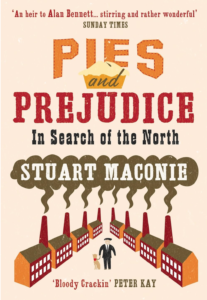
Radio DJ, Stuart Maconie,- a native of Wigan – in his book Pies and Prejudice: In Search of the North revealed that they’d take talcum powder to dances with them to sprinkle on the floor to make it more slippery (70s kids spit on your ‘health & safety’). Such insider tricks were more important than dressing to impress. By the end of the evening, they’d all be dripping with sweat anyway, which many of the Casino regulars would wash off with an early morning visit to Wigan swimming pool following the all-night, alcohol-free sessions – so perhaps the talc served a dual purpose.
Looking back, it is clear that Northern Soul was a precursor to the club culture that exploded in Britain during the late 1980s and 1990s. The all-night events, the devotion to specialist DJs, the search for exclusive records, the sense of belonging to a distinct community and the euphoric experience of dancing for hours all anticipated what would later emerge in the acid house and rave scenes. Many of the ingredients that defined modern clubbing could be found years earlier on the dance floor at Wigan Casino.
The retrospective also captures the social context of the time. Northern Soul flourished in working-class communities during a period of economic uncertainty. For many young people, the weekends offered escape, excitement – the music was an upbeat contrast to the industrial sounds many endured throughout the working week, serving the same purpose it had where it began, in the poor US manufacturing towns like Detroit. Acolytes shared a sense of identity with the raised fist symbol emblazoned on t-shirts. Inside venues like Wigan Casino, social divisions mattered less than a shared love of music and dance.
Perhaps the greatest achievement of the film is showing why Northern Soul continues to resonate decades later. It was authentic, driven by enthusiasts rather than corporations, and fuelled by a genuine love of music. The scene preserved hundreds of forgotten American soul recordings that might otherwise have vanished from history.
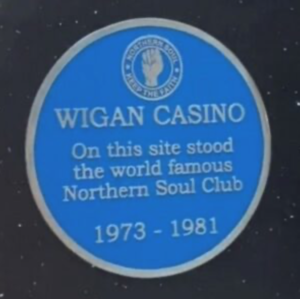
For those of us who remember the 1970s, the documentary is both nostalgic and enlightening. For younger viewers, it provides a fascinating glimpse into a uniquely British cultural phenomenon that left a lasting mark on music, dance and club culture. Wigan Casino may have closed in 1981 due to a council’s usual lack of foresight leaving only a blue plaque where it used to stand, but its influence can still be felt every time a dance floor fills with people chasing the feeling of freedom, connection and exhilaration that Northern Soul gave us all those years ago.
In 2023, The Royal Albert Hall shook to the sounds of this iconic music when it hosted the Northern Soul Prom, with dancing at every level of this massive venue See Stuart Maconie interviewed about the event – with footage from the evening: https://youtu.be/d0uNrDIcinQ?si=N9lKnokD-eWw1Xtz As Maconie points out, you can still find Northern Soul clubs and events all over the UK. What we might have thought was a passing fad became a timeless trend.
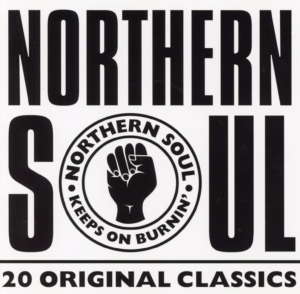
I own a fabulous CD – Northern Soul: 20 Original Classics that I seek out when I want to raise my mood. It worked in the grey, industrial North in the depressed mid-70s so it has little problem working its magic in a pretty plush Southern living room today. Give it a try, I’m sure it works better than any mood-enhancing drug.