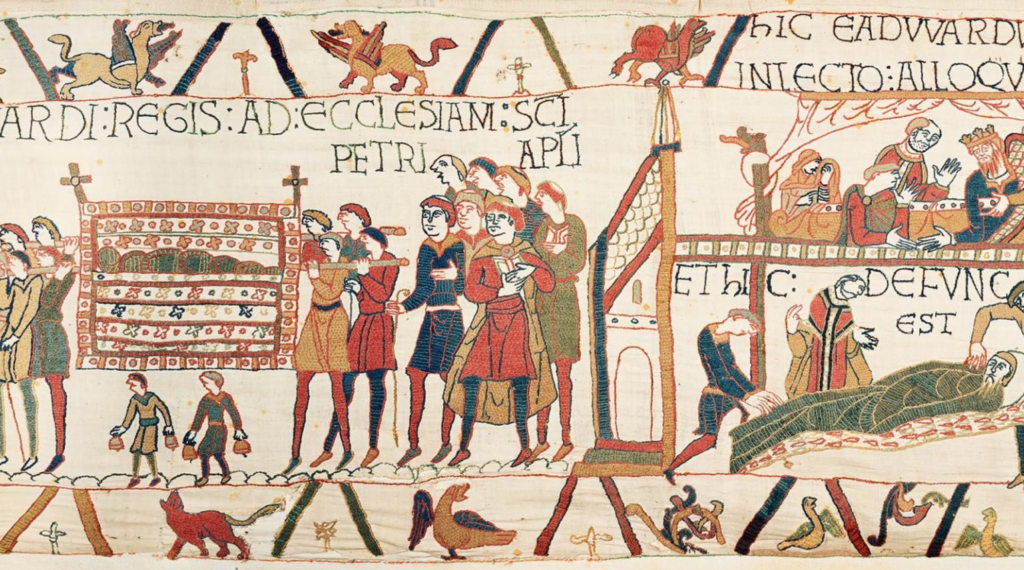
Few historical artefacts capture the imagination quite like the Bayeux Tapestry. Stretching almost 70 metres in length, this extraordinary embroidered masterpiece tells the dramatic story of the Norman Conquest of England in 1066 and culminates in the famous Battle of Hastings, fought on Sussex soil.
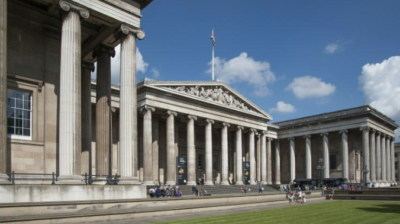
Now, for the first time in nearly a millennium, the tapestry is returning to England. From September 2026 it will be displayed at the British Museum in London, offering visitors a once-in-a-lifetime opportunity to see one of the world’s greatest historical treasures up close.
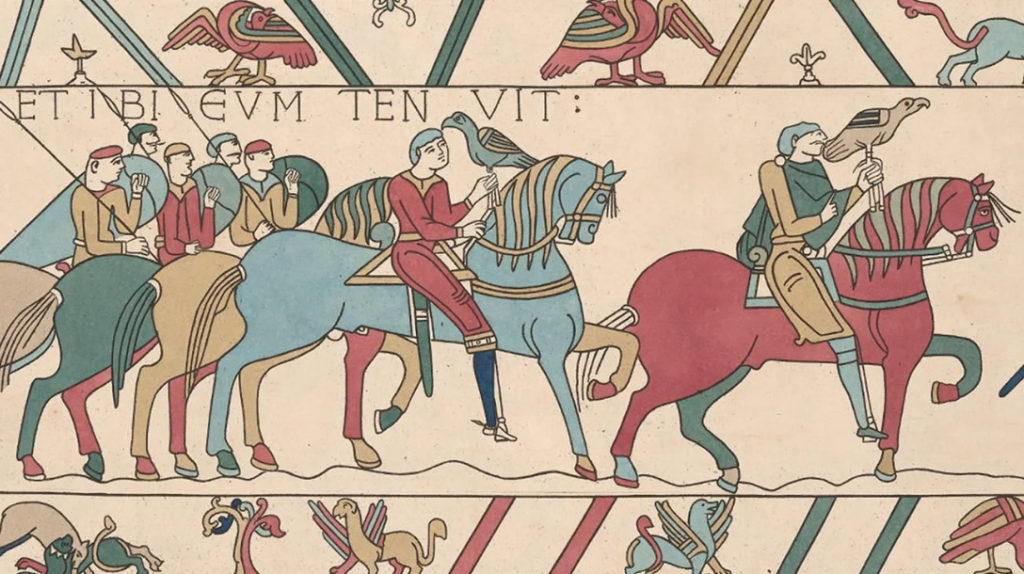
Although commonly called a tapestry, it is actually an embroidery. Created using coloured wool threads stitched onto linen, it consists of dozens of scenes depicting kings, nobles, soldiers, ships, horses and battles. In total it contains hundreds of human figures and provides an astonishing visual record of life in the 11th century.
Its importance cannot be overstated. Historians often describe the Bayeux Tapestry as the medieval equivalent of a documentary film. It provides invaluable evidence about armour, weapons, clothing, shipbuilding, architecture and daily life at a time when written records were relatively scarce. Without it, our understanding of the Norman Conquest would be considerably poorer.
For Sussex residents, the tapestry holds particular significance because it tells the story of events that unfolded in their own county. Much of the narrative centres on King Harold Godwinson and William, Duke of Normandy, culminating in the invasion of England and the Battle of Hastings. Although the battle was actually fought near present-day Battle, about 6 miles from Hastings, the tapestry preserves the defining moment that changed English history forever.
One of the most famous images in the embroidery shows a bright object streaking across the sky. For centuries, scholars have identified this as Halley’s Comet. The comet appeared in 1066 and was recorded by contemporary observers across Europe. In the tapestry it is shown as a dramatic celestial omen, with fearful figures gazing upwards. Many historians believe the appearance was interpreted as a sign of great change ahead — and change certainly followed with the Norman conquest. While absolute certainty is impossible after nearly 1,000 years, the overwhelming scholarly view is that the object depicted is indeed Halley’s Comet.
Another fascinating figure associated with the tapestry is Bishop Odo of Bayeux, the half-brother of William the Conqueror. Odo was one of the most powerful men in Norman England and played a significant role in the conquest. He appears prominently within the embroidery itself, an unusual honour that has led many historians to believe he commissioned the work.
In fact, Odo may be one of the reasons the tapestry exists at all. Most scholars believe it was produced in England, possibly in Canterbury, Kent, by highly skilled English embroiderers working under Norman patronage. Odo’s influence, wealth and political ambitions made him an ideal sponsor. The tapestry not only records history but also presents events from a distinctly Norman viewpoint, helping to legitimise William’s claim to the English throne.
For visitors planning a trip to London, seeing the Bayeux Tapestry promises to be an unforgettable experience. Yet for many Sussex residents, it will feel like more than a museum exhibition. It is the return of a story deeply connected to their own landscape — a visual account of the events that unfolded on Sussex fields nearly a thousand years ago and shaped the future of England.
History rarely comes closer to home than this.
The Bayeux Tapestry will be displayed at the British Museum in London from September 2026 until July 2027. It is expected to become one of the most popular exhibitions ever staged in Britain.
Tickets are now on sale HERE and a series of events planned.


