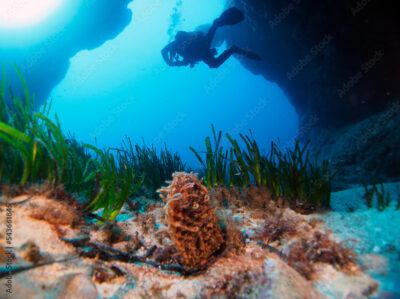
Messing about in boats comes as second nature to us Maltese and Gozitan islanders where the sea is only a stone’s throw away wherever you are.
Some of my early recollections were many, many hours spent with my late father in his small boat (a “frejgatina”), rod and line fishing, netting shrimps by net-scraping the underside of buoys, or otherwise just rowing and drifting about for pleasure and the peace and quiet of solitude on the water.
When we left for England in 1954, all of that sadly came to an end. I loved living in England but where we lived in south London (Dulwich, then Forest Hill, then Herne Hill, then West Norwood and then Brixton), Bedford and Market Rasen in Lincolnshire, the sea was a distance away and I spent many hours gazing at the River Thames and the Great Ouse in Bedford, knowing they flowed down to the sea.
There are three typical Maltese boats, two mainly endemic to Malta and the third international. These are the “dghajsa” (pronounced die-sa) and the “luzzu” (pronounced luzz-u), both particular to Malta and mainly small commercial vessels, and the “frejgatina” (pronounced fray-ga-tina) found all over the world and mainly a small and personal pleasure boat to get out and about on the water and ideal for amateur fishermen whose sole interest is that of making a catch for a good meal.
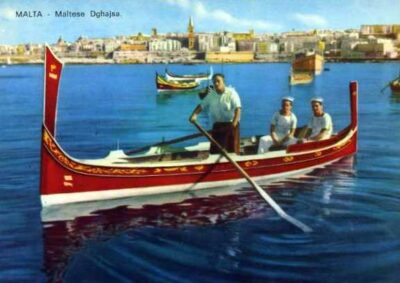
The “dghajsa” and the “luzzu” are largely of Phoenician origin. The former is likened to the Venetian gondola, not mainly in shape but because it has been used for centuries as a sea-taxi, mainly ferrying sailors to their ships and thus vastly popular with British naval sailors. It was also used for carrying small baggage from ship to shore and vice versa.
Although it can be rowed by two oarsmen it is usually rowed by one man, standing in the middle of the boat and rowing both oars in a forward movement. The prow and stern pieces are lengthy and mostly ornamental but also aid in managing the boat.
Sadly, much of the romance has been taken out nowadays because they are propelled by outboard engines and thus relieve the back-breaking work of the oarsman, but they are still elegant and highly colourful.
Into the late 1960s there were about 1,000 registered “dghajsas” in Malta and Gozo but today, very sadly, only a few score remain. They were a highly-favoured mode of water transport for Princess Elizabeth and the Duke of Edinburgh when they lived in Malta in the early 1950s and were generally much-loved by British sailors when most of the Mediterranean Fleet was in and out of the Grand Harbour.
RN regulations stated that when in home ports, sailors were commanded to use the last “liberty boat” to ensure a return to their ship before sailing. This was waived in Malta and sailors could remain in seashore bars swigging their final pints even after the “liberty boat” had left and would then hail a “dghajsa” to ferry them back to their ship.
Between 1976 and 1988 it was used in Malta’s official Coat of Arms but then disappeared when a new logo came into use.
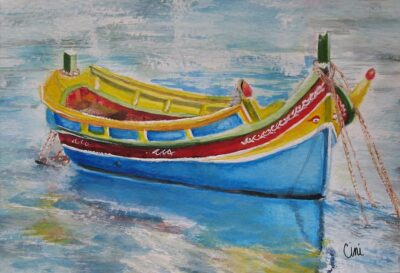
The “luzzu” was much more sturdy and stable with a double-ended hull and was mainly used for commercial fishing and providing a transport service between Malta and Gozo and vice versa, including the carriage of heavy items. Prior to the inboard and outboard engines, they sailed under canvas but all those disappeared when engines appeared.
Although of Phoenician origin, the name “luzzu” is derived from the Sicilian “guzzu” and the Italian “guzzo”, both common fishing and transport vessels in Sicily and the Italian mainland.
In Malta, they evolved in the Phoenician tradition, very colourfully painted and with the statutory pair of eyes on both sides of the prow looking down into the sea as the Eyes of Horus (in the Greek tradition) or the Eyes of Osiris (the Egyptian tradition), a lookout to warn and keep away the evil denizens below the sea’s surface.
Larger versions are still used today for commercial fishing and some have been converted as tourist passenger boats. A smaller version used by amateur fisherman is known as a “kajjik” (pronounced ka-yik) is still popular.
The “frejgatina” is a small, open boat normally between 11 and 13 feet long, used mainly in inland waters and is common throughout the world with many hundreds in Malta moored in inland creeks and mainly used for fishing by amateur boatmen as well as for family picnics on calm and sunny days.
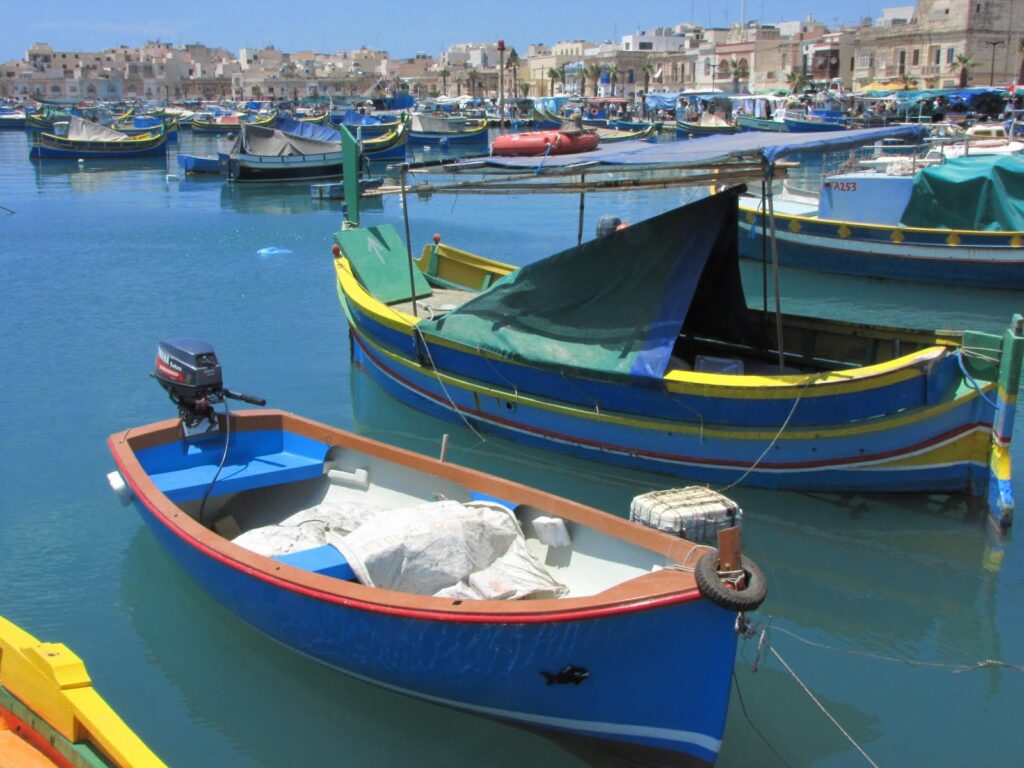
In days of yore, all were made of wood and required great carpentry skills but the passage of time has reduced the numbers of commercial vessels and today the manufacture of “dghajsas” and “frejgatini” is of fibre-glass material – although the bright colours remain.
Nowadays too, Malta’s creeks and inland waters are filled with cabin cruisers, powerboats, yachts and the luxurious super yachts but some of the traditional lure of the more humble boats remains.
Malta’s fascinating sea and underwater world continued to surface in a brand-new exhibition giving visitors the chance to discover centuries lying beneath the waves.
Running throughout the summer until the end of September, the exhibition also marks 25 years since the UNESCO Convention on the Protection of the Underwater Cultural Heritage came into force and five years since Malta ratified it.
Organised by Malta’s Underwater Cultural Heritage Unit, the free outdoor exhibition celebrates Malta’s rich maritime past, from ancient shipwrecks and wartime aircraft to priceless items and marine ecosystems.
Among the exhibits are 2,000-year-old amphorae used to transport wine and olive oil across the Mediterranean, a beautifully decorated 15th-century apothecary jar recovered from a Gozo shipwreck, and even First World War perfume bottles that still retain their scent more than a century later.
The exhibition also tells the story of Malta’s underwater archaeology, from early historical records dating back to the 17th century to the creation of the world’s first deep-water archaeological park off Xlendi Bay in Gozo.
Sadly, visitors can also understand the growing threats facing underwater heritage, including pollution, coastal development and abandoned fishing gear.
If you’re looking for a different kind of summer outing, this exhibition proves you don’t have to wet your feet to explore Malta’s wonderful marine and underwater treasures.
ALBERT FENECH


Sounds like a really important part of the islands’ culture, it’s amazing how connected people are to the sea around here.