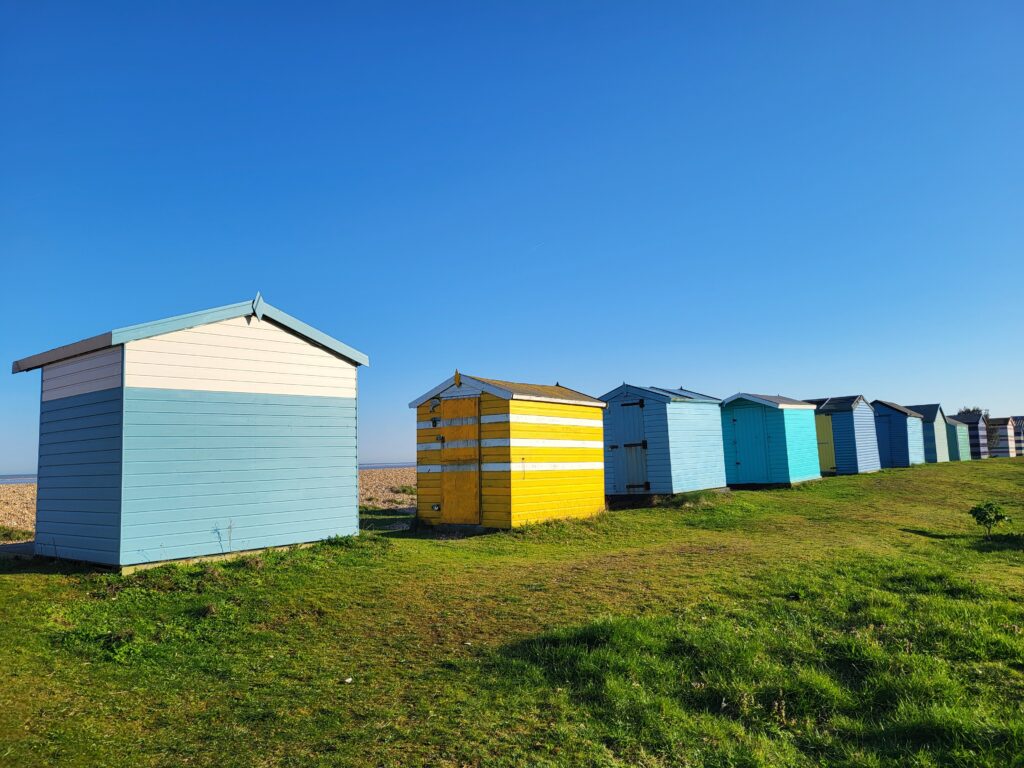
There is something quintessentially British about the seaside holiday, just the mention of a seaside holiday conjures up images of ice creams, deck chairs, fish and chips and of course rows of beach huts painted in garish shades.
The habit of loving to be beside the seaside emerged in the mid-18th century, with sea air and frolicking on the beach promoted as a healthy antidote to a variety of ailments and stresses caused by city dwelling.
Today a day at the beach signifies an opportunity to embark on a care-free afternoon or windswept day of sandcastles, enjoying a paddle in the sea and sunbathing, but such care free joys at the beach were not to be enjoyed ladies of the Georgian and Victorian era who had to be careful to follow beach etiquette, that was designed to uphold modesty standards and ensure that no one peaked at them in their bathing suits.
This was accomplished with the help of the revolutionary invention: the bathing machine. This small wooden box was essentially a changing cubicle on wheels, that allowed people to get into their bathing costumes in privacy without any chance of impropriety. Royal patronage accelerated the popularity of being beside the sea and of the bathing machine, with Queen Victoria employing a ‘dipper’ to assist her take a dip in the sea after changing in her very own bathing machine. A dipper was a seaside assistant who would help you venture into the sea and assist with your retreat back into your bathing machine to change.
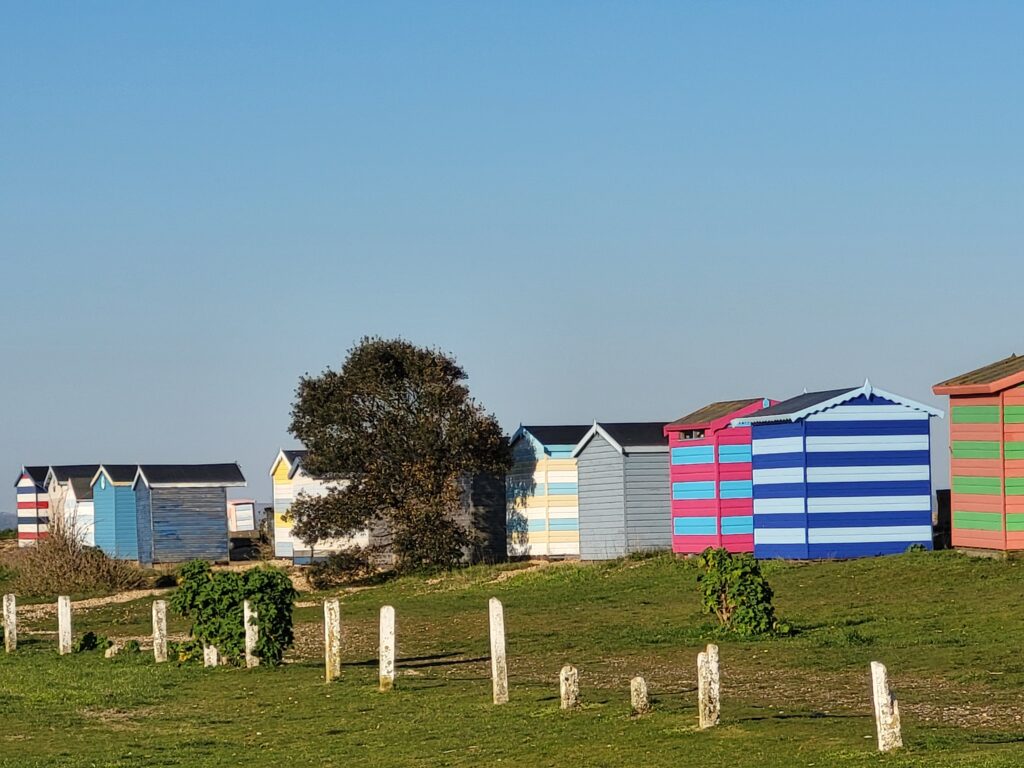
Railway expansion in the 1840s made the seaside affordable and accessible to everyday folk and today a trip to the seaside in the ultimate British day out. I was delighted to take a trip to Romney Marshes and visit the beach hut development that is taking place on Coast Drive, Greatstone. Following on from the success of a beach hut project in Folkstone, the district council have a ninety-three brand new beach huts that they will be citing along Coast Drive. I saw the new beach huts with their uniformed paint, neat and pretty pitched roofs and I can see their appeal, but I prefer the rustic eccentricity of the older huts that are characterised by many seasons of sea air and wind, hand painted and full of love and the memories of happy days.
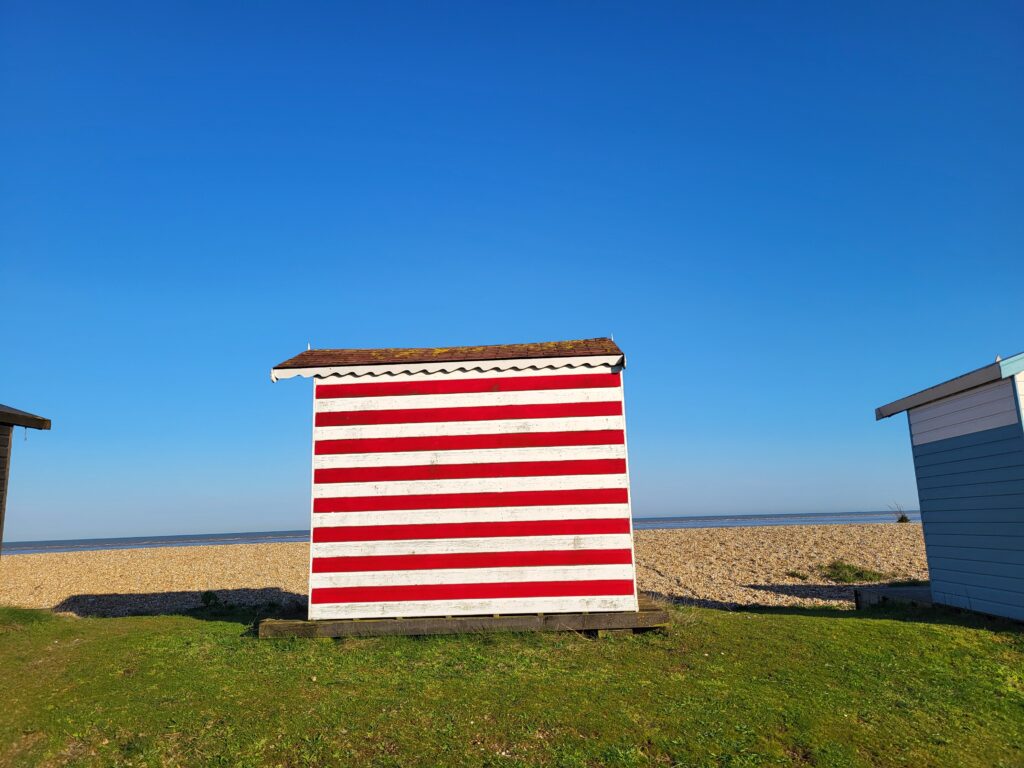
In some ways beach huts are an admission that British weather is hardly predictable and shelter may be required. The beach hut is an eccentric little structure, and it is the ultimate symbol of Britishness. It combines all the things the British love, nostalgia, a reference to the weather, part garden shed and part Punch-and-Judy tent. A shed on the shore and a charming bit of British history, these little beach huts are held dear by many Brits who like to be beside the seaside.
As visits to the seaside became more popular, so too did the demand for beachfront accommodation and beach huts replaced bathing machines, for the beach hut provided not only a place to change, but somewhere to shelter from the elements. Beach huts are at their simplest just a shed on the beach, but they offer an opportunity to adorn with detail and paint, for some people the beach hut is an opportunity to indulge in the British preoccupation of home ownership and those that come up for sale are eagerly snapped up and waiting lists for rental are exhaustively long.
By the early 20th century, beach huts had become a common sight along England’s coastline, gracing the sandy coastlines of areas such as Brighton, Blackpool and East Sussex. Beach huts are cheery, they are the subject of literary works, art and are sold in seaside souvenir trinkets.

I spent a lovely few hours pottering along the coastline and enjoying the spectacle of pretty beach huts. I feel that in this fast-paced society that we live in, beach huts are more appealing than ever. A few hours spent listening to the sea crashing in, washing up its beach combers treasure is an excellent tonic for the soul.


