By Gareth Butterfield 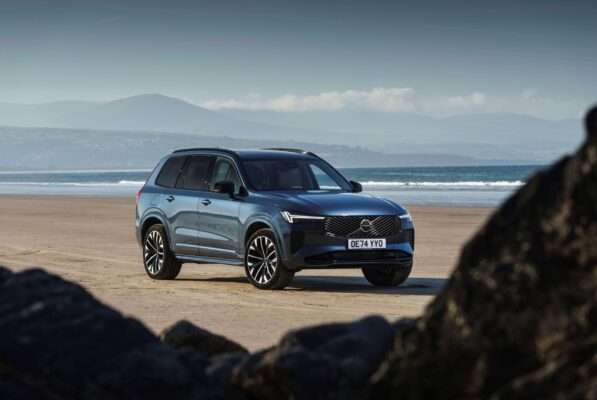
You really have to doff your cap to Volvo’s XC90 for its sheer success. Here’s a remarkably expensive car that should be a bit niche, with seven seats and a huge SUV body, that’s not only lasted as a template since 2003, but it’s still selling really strongly and leading its segment.
Part of that success is probably down to some clever quiet evolution. Volvo has very much applied if “if it ain’t broke, don’t fix it” ethos to its flagship family car. While it obviously underwent a huge transformation in 2014, it never lost the spirit and simple packaging of the original version.
And, while it’s had a pretty handsome facelift in 2025, it’s fair to say it never really aged all that much. Now it just looks a little bit more modern, and still every bit the Volvo.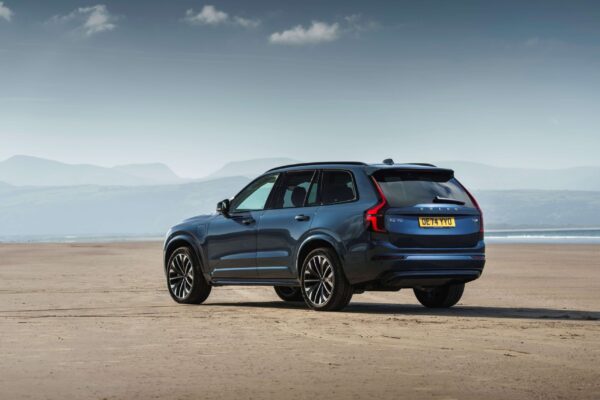
Along with the facelift came a few revisions to the interior, chiefly in the tech you live with, and some changes to the suspension. But there’s not as much a you might think separating this from the car we’ve seen all over the roads for more than 10 years. What an achievement.
Driving an XC90 is always a pleasure. They absolutely devour long journeys, and the interior is so beautifully designed that you just blend in to the refinement and soak up the effortless task in hand.
Granted, if you’ve got five kids smattered across the middle and rear seats, luxury and refinement might not be your first sensations, but the seats are genuinely big enough to fit adults in, even the ones in the back.
And, when they’re not in use, they’re a doddle to fold away flat, offering up a gigantic 680 litre boot. Even in the plug-in hybrid T8 version, the XC90 remains a packaging triumph.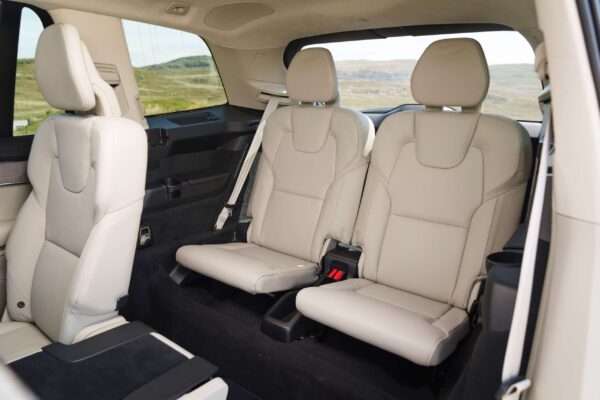
And it’s the plug-in hybrid version I’ve spent a week with. Encompassing a three-hour trip to Bristol. It still has the familiar 2.0-litre four-pot engine, but there’s a fairly beefy electric motor thrown into the mix, so power is up to 449bhp. Yes, that does feel as quick as it sounds. In fact, 0-62mph arrives in in 5.4 seconds. You’d argue that’s not entirely necessary, but I really don’t care.
The new version of the XC90 T8 has a larger 18.8kWh battery and Volvo claims a 44.1-mile e-range. Think of it more like the high-30s on a good day. It’s not exactly impressive these days, but it’ll be plenty for commuting and school runs.
Of course, CO2 emissions of 30-32g/km, will also help justify the investment in the T8. And it is quite the investment – my test car, in Ultra spec, cost the best part of £80,000, and there’s another trim level above that.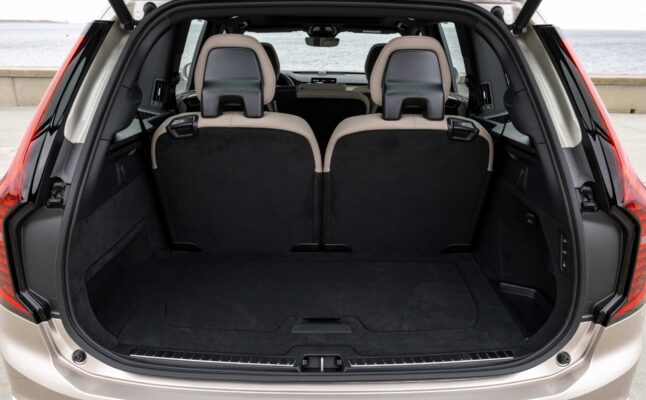
But one of the things you need to remember about the XC90 is that it’s always felt luxurious and premium. The interior design is absolutely exquisite, build quality is superb, and the safety systems are basically the best on the market. You really do get a lot for your money.
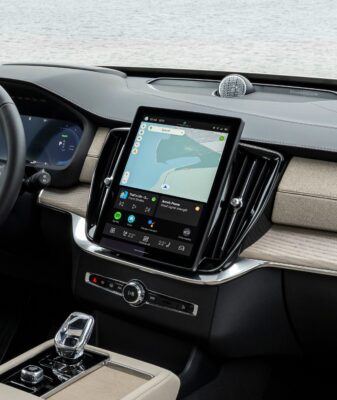
That’s not to say there aren’t a few foibles. If only a few. The infotainment system is a vast improvement over its earlier editions, but there are hardly any physical buttons now, so you’ll be wading through it quite a lot.
While the shortcuts are well thought out, and there’s a voice control system that works surprisingly well, having to take your eyes off the road to fumble for your air con controls seems a little bit dicey. And nothing in a Volvo should feel unsafe.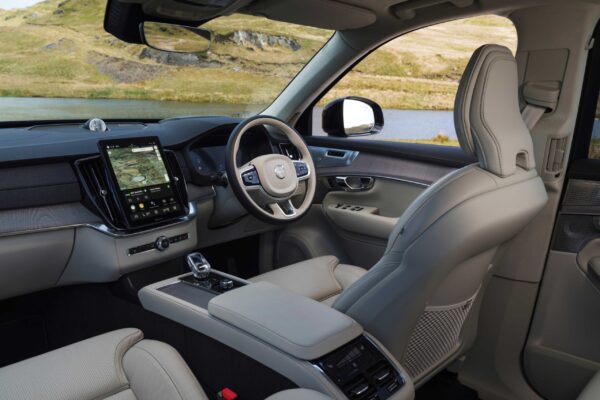
It’s also the sort of car that will leave you with a sense of fear and trepidation when it comes to parking it in supermarkets. Sure, the camera system is excellent, and visibility is decent, but it’s huge.
It also has quite firm ride on the Ultra’s 22″ wheels. And, I know this from bitter experience, its low-profile tyres are quite vulnerable to potholes.
The smaller rims will make for a far more comfortable journey, and the lesser variants really do have plenty of standard bits thrown in anyway.
Overall, the XC90 remains an example of a tried-and-tested template going through the evolutionary motions in the best way possible.
Volvo has improved its seven-seat SUV with every iteration, and it’s now as good as it’s ever been. And that’s saying something.