One of Britain’s most familiar household objects began its life in Brighton.
In 1966, the classified section of the Brighton telephone directory became the first UK Yellow Pages. For decades afterwards, the thick yellow book became part of the furniture in homes across the country.
If you needed a plumber, decorator, roofer or electrician, you knew where to look.
There was something wonderfully straightforward about it. Find the right heading, run a finger down a column of names and telephone numbers, perhaps circle two or three with a biro, and start ringing.
By the time the final printed Yellow Pages was delivered in Brighton in 2019, the way we searched for local businesses had changed almost beyond recognition
The book had disappeared.
The question behind it had not.
Who around here can do this job?
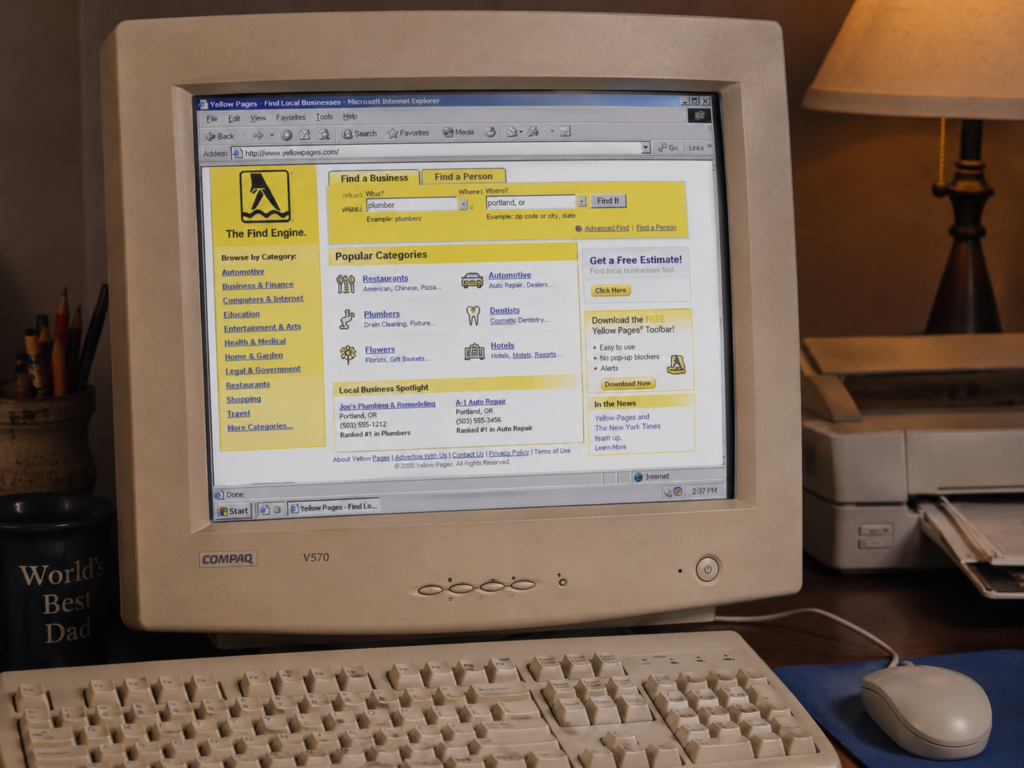
When finding the information was the difficult part
The Yellow Pages was never the only way Sussex found its tradespeople.
There were recommendations from neighbours and relatives. Small adverts appeared in local newspapers. Business cards were kept in drawers. Telephone numbers were written on scraps of paper and pinned near the phone. Later came fridge magnets, leaflets through the door and increasingly elaborate lettering on the sides of vans.
If somebody did good work, their name travelled.
For many tradespeople, that local reputation was every bit as important as an advert.
The Yellow Pages simply put a huge number of businesses into one place where people knew to look for them.
What it could tell you was limited.
A larger advert might include a list of services, perhaps an address and a memorable slogan. A smaller entry might amount to little more than a name and telephone number.
After that, you called.
The conversation did much of the work that we now expect the internet to do before anyone speaks.
You asked whether the business covered your area. You explained the job. You found out whether it was the sort of work they took on.
Today, a homeowner may do all of that without making a single telephone call.
We went from too little information to almost too much
This is perhaps the biggest change.
The old Yellow Pages solved a shortage of information.
The internet has created the opposite problem.
Someone looking for a local tradesperson today can be presented with websites, directories, map listings, social media pages, reviews, photographs, adverts and business profiles before they have even decided whom to contact.
Twenty-five years ago the question might have been: where do I find a decorator?
Now it can be: which of these decorators actually does the kind of work I need, covers my area and is worth contacting?
That is a very different problem.
More information is useful, of course.
You can often see photographs of previous work. A business can explain exactly what it does. Working areas can be shown. Questions can be answered before an enquiry is sent.
But more information does not automatically make the decision easier.
Anyone who has disappeared down an internet rabbit hole comparing ten apparently similar businesses will know that.
There is a balance somewhere between the old simplicity of a telephone number in a yellow book and today’s almost unlimited choice.
People do not necessarily want hundreds of businesses.
They want a sensible way to find a few that are relevant.
A tradesperson still has to get in the van
I have spent around 20 years working as a painter and decorator in Sussex, so I have worked through a fair portion of this change.
The way customers find tradespeople has altered enormously.
The physical reality of the job has not.
However sophisticated the search becomes, somebody still has to travel to the property, look at the work and carry it out.
A bedroom cannot be painted remotely because the decorator has an impressive website.
A roof does not become easier to repair because the roofer appears in more search results.
That is why local information still matters.
A business being somewhere in Sussex does not necessarily mean it works everywhere in Sussex. Different trades have different working areas, and even the same business may travel further for one type of project than another.
That was true in the Yellow Pages era and it remains true now.
The difference is that today there is no reason for that information to be difficult to discover.
The same applies to the work itself.
A few lines in a directory could tell you that somebody was a painter and decorator.
A modern business profile can explain whether they mainly undertake interior decorating, exterior work, larger refurbishments or something more specialised. It can show photographs and make the areas covered clear before the first enquiry is sent.
For someone in a trade, that can be useful too.
There is little benefit in receiving an enquiry for work you do not carry out or in a place you do not travel to.
The technology is most helpful when it gets the basic details right.
Word of mouth didn’t vanish when search went online
It is tempting to imagine that internet search replaced the old local way of finding somebody.
I do not think it did.
A recommendation still carries weight.
A neighbour still asks who did the decorating next door. Tradespeople still recommend other trades they know. People still notice vans working regularly in their area and remember business names.
What has changed is what happens next.
Someone says, “Try this builder.”
Twenty years ago, the next step might have been picking up the telephone.
Now it is quite likely to be typing the name into a phone.
The homeowner may look for a website, check photographs, see whether the business works locally and find out a little more before making contact.
In that sense, the internet has not killed word of mouth.
It has given word of mouth a second stage.
The recommendation gets somebody onto the shortlist. What they find afterwards helps them decide whether to make contact.
That places a new responsibility on small businesses as well.
Being good at a trade and being good at presenting that trade online are two completely different skills.
A very capable plumber, decorator or carpenter may have no interest whatsoever in building websites, understanding search engines or spending evenings writing posts for social media.
Yet increasingly, being visible online is part of being found at all.
A modern version of an old idea
Building TradeKind has made me think quite a lot about how little the basic problem has changed.
A homeowner still needs somebody who does the right kind of work and is willing to travel to their part of Sussex.
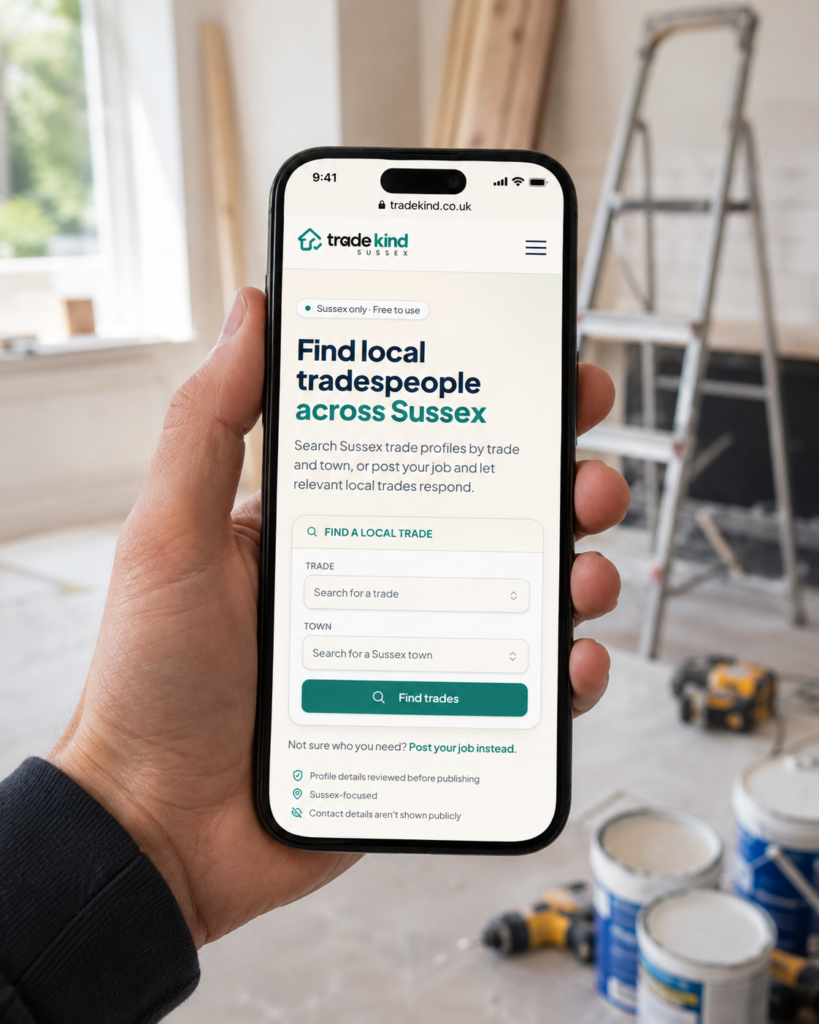
A tradesperson still wants to be found by people looking for the work they actually do.
What has changed is the amount of useful information we can put between those two things.
TradeKind is a Sussex-focused platform where local businesses can show the services they offer, the areas they cover and examples of their work, while homeowners can browse businesses, approach one directly or post details of a job.
For tradespeople, joining is currently free, with no subscription, lead charge or commission.
There are plenty of sophisticated ways to describe an online marketplace.
But stripped back, the idea is surprisingly old-fashioned.
Put useful local businesses somewhere local people can find them.
The Yellow Pages did that with paper, alphabetical headings and telephone numbers.
Today we can add photographs, service areas, detailed profiles and online enquiries.
The mechanism is different. The purpose is remarkably familiar.
What should we keep from the old way?
It is easy to look back nostalgically at the Yellow Pages, particularly now that we no longer have to find somewhere to store one.
But the old system had obvious limitations.
You could not update a printed advert because you had started offering a new service.
You could not change your working area instantly.
You could not scroll through photographs of somebody’s work.
And if you wanted to contact several businesses, you generally had to start making calls.
The modern way is more flexible.
But there are qualities from the older local system that are worth keeping.
Knowing where a business actually works matters.
Reputation matters.
Clear information matters.
And there is still value in making it easy for a local business to be found without requiring the person running it to become a full-time marketer as well as a tradesperson.
Technology should make those things easier, not bury them underneath more noise.
That is probably where the next stage of local search becomes interesting.
We have already solved the problem of having too little information.
Perhaps the challenge now is helping people find the useful information without making them wade through everything else.
From the Brighton directory to the phone in your pocket
There is something fitting about the Yellow Pages story beginning and ending, in print at least, in Brighton.
In 1966, gathering classified businesses together in one recognisable section gave people a practical new way to find local help.
By 2019, the printed book had become unnecessary because most of us were carrying something far more powerful in our pockets.
Yet many of the headings from that first directory would still look perfectly ordinary today.
Plumbers.
Electricians.
Builders.
Decorators.
Roofers.
The trades have not changed nearly as quickly as the way we search for them.
Nearly sixty years after Brighton’s first Yellow Pages, we can compare businesses, look at their work, check where they operate and make contact without leaving the sofa.
But underneath all that technology is the same very human, very local question people were asking when they opened that yellow directory:
Who around here can do this job?
In 1966, the answer might have begun with a heavy book beside the telephone.
In 2026, it is more likely to begin with the phone itself.
Different method. Same question.



That’s a really interesting connection to Brighton. It makes you think about how local businesses have adapted over the years.