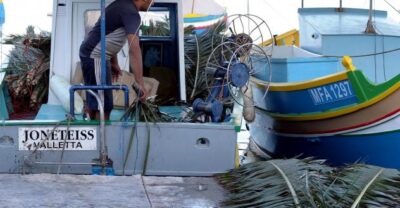
When summer looming, this is a signal for Malta and Gozo’s fishing community to gear up for the season which annually lasts to October. The valuable target is the lampuka fish, a highly popular, relatively inexpensive and staple food provision for Maltese kitchens.
However, the abundance of former years is under close scrutiny as changing climatic conditions and over-fishing threaten the presence of this fascinating fish in Maltese waters.
The lampuka is the Maltese name for the Yellow Fin Dorado, also known as the Mahi-Mahi in the Pacific region. It is traditionally abundant in Malta’s territorial waters but also concentrated in the Pacific and around Australia where it can grow to enormous and almost monstrous lengths and weights.
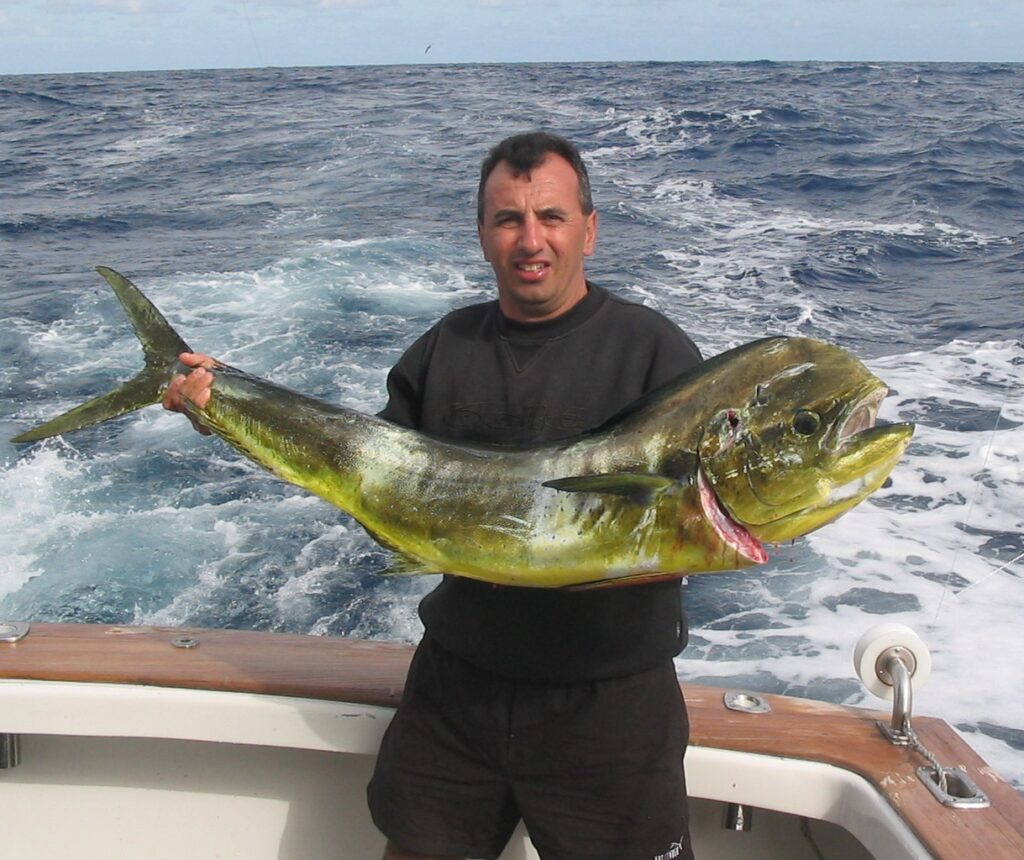
It is by no means a delicacy but has many advantages being fleshy, not intensively bony and can be cooked in each and every way whether fried, grilled, poached, made into fish cakes, used as a basic ingredient for Mediterranean Fish Soup or blended with fresh spinach in crusty pies.
The early season catches of young lampuki are ideal for deep pan frying but it can later grow to larger lengths and becomes rather “woody” but suitable for fish cakes and pies.
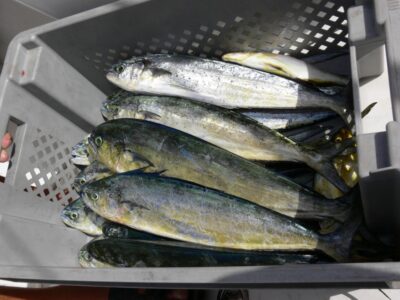
Malta’s fishing communities are located mostly in the south of the island, Marsaxlokk being the principle village, followed closely by Zurrieq and Marsascala with the Gozitan fleet being located mostly in the north at Marsalforn and Xlendi.
The beginning of the fishing season is active and highly concentrated and the season is launched by the traditional blessing of the fleet by the local parish priest, a must for the superstitious fishing folk.
The lampuka is a surface fish. The method used by local fishermen is unique and harks back to Roman times. In late June and early July fishermen cut and gather the larger, lower fronds from palm trees and weave them into large flat rafts, providing the surface cool that a lampuki school favours particularly around mid-day to avoid the scorching sun.
The fishermen stand off the rafts but within ten metres of them and after surrounding the school with an enormous drag net, they begin to surround the school dragging a baited silicone squid jig line.
When a lampuka is hooked it will be dragged alongside the boat. As the school swarms to surround the lure a large mesh net called a “kannizzata” is thrown over the teeming fish and hauled in.
Competition amongst the fishermen is fierce and cut-throat and in some cases erupts into violence despite the fact that an allocation system has been used for the last 100 years whereby sectors are plotted and drawn by lots. Encroachment is not unusual, including that of local amateur fishermen who are often warned off with a rifle volley.
In the past, Tunisian and Sicilian fishermen ignored the lampuka as being non-worthy but with the increasing scarcity of fish throughout the Mediterranean Sea, they have now also turned their attention to the fish and armed Maltese patrol boats frequently clamp down on foreign encroachment, hauling offending boats back to Valletta with the Courts imposing heavy fines.
Since 2005 annual catches have been dwindling alarmingly for various reasons, greatly decreasing local availability and steadily pushing up prices. There have also been technique changes, primarily the use of synthetic palm fronds as the red palm weevil disease has had a devastating effect on palm trees and shrubs.
The lampuka’s kitchen friendly attributes are a major part of its attraction. It is easy to clean and has no scales and can also be filleted easily. The early catches – when the lampuka is about a foot long – make the ideal frying dish.
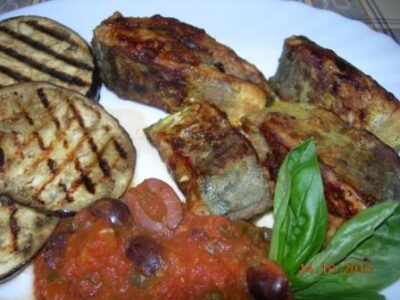
Its head is detached as well as the tail (these used to make ideal fish soup), and it is halved, rolled in flour or semolina and then deep fried. The pieces are served topped by a light tomato salsa flavoured with garlic, capers and olives and garnished with lemon juice and fresh bay leaves. Accompanying French fries are a must.
When it grows it is again beheaded and tailed, sliced into three inch pieces which are then lightly boiled. When the pieces have cooled they are carefully filleted and mashed with pepper and salt garnishing and blended with boiled fresh spinach, garlic and sliced olives. The mash is placed in short pastry (one recipe includes the pastry being blended with red wine) and then baked as a pie.
This is my favourite use of lampuka.
When the fish is at middle growth (two feet) I behead/tail and lightly poach or steam the three inch pieces, using the liquid for fish soup.
When the pieces cool these are finely filleted, placed in strips in a dish and liberally garnished with olive oil, garlic, fresh mint, pepper and salt and lemon juice and a sprinkling of white wine.
Before being served these are lightly grilled and served with French fries and broccoli or boiled courgettes and lashings of fresh Maltese bread…and of course a glass or two (or maybe three!) of cool white wine…and finally topped off with a welcome siesta if it’s a lunch.
ALBERT FENECH


It’s interesting to hear about the tradition around lampuki. I’ve always found it quite simple to prepare and still delicious.