Taiwan to many echoes the words Taipei, temples, dragons, technology and, dare we say, China. Think dragon boat races, rich resources and a growing reputation for technological supremacy — not to mention its status as the global capital of semiconductors, manufacturing the chips that power computers and bikes worldwide. No wonder China wants it back, as the many media stories remind us. For now, it remains a peaceful standoff.
Taiwan has had a chequered history and has proved itself to be remarkably resilient. Its past has included Spanish, Dutch, Japanese and Chinese domination, and lessons in resilience have been hard won. The country has suffered devastating earthquakes. In 1999, 2,415 lives were lost and in 2003 the SARS outbreak caused further sadness. But today it is a prosperous, forward-looking country and success stories such as Ang Lee, the two-time Academy Award-winning director behind Crouching Tiger Hidden Dragon, Brokeback Mountain and The Life of Pi. It’s a country of free expression and a layered history with roots shaped by an indigenous culture where temples burn huge coils of incense, solemn yet deeply meaningful, tea plantations, steaming soups, food adventures meandering around street food stalls, every bite an experience, bubble tea and those hard-to-resist scallion pancakes.
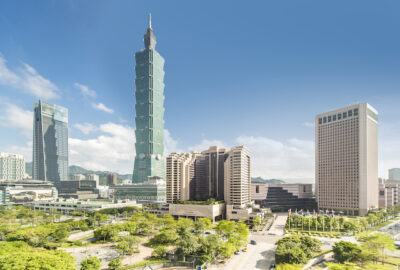
Taipei is the capital, dominated by its iconic skyscraper, Taipei 101. You can visit the 89th-floor observatory for 360-degree views. Until 2010, this skyscraper was the tallest building in the world, before being surpassed by the Burj Khalifa in Dubai. It remains an impressive sight with its distinctive bamboo-inspired shape. The elevator is said to be among the fastest in the world, reaching the observation deck in just 37 seconds.
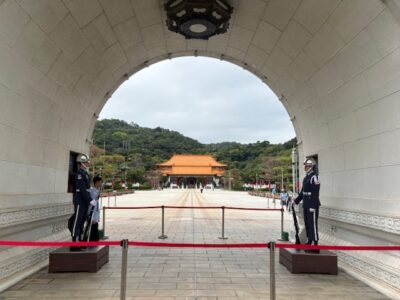
Liberty Square is framed by a massive gate on one side and the Chiang Kai-shek Memorial Hall on the other where a grand monument sits within beautiful gardens. There is an hourly guard-changing ceremony, a spectacle worth pausing for as the guards march in precise step, immaculate in their uniforms. A walk through the gate leads to the 228 Peace Memorial Park, its name referring to an incident on 28th February 1947, when Chiang Kai-shek’s KMT party violently suppressed protests by the local population against a corrupt government, sparking further unrest across Taiwan. The park itself has existed since 1908 and offers a peaceful escape from the city bustle. For a step further back in history, stroll along Dihua Street, the oldest street in Taipei. Built in the 17th century during the period of Dutch colonisation, it later became the city’s main commercial centre in the 19th century.
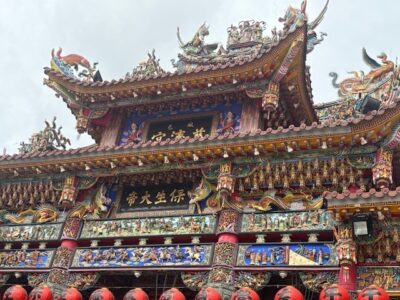
There are more than 15,000 official temples in Taiwan, but the most famous and impressive is considered to be Longshan Temple. One of the oldest in the country, it dates back to the 18th century. It has been lovingly restored and holds the honour of a UNESCO Asia-Pacific Heritage Award.
The National Palace Museum houses one of the world’s largest collections of Chinese art and artefacts. Leave plenty of time to explore the many floors displaying ancient porcelain, furniture, armour and jewellery. One of the most celebrated pieces is a jade carving of a Chinese cabbage, modest in size, extraordinary in craft. The museum is located just outside the city centre.
Where to Stay: Grand Hyatt Taipei
There are many reasons to choose this Grande Dame of Taipei. At 36 years old, it accommodates history and elegance. It looks out onto a green area, part of a complex owned by the Government, with City Hall nearby and a dedicated Sky Way linking it directly to Taipei 101, one of the main city attractions. Its location, adjacent to the Taipei World Trade Centre, makes it ideal for both business and leisure travellers, with easy access to the New Taipei shopping and entertainment district.
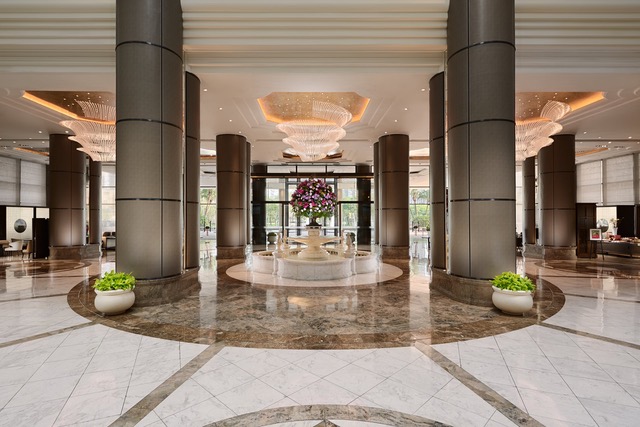
The Grand Hyatt Taipei is the archetypal Far East megahotel and was the first international five-star hotel in Taiwan. With a harmonious blend of ancient and modern architecture, luxury furnishes each of its 850 rooms and event spaces, attracting international guests who enjoy an impressive choice of restaurants. The lobby is stunning, and its retail shops include specially selected items from the National Palace Museum. There is a wide choice including two Chinese restaurants, two Western, Japanese, a vegetable buffet, and Ziga Zaga, an Italian restaurant that was once a nightclub. Bel Air, the steakhouse, is renowned for its dry-aged steak. Buffets are enormously popular, featuring Taiwanese specialities such as braised pork and beef noodle soup, ramen and udon noodles. The fitness and spa are an oasis in itself, with an outdoor heated pool. The fitness facilities are impressively large and attractively laid out, with separate aerobics, weights and cardio rooms, open 24 hours.
Out of the City
Away from Taipei, there are charming towns, villages and traditions to explore. I joined a small day tour organised by Edison Tours to visit Yehliu, Jiufen and Pingxi. We set off in a comfortable but characterful bus with fringed curtains and with a guide admirably strict on safety procedures.
Jiufen Village is a charming former gold-mining town of narrow hidden alleyways, teahouses and ocean views. Set on the hillside of Ruifang District in New Taipei City, it flourished in the 1940s thanks to the gold mining industry before falling into years of disrepair. The film A City of Sadness, directed by Hou Hsiao-Hsien, was filmed here, and its success brought a new wave of visitors, making Jiufen the most popular destination in north eastern Taiwan. We drove to the seaside district of Tamsui, renowned for its historic buildings and sunset views at Fisherman’s Wharf, and to Shifen Waterfall, widely known as the Little Niagara Falls of Taiwan, with numerous viewing platforms to capture the scene from every angle. A highlight of the day was Shifen Old Street where sky lanterns are launched along the railway track. It’s big business and a crowded affair, but full of excitement, family togetherness and colour. Shifen Station, originally built to transport coal during Japanese colonisation, stands today as a quiet reminder of Taiwan’s history while the streets around are lined with souvenir shops, lantern sellers and eateries.
One of the premier attractions on the northern coast is Yehliu Geopark, home to extraordinary rock formations sculpted by wind and sea creating mushroom rock, chessboard rock and trace fossils among them. The most famous is the iconic Queen’s Head, a mushroom rock bearing a striking resemblance to the profile of a regal figure in profile. Other formations include the Sea Candles, the Fairy Shoe, the Ginger Rocks, the Elephant Rock, the Ice Cream Rock, the Kissing Rock and the Princess’ Head.
Taiwan is a destination that surprises, charms and stays with you. I highly recommend it.
Grand Hyatt Taipei: www.grandhyatttaipei.com
Day tours in and around Taipei: Edison Tours — edisontours.com


