Across Kent and Sussex, some of the most compelling places to visit are not landmarks in the traditional sense, but pubs that have been in continuous use for centuries. Many began as inns, built for travellers moving between London, the coast and religious sites. What makes them worth seeing is not just their age, but how much of that past still shapes the experience of being inside them.
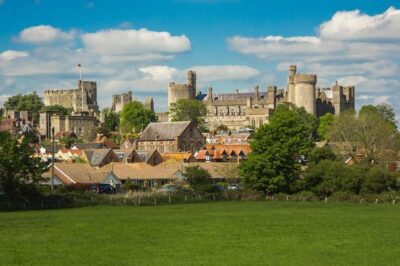
Dating to 1348, Ye Olde Yew Tree Inn is often described as the oldest pub in Kent. Set in the village of Westbere near Canterbury, it carries the kind of quiet presence that comes with long use rather than restoration. Inside, the building shows its age through low ceilings, exposed beams and uneven floors. Over time, it has gathered a mix of historical associations. Queen Anne is said to have stayed here, along with the Archbishop of Canterbury, placing it within older networks of royal and religious travel. There are also stories linking the inn to the highwayman Dick Turpin, who is said to have hidden here while evading capture. During the English Civil War, the building reportedly served as a hospital for wounded soldiers. Whether each detail can be confirmed or not, the accumulation of stories contributes to a sense that the inn has been part of many different moments in English history.
The King’s Head sits along Rochester’s historic high street, an area that has long functioned as a stopping point along the River Medway. Inns like this developed to serve travellers moving through the town, and that role still shapes how the space feels today.
The layout is more segmented than a modern pub, with smaller rooms that encourage people to settle in. It feels tied to the rhythm of the street outside, where older buildings create a consistent sense of place. Rather than standing out as a single destination, it works as part of the wider experience of being in Rochester.
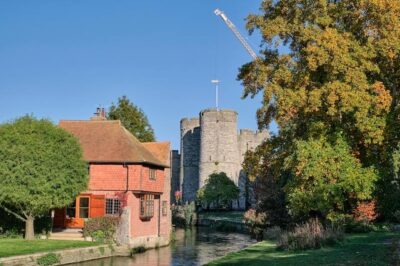
The George & Dragon in Westerham dates back to around 1420 and began as a coaching inn. Beyond wining and dining, The George & Dragon still functions as an inn if you’re looking for a place to stay with history and charm. Its location reflects older travel routes, where regular stops were necessary for long journeys. The building has been maintained over time but still reflects its original structure. There is a sense of continuity in how it operates. It has adapted, but it has not been reshaped into something entirely different. Westerham itself is quieter than larger historic towns, which gives the inn a slower, more grounded atmosphere.
The Mermaid Inn is one of the most well-known historic inns in Sussex. Located in the medieval town of Rye, it features cellars dating back to around 1156, with the main structure rebuilt in 1420 after a French raid had destroyed much of the town. The interior is defined by heavy wooden beams and enclosed spaces that feel shaped by centuries of use. The giant’s fireplace bar is a focal point, and the inn is often associated with 18th-century smugglers, particularly the Hawkhurst Gang. Stories of hidden passageways add to that reputation, though they are difficult to verify. Rye itself reinforces the experience. The narrow streets and preserved buildings make the inn feel like part of a larger historical setting rather than an isolated site.
The George Inn has been operating since at least 1397 and sits in the village of Alfriston along the South Downs Way. Its structure remains largely intact, with timber framing and low ceilings that reflect its early construction. It feels like a place that has continued in use rather than one that has been restored for effect. The surrounding village, with its small scale and slower pace, adds to that sense of continuity.
Originally built in 1345 as a religious hostel, The Star served monks and pilgrims travelling between Battle Abbey and Chichester Cathedral. That origin still shapes how the building functions. The bar opens directly onto the street, with additional spaces arranged around a central courtyard. While it now operates as a hotel as well as a pub, the layout still reflects its original purpose as a place for rest and gathering. Its location near the South Downs makes it a natural stopping point for those walking through the area.
Folk Stories and Legends of Kent and Sussex
Alongside their historic pubs, Kent and Sussex are shaped by stories that are tied to specific places. These are not always written down in a single version. They shift over time, passed along through local tradition. Some draw from real events, while others lean fully into the supernatural.
Pluckley is widely described as one of the most haunted villages in England. Its reputation comes from the number of ghost stories associated with it rather than a single defining legend. Reports include sightings of figures along quiet country lanes, unexplained presences in older buildings and recurring encounters in the same locations. Over time, these accounts have built on one another, creating a broader identity for the village. What makes Pluckley notable is the contrast between its appearance and its reputation. It looks like a typical rural village, which makes the persistence of these stories more striking.
The Kent coastline has long been associated with smuggling. In the medieval period, this often involved wool, which was heavily taxed. Later, the focus shifted to goods like brandy and tobacco. Smugglers operated in groups, moving goods across beaches and marshland at night. They relied on signals, coded names and local knowledge. Communities sometimes supported them, whether out of necessity or shared interest. Over time, these figures have been reimagined in a more favorable light. Stories tend to emphasize their resourcefulness and independence, turning them into part of the region’s identity rather than simply its criminal past.

Dering Woods, located near Pluckley, are often referred to as the Screaming Woods. The name comes from repeated reports of strange sounds, including screams, footsteps and voices, particularly in foggy conditions. Some stories suggest the woods are haunted by those who became lost within them. Others mention specific figures, including an 18th-century officer and a captured highwayman. Visitors sometimes describe a strong sense of unease, even during the day. The woods also contain ancient sites dating back thousands of years, which adds another layer to their reputation. The combination of deep history and ongoing stories gives the area a distinct presence.
In Sussex, one of the most well-known legends is that of the knucker dragon. Said to live in deep pools known as knucker holes, the creature is most closely associated with Lyminster. According to the story, the dragon would emerge from the water and threaten nearby villagers. A local man, often named Jim Puttock, is said to have killed it, in some versions by feeding it a poisoned pie. In others, he confronts it directly. The details change depending on the version, but the setting remains consistent. The pool itself anchors the story in a specific place.
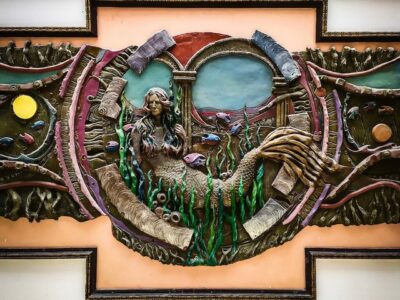
The Mermaid of Rye is a quieter story, but one that remains part of the town’s identity. A mermaid is said to have been washed ashore and been helped by local residents. In return, she promised to protect the town. Later sightings describe figures in the water at night, particularly under calm conditions. The story reflects a common theme in coastal folklore, where the sea is seen as both protective and unpredictable.
Devil’s Dyke is a large valley in the South Downs and its scale led to early explanations rooted in myth. The most common version of the story claims the Devil dug the valley in an attempt to flood nearby settlements. Some variations add that he is buried within the landscape, or that certain actions can summon him. While the valley was formed during the last Ice Age, the legend remains closely tied to how people experience the space.


