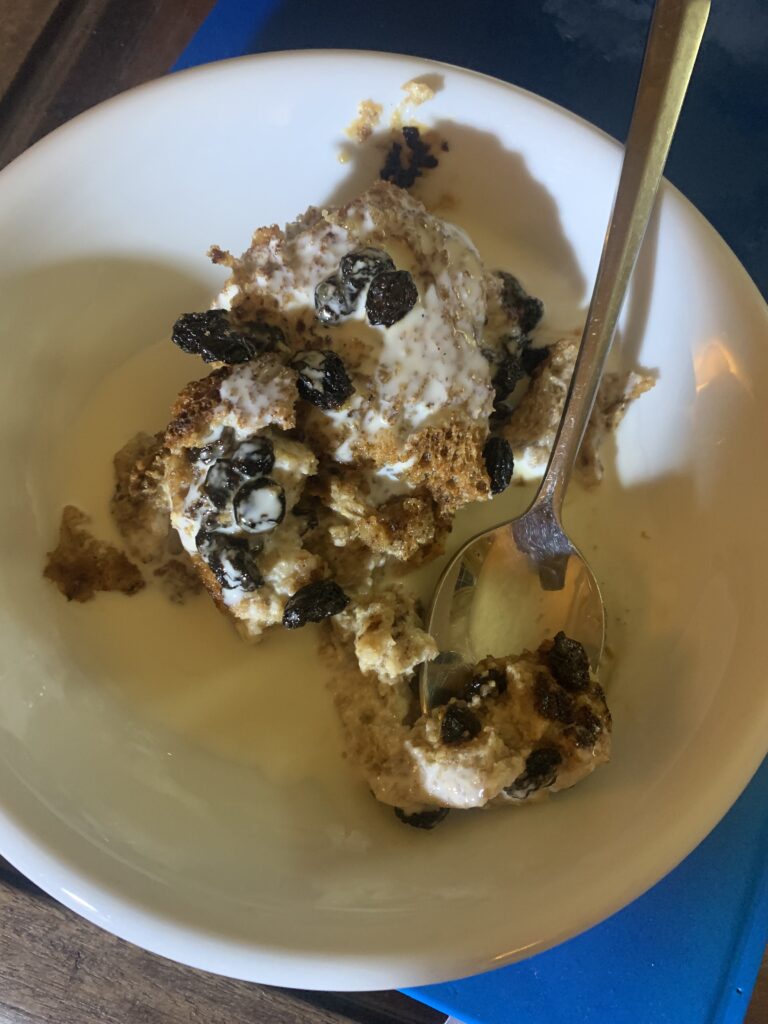
Talk about historic, I thought this desert probably originated out of necessity during one of the wars, but I discovered it’s from far, far earlier. We have the thriftiness of 11th Century English cooks to thank for this filling and easily made dish that’s the epitome of the phrase ‘waste-not, want-not.’ It’s blinking tasty, adaptable and very filling. I suggest every university student should leave home with this recipe tucked in a pocket.
The following amounts provide enough for 4-6 people but are easily halved if there are only two of you.
Ingredients:
25g butter
8 slices bread
(remove crusts if desired, use white or brown or even rolls – stale works better than fresh)
50g sultanas
2 tsp cinnamon powder
350ml full fat milk
50ml double cream/blue Elmlea
2 eggs
1 tsp nutmeg (optional)
Vanilla essence or vanilla pod (optional)
25g sugar (preferably brown)
Method:
Preheat the oven to 180C/160C Fan/Gas 4.
Grease an ovenproof dish about 10” x 10” with a little of the butter.
Butter each slice of bread on one side, then cut into triangles.
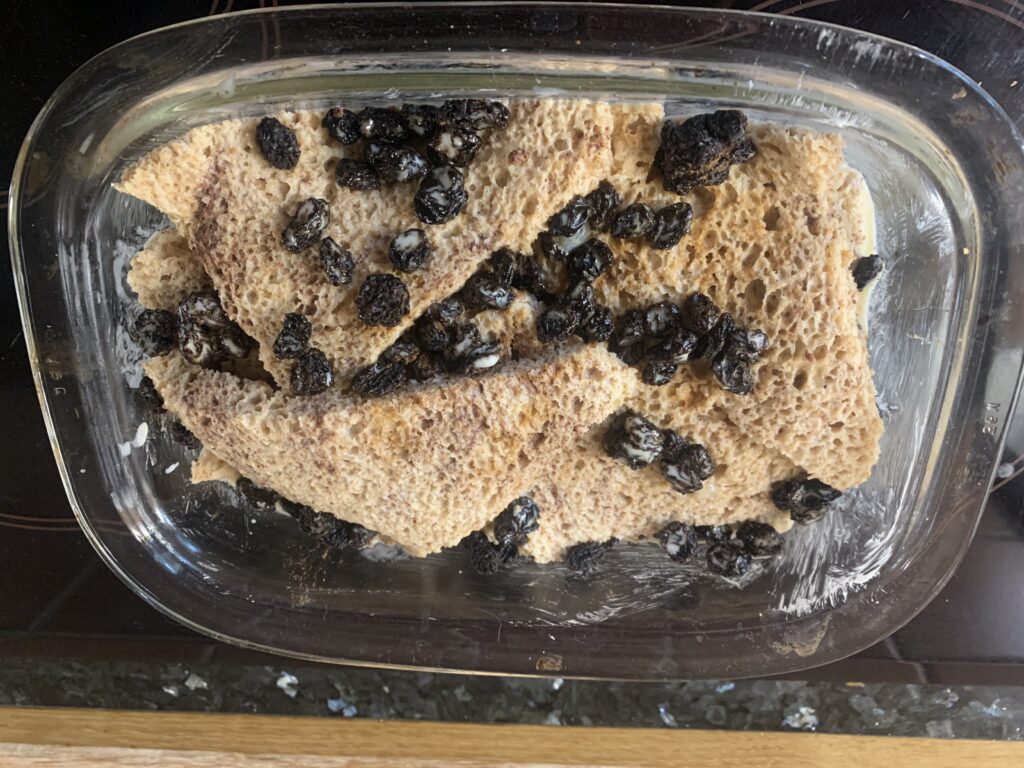
Layer the bread slices, butter-side up, with sultanas and a dusting of cinnamon. Continue layering until all the bread and fruit is used.
Heat the milk and cream slowly in a saucepan over a medium heat taking care not to let the mixture boil. Add 5 drops of vanilla essence or the contents of a vanilla pod, if desired.
Break the eggs – yoks and whites – into a jug or bowl, add approximately 20g of the sugar and whisk thoroughly without over-frothing. Gently stir in the warmed milk mixture.
Pour the resulting mixture over the bread layers, sprinkle with the nutmeg, if desired, and the remaining sugar and let stand for up to 30 minutes to allow the bread to soak up the liquid.
Bake for 30–40 minutes until the liquid has set. The top should be golden brown. Be careful not to allow it to burn.
Best served warm with custard, cream or even hot with ice-cream melting over the top.


That’s fascinating about its origins! It makes perfect sense that something like this would develop during times of limited resources.