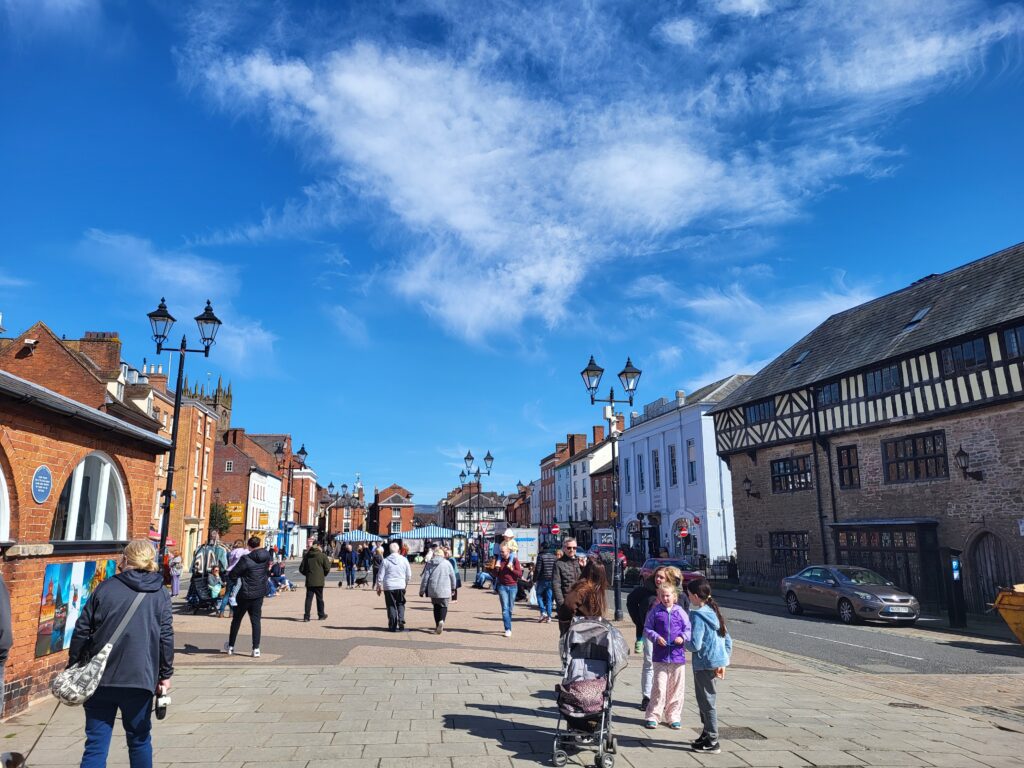
Bright sunshine and beaming blooms at the weekend were clear indications of Spring having arrived and whilst I did feel very tempted to get on with a multitude of gardening jobs, I opted to take advantage of the fine weather and visit the pretty town of Ludlow which is steeped in history. The late, great poet laureate John Betjeman called Ludlow “probably the loveliest town in England.” Indeed, Betjeman had sound judgment for this Shropshire market town is not only steeped in history, but has a variety of independent shops, restaurants and pubs. Whilst it has not managed to resist the influx of supermarkets, chain coffee shops and like so many small towns it has lost its banks, it has still managed to retain its period charm and sense of independence.
Being a Bank Holiday, the town was busy, so after finding a coveted parking bay I was feeling rather exhilarated. My children and I had a potter through quality square which is now a courtyard mainly accommodating restaurants and coffee houses. As you enter Quality Square, two rather grand townhouses greet you on the right-hand side, these buildings were once part of the townhouse of Charles Foxe, a local MP and Secretary of the Council of the Marches. Built in 1590, it is one of the earliest structures entirely made of brick. The novelty of an all-brick building attracted many visitors who admired the craftsmanship of the brick-built town house and deemed it “work of quality.” The appreciation of the property and its build quality led to the courtyard being named Quality Square.
It is easy to recognise that the square you stand in that is now home to a collection of hospitality business frontages was once Charles Foxes’ courtyard, but it would be easy to mistake the black paving stones beneath your feet as cobbles, but they are actually called setts, which differ from paving stones by their square cut design. The setts are made from a black stone, called Dhu, which was mined from Clee Hills, which lie to the east of the town.
Turning left out of Quality Square we meandered through the market and perused the stalls selling Bric à Brac, preserves, Shropshire China, Crystals and all sorts of other wares. The market square which was bustling is a few yards away from the castle which I had originally intended to make our destination, but enroute I spotted a guided tour and so hurriedly parted with a five-pound note and joined the guided tour of historic Ludlow. Sadly, my grand plans for exploring the town with a tour guide were very short lived, whilst listening to the first five minutes of the talk in the square, my five-year-old managed to mysteriously lose his shoe! Much wailing and complaining commenced as my little boy bemoaned his missing shoe, reluctantly leaving the tour, I proceeded to search for the shoe before finding it stranded in a nearby tree. With the shoe retrieved and firmly secured back on my son’s foot we decided to explore the church.
The name Ludlow means town on a hill by running water. The town is drenched in history and boasts 502 listed buildings. The town has enjoyed four main periods of wealth and prosperity. The first period of wealth was based around the castle and the church, alongside the wool trade.
The second period of wealth for the town of Ludlow was when it gained political status thanks to Ludlow being established as the Capital of the Marshes and Ludlow Castle being the home of Prince Edward, the future king Edward V, who is famously, but also tragically known as one of ‘the Princes in the Tower’.
Ludlow has been described as the perfect Medieval town. Between 1066 and 1190 a hundred new towns were created in England and Wales, and Ludlow was one of them. Having built the castle around 1090, the de Lacys laid out the town on a grid pattern that linked of Ludlow was created to provide services to the castle with the ancient road running along Old Street and Corve Street. It was recognised by those planning the town that there was profit to be had from setting up a market and by the mid-12th century Ludlow was centred on the high street and the large market place that had developed outside the castle’s gates. By the end of the century Corve Street and Old Street had been built up. Mill street and Broad Street Followed.
In the 14th and 15th centuries the town prospered, being a hub for shoemakers, drapers, butchers, tailors, bakers and metal workers.
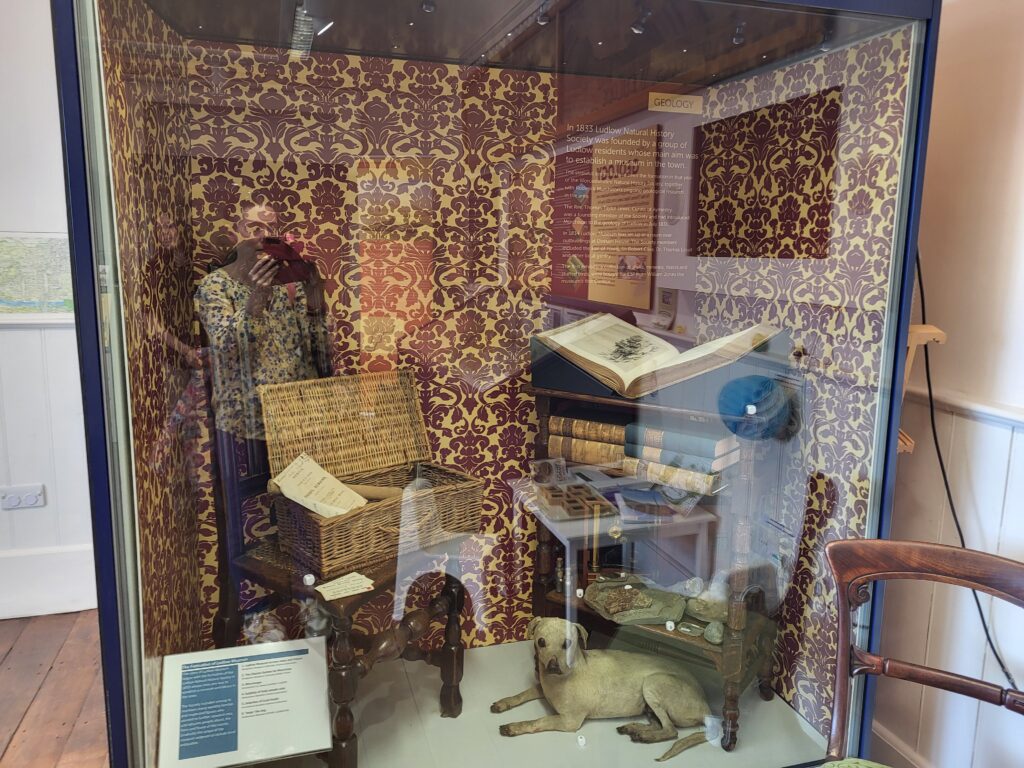
The third period of prosperity for Ludlow was the 18th century when it was established as a tourist town, with beautiful walks, dance halls, assembly rooms and theatres. However, by the 19th century the town was in decline. Ludlow became run down and a little-known area.
By the 1970’s it began to enjoy a revival as a tourist destination and popular retiree destination. The 1990’s saw Ludlow being heralded as a food heaven and it garnered national media attention as being foodie paradise. I do recall visiting Ludlow in the late 1990’s and following the foodie trail great pub grub, Michelin starred restaurants and fabulous local producers. I was saddened to learn that one of my favourite tearooms and bakery of all time De Gray’s is no more. De Greys was an institution on the Borders; it’s beautiful premises with uniformed staff and impeccable service allowed you to indulge in the very best of afternoon teas whilst feeling as if you were stepping into the set of Poirot. Everything from cakes, scones and bread were baked on the premises and it was a time warp that had remained unchanged for a century. Today, it’s timbered frontage on Broad Street dating from 1570 looks rather sad. The economic climate was blamed for the demise of De Gray’s in 2014 and after a takeover by the Wildwood Group it was agreed the name of the restaurant would remain, but in 2016 De Gray’s vanished as the black and gold sign of De Gray’s was removed and a piece of Ludlow’s history was lost. This is most certainly a loss for locals and tourists alike.
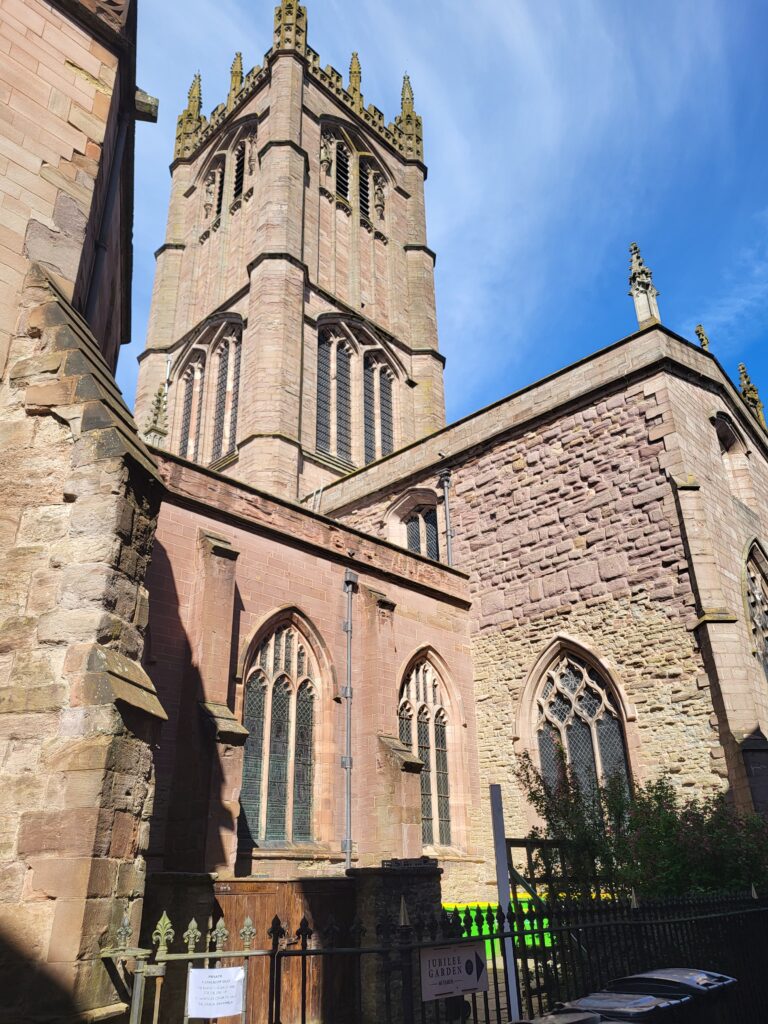
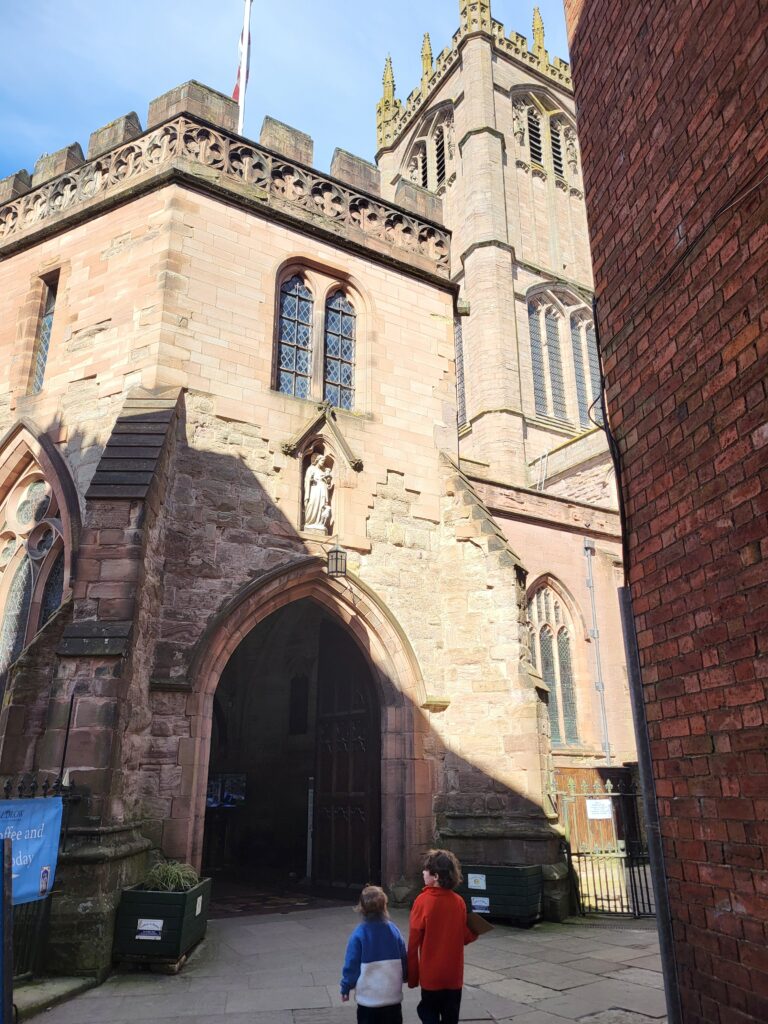
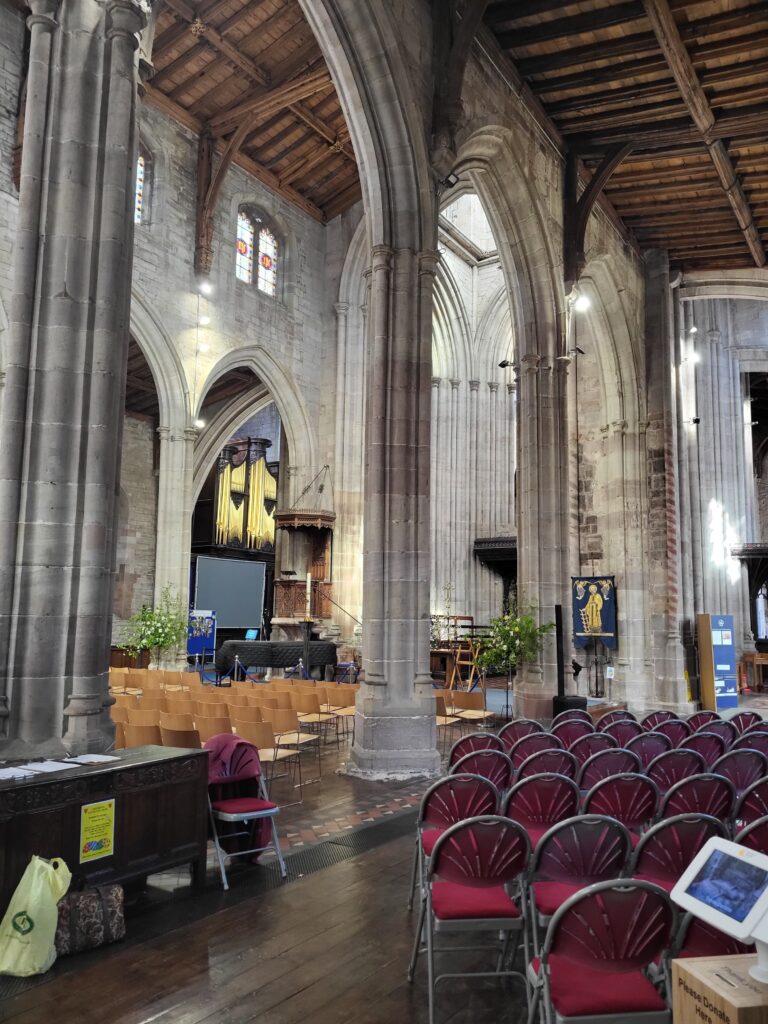
At the end of my Ludlow visit visited St Laurence’s Church where I climbed the 200 narrow circular stone stairs of the church tower. This was certainly a worthwhile climb, but not one to attempt after a hearty lunch! St Laurence’s is one of only a handful of five-star churches listed in Simon Jenkin’s well-known work, England’s Thousand Best Churches. St. Laurence’s is well worthy of its standing as “the cathedral of the Marches.” It is a magnificent structure and the views from the top of its domineering tower spread in every direction across the farmland, forest and orchards. The view of the town and castle from this vantage are truly breathtaking and thankfully the descent is far easier than the climb.
So if you love history, good food and drink, then Ludlow is well worth a visit.


Absolutely, I’ve been meaning to visit Ludlow! The gardens sound lovely, I’m definitely feeling the urge to get my hands dirty myself.