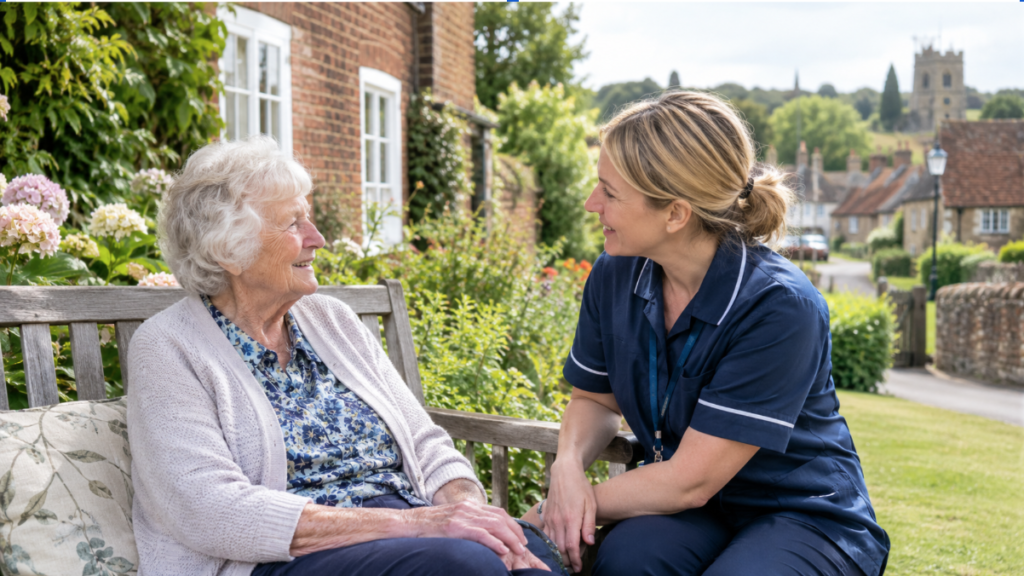
For many families in Sussex, the hardest part of the conversation is not care at all. It is place. A parent who has spent sixty years between the Downs and the sea has a life stitched into a postcode, from the butcher who knows the order to the bench with the best view of the water. So when families begin looking at care homes in East Sussex or care homes in West Sussex, the question underneath the search is rarely a clinical one. It is whether your loved one can keep the county, the coast and the routines that come with them. The reassuring part is that staying local is usually possible, and it matters a great deal more than most families expect it to.
Why the Search Usually Starts
The search tends to begin with a pattern rather than a single moment. Meals get skipped more often than they used to. The stairs take longer to climb. A short spell in hospital leaves confidence a little shaken, and the house that felt manageable in spring feels far too big by November. Winter on the Sussex coast has its own effect, when icy pavements and early dark quietly shrink someone’s week down to the front room. None of this means independence is over. It usually means that the right level of support nearby would give your loved one more of their life back, not less of it.
East and West Sussex Search Very Differently
Families notice quickly that the two counties are not one search. In West Sussex, options cluster around Chichester, Arundel, Worthing and Horsham, a mix of coastal towns and inland villages that keeps journey times short if the family is spread between the A27 and the A24. East Sussex is more spread out. Eastbourne and Hastings anchor the coast, Lewes and Uckfield sit inland, and Brighton and Hove is a separate local authority altogether, which matters once assessments and funding conversations begin. Decide early which side of the county line you are searching. It shapes visiting routines, travel on a weekday evening, and whether your loved one keeps the same GP surgery and community services after the move.
What to Look For When Staying Local Matters
When place is the priority, the question is not only what care is provided but how well a community stays connected to the area around it. Different levels of support suit different needs, and most homes along the Sussex coast offer more than one, so it is worth understanding the difference before you visit.
Residential care provides safety, companionship and professional support in a warm and welcoming community, where residents can leave their worries behind, build meaningful relationships and rediscover enjoyment in everyday life.
With registered nurses on site 24 hours a day, nursing care provides reassurance that expert support is always available.
Compassionate care teams work closely with residents and their loved ones to help each person live with dignity, comfort and as much independence as possible within a safe and supportive community.
That distinction matters, but so does the feeling of the place. They are communities designed to provide a level of care and reassurance that cannot always be achieved at home.
How to Research Homes in the Area
Two sources do most of the heavy lifting. The Care Quality Commission inspects registered homes in England and publishes its reports online, and carehome.co.uk collects verified reviews written by relatives of people already living there. Read both and you get the formal picture alongside the lived one. Local knowledge fills the rest of the gap. Parish magazines, village social media groups and the county papers will often tell you which homes turn up at the summer fete, send a minibus to the remembrance service, or sponsor the school choir.
Questions Worth Asking on a Visit
Generic checklists cover the basics well enough. When staying local is the point, ask about local life specifically. How often do residents get out into the town or along the seafront, and what happens when the weather closes in for a fortnight? Can your loved one keep the same hairdresser, GP or church? Does the home bring the area in, with local choirs, school visits, growers and volunteers? Ask whether family can visit at the times that suit them rather than fixed hours, and whether there is somewhere quiet to sit together that is not the main lounge.
Keeping the County in the Picture
Needing more support does not mean giving up Sussex. The right community keeps the Downs, the sea air and the familiar faces within easy reach, and often gives your loved one the energy to enjoy them again. Visit two or three homes on your side of the county, go at different times of day, and pay attention to what the atmosphere tells you when nobody is giving a tour.


My cousin faced this issue when his required facility was far from his cherished coastal community.