Rather a contrasting headline – linking sea and land as marine landmarks – but then they are terrestrially linked and Malta has made its mark in two very major marine events.
As an islander I have always loved the sea and every aspect of marine life. I always wanted to eventually become a marine biologist and just about read every book about the subject in any library I visited.
Alas, my life’s objective and my scientific academic progress were worlds apart and my dreams remained on the shelf.
However, my hobby was relentless and as a boy many years ago I would sit glued to our black and white television set to watch every programme screened about the French marine adventurer Jacques Cousteau and his weekly programme The Silent World of Jacques Cousteau as well as The Adventures of Hans and Lotte Hass (anybody remember them?) revealing the wonders of an underwater life that always held me fascinated and thrilled.
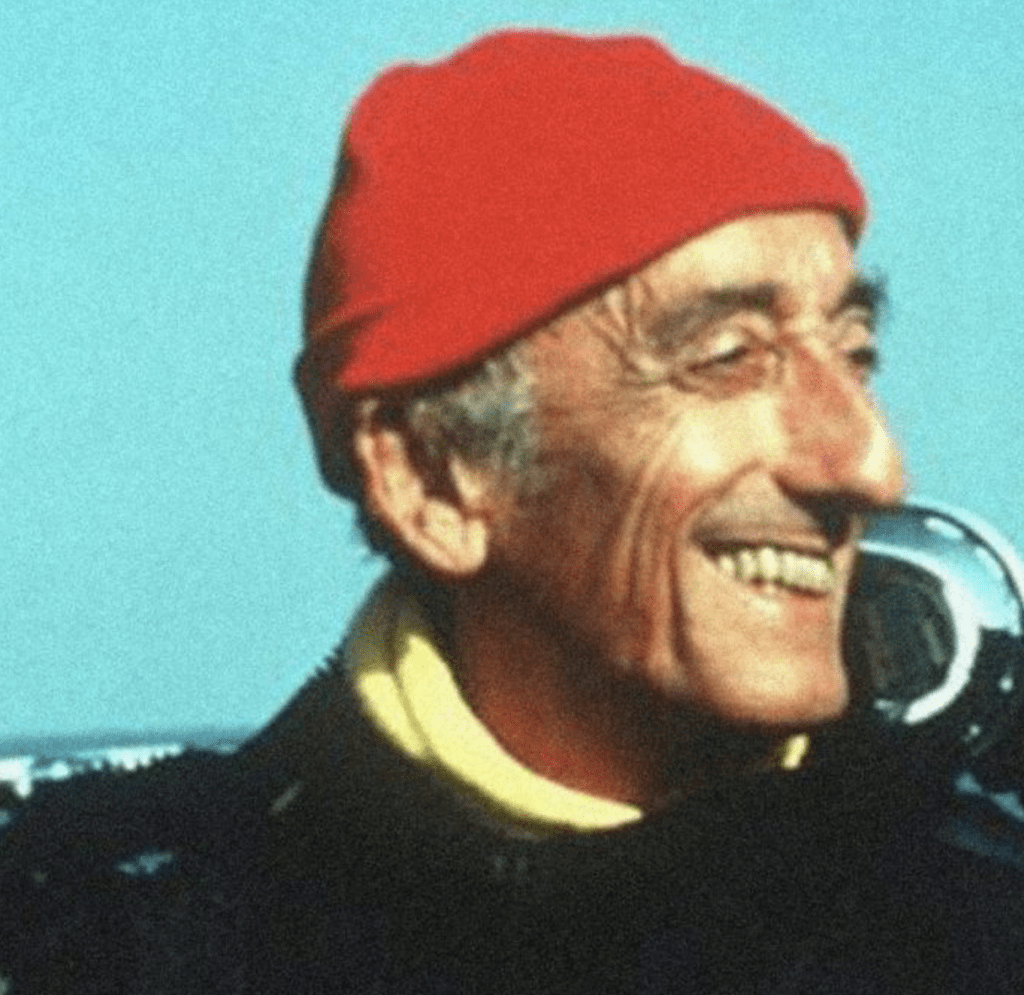
Jacques Cousteau
Cousteau was born in 1910 and went on to become a French naval officer, an underwater explorer, a conservationist, a filmmaker, an innovative scientist, an author and a marine researcher. He invented the aqualung and the bathyscaph saucer for underwater exploration. He died on 25th June, 1997.
So, where does Malta fit into all these? Not many people know that Cousteau had a very strong Malta connection, not in blood ties but because before his first exploration adventures began, he bought his first research boat in Malta and named it Calypso, after the island of Gozo known in myth as the Isle of Calypso and tied to the adventures of Ulysses in Greek mythology.
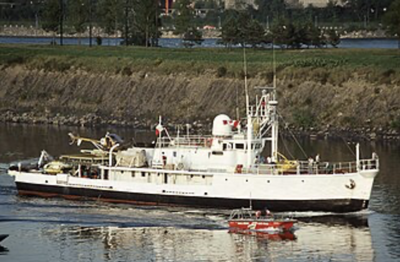
The Original Calypso
The Calypso was originally a Royal Naval vessel but was bought by a Maltese entrepreneur and converted to carry out a ferry service between Malta and Gozo, which it did for four months, before being bought by Cousteau to sail around the world. Later vessels purchased kept the name series tradition with Calypso II, III and IV.
When the original Calypso became too old and outdated for use it was subsequently moored in Singapore and unfortunately sank in 1996 after an incident but was later salvaged and restored.
On 2021 the Malta Maritime Museum at Vittoriosa staged a Jacques Cousteau exhibition in 2021 displaying a quantity of objects that made up Cousteau’s marine life and adventures.
His daughter Diane Cousteau mentored mentor the exhibition and said:
“This is an exhibition about the history about Jacques Cousteau’s ship Calypso… and this is a ship that my father found in Malta, and this is where the ship received her name, so it seems like it’s the perfect place to tell the story about the ship.”
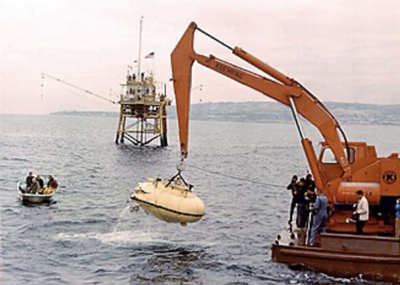
Cousteau’s “Flying Saucer”
Dr Arvid Pardo had a tragic and unhappy childhood. He was born in Rome in 1914, the offspring of a Maltese father and a Swedish mother. His father Guido worked for the International Labour Organisation and died in 1922 from typhus while on a work mission in the Soviet Union.
Arvid was eight years old. He became an orphan a year later when his mother also succumbed following a surgical operation. Later, his brother was killed in an automobile accident.
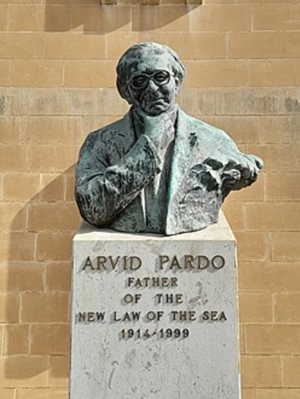
Arvid Pardo
Pardo was subsequently brought up by his father’s Italian friend, diplomat Bernardo Attolico and studied at the Collegio Mondragone, going on to become a Maltese and a Swedish diplomat, a scholar and a university professor.
He passed away in 1999 after an eventful life. He was fluent in Italian, English, French, Swedish and Spanish and competent in German. He graduated in Law in Rome in 1939.
With the outbreak of war he commenced anti-Fascist underground activities and was immediately arrested. When Mussolini died Pardo was released in September 1943 but immediately re-arrested by the Gestapo and sentenced to death only to be later rescued from execution by Swiss officials and the International Red Cross just as the Soviet Red Army was marching into Berlin.
He took up diplomacy and during the 1960s represented Malta at the United Nations where he pioneered the United Nations Convention on the Law of the Seas, the first-ever maritime law of its kind and for many years later continued to refine the law, provide marine protection and use funds to help the poor. Between 1967 and 1971 he was Malta’s Ambassador to the United States.
However, despite his satisfaction in pioneering the Convention he was not at all satisfied with the final result, General Assembly Resolution 2749 on 17th December 1970, lamenting strongly and wryly that the maritime common heritage of mankind had been cut down “to a few fish and a little seaweed”.
In the United Nations he pioneered The Law of the Sea which over the subsequent years has been updated and renovated to cater for modern developments
In 1992 Pardo was made a Knight of Malta and passed away in 1999 in Seattle.
Indeed, Malta’s great marine landmarks is in the embodiment of Jacques Cousteau and Arvin Pardo, landmarks to be proud of for such a small island but with an outstanding marine history in the centre of the Mediterranean Sea.
ALBERT FENECH
salina46af@gmail.com


