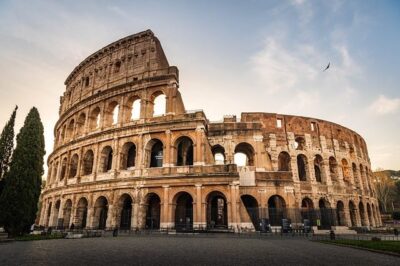
Rome, Florence, and Venice in eight days sounds reasonable until you map out the logistics. That itinerary means three train transfers, three sets of hotel check-ins, and roughly two full days lost to packing, unpacking, and getting oriented in a new city. By the time you’ve figured out where the good coffee bar is, you’re already leaving.
Why the Ten-City Itinerary Backfires
First-time visitors often build a wish list from guidebook chapter titles: Rome, Florence, Venice, Milan, Cinque Terre, the Amalfi Coast, Bologna, Siena, Verona, Naples. Ten places in twelve days looks efficient on paper. In practice, Italy’s regional trains and the winding roads of places like Tuscany and the Amalfi Coast eat far more time than Google Maps suggests.
A same-day trip from Rome to Venice takes roughly four hours by high-speed train, one way. Add taxi rides, ticket lines, and the general friction of travel, and a single transfer day can consume six or seven hours. Multiply that by five or six moves and a two-week trip becomes a series of train platforms with brief stops for sightseeing in between.
What Gets Lost When You Move Too Fast
The real cost of overpacking an itinerary isn’t exhaustion, though that’s part of it. It’s that Italy rewards slowness in a way few other countries do. A market in Bologna on a Tuesday morning looks completely different from the same market on a Saturday. Restaurants worth visiting often require a reservation made a day in advance, which is hard to manage if you’re only in town for eighteen hours.
Skipping around also means missing the small, unbookable moments that make a trip memorable: the gelato shop with no sign, the neighborhood where locals actually eat dinner, the hour spent doing nothing in a piazza because there’s nowhere else to be. Those things don’t happen when every day has a checkout time.
The Case for Picking Three
Three places, chosen deliberately, give a first-time visitor enough variety to see different sides of Italy without the whiplash. A common and effective combination is Rome for history and food culture, Florence for Renaissance art and access to Tuscany, and either Venice or a coastal region like the Amalfi Coast for something visually different from the first two cities.
This structure also builds in slack. Instead of one night in each location, plan three or four nights per stop. That’s enough time to see the major sites without rushing, take at least one day trip from a home base, and still have an afternoon with nothing scheduled.
Sample Three-Place Itineraries
For a two-week trip built around art and history, consider Rome, Florence, and Venice, spending four nights, four nights, and three nights respectively, with the remaining days for travel and a slower final stretch. For something more food- and landscape-focused, Bologna, Florence, and a base in Tuscany like Montepulciano or Montalcino works well, since Bologna anchors Emilia-Romagna’s food scene and Tuscany offers wine country without a car being strictly necessary if you choose a well-connected town.
A third option pairs Rome with Naples and Sorrento, giving access to Pompeii, the Amalfi Coast, and southern Italian cooking that’s noticeably different from anything found further north. Each of these itineraries covers meaningfully different territory while keeping total transit time manageable.
How to Decide Which Three Places Are Right
Start with what actually interests the traveler, not what feels obligatory. Someone drawn to art history should prioritize Florence and Rome over a coastal stop. Someone who wants beach time and slower afternoons might do better skipping Venice altogether in favor of Sicily or the Puglia coast.
It also helps to think in terms of one anchor city and two supporting stops within a couple hours of it. This keeps travel days short and makes day trips realistic instead of aspirational. Several companies that run the best Italy travel tours build their multi-city trips around exactly this logic, pairing a major city with nearby towns rather than stringing together destinations across the length of the country.
Logistics Worth Sorting in Advance
Book train tickets between cities at least a few weeks ahead, especially for high-speed routes during summer, since prices climb and popular departure times sell out. Museum reservations, particularly for the Uffizi in Florence and the Vatican Museums in Rome, should be made online well before arrival to avoid multi-hour lines. If a day trip to somewhere like Cinque Terre or Pompeii is planned, confirm whether it requires a regional train, since those run less frequently and don’t always show up clearly in trip-planning apps built for tourists.
The Real Payoff
A shorter list of destinations isn’t a compromise; it’s what actually makes a first trip to Italy feel complete rather than rushed. Choosing three places means arriving somewhere twice, once as a stranger and once, a few days later, with at least a passing sense of how the place actually works. That second visit, even if it’s just to the same corner café, is usually what people remember most.


