Just a few miles north of Liverpool’s bustling city centre lies one of Britain’s most extraordinary open-air art galleries. There are no admission charges, no opening hours and no walls. Instead, the exhibition stretches across nearly two miles of shoreline, where 100 life-sized cast-iron figures quietly gaze out towards the Irish Sea.
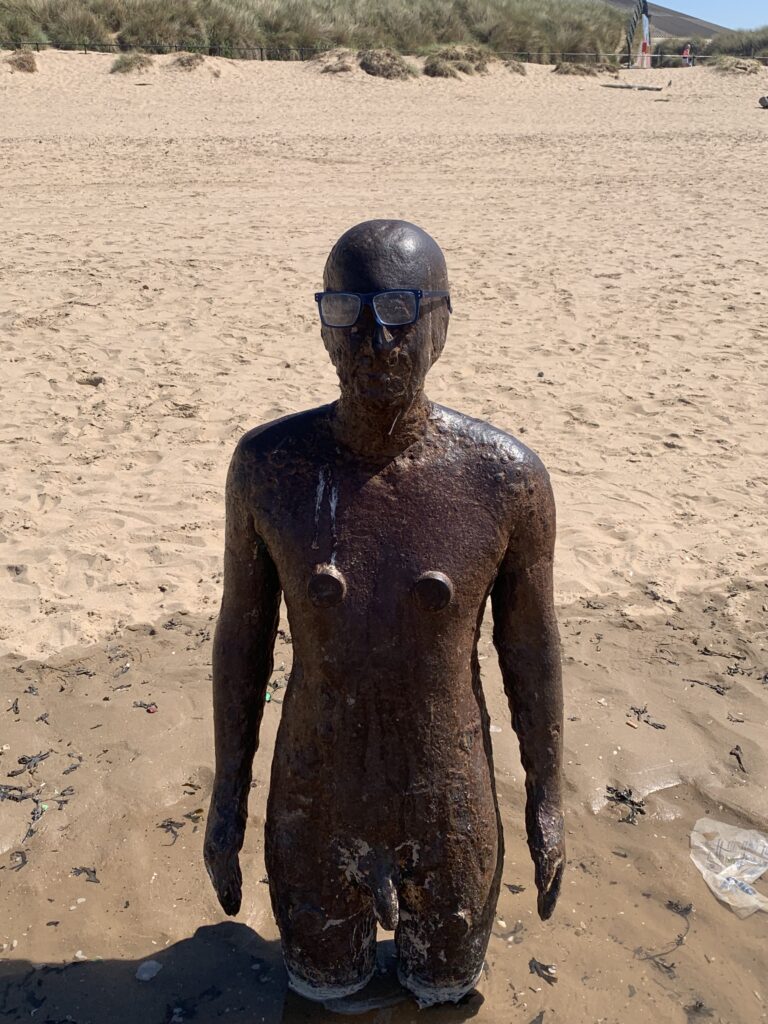
Welcome to Another Place, Antony Gormley’s internationally acclaimed installation at Crosby Beach.
After spending time exploring Liverpool’s vibrant streets, waterfront and musical heritage, a short journey to Crosby offers a complete change of pace. Within half an hour, the city’s energy gives way to wide open skies, sweeping sands and an atmosphere of remarkable tranquillity.
The easiest way to reach Crosby is by Merseyrail from Liverpool Central, with regular trains taking around 20 minutes to either Waterloo or Blundellsands & Crosby stations. From there, it’s a pleasant stroll through attractive residential streets before the vast beach suddenly opens out before you. For those travelling by car, ample parking is available nearby, making it an easy half-day excursion from the city.
Crosby itself has long been regarded as one of Merseyside’s most desirable places to live. Elegant Victorian villas, leafy avenues, independent cafés and excellent schools have helped establish its reputation as an affluent coastal suburb. It feels distinctly different from the industrial image many people still mistakenly associate with Merseyside, offering visitors an unexpectedly refined seaside setting.
Then comes the beach.
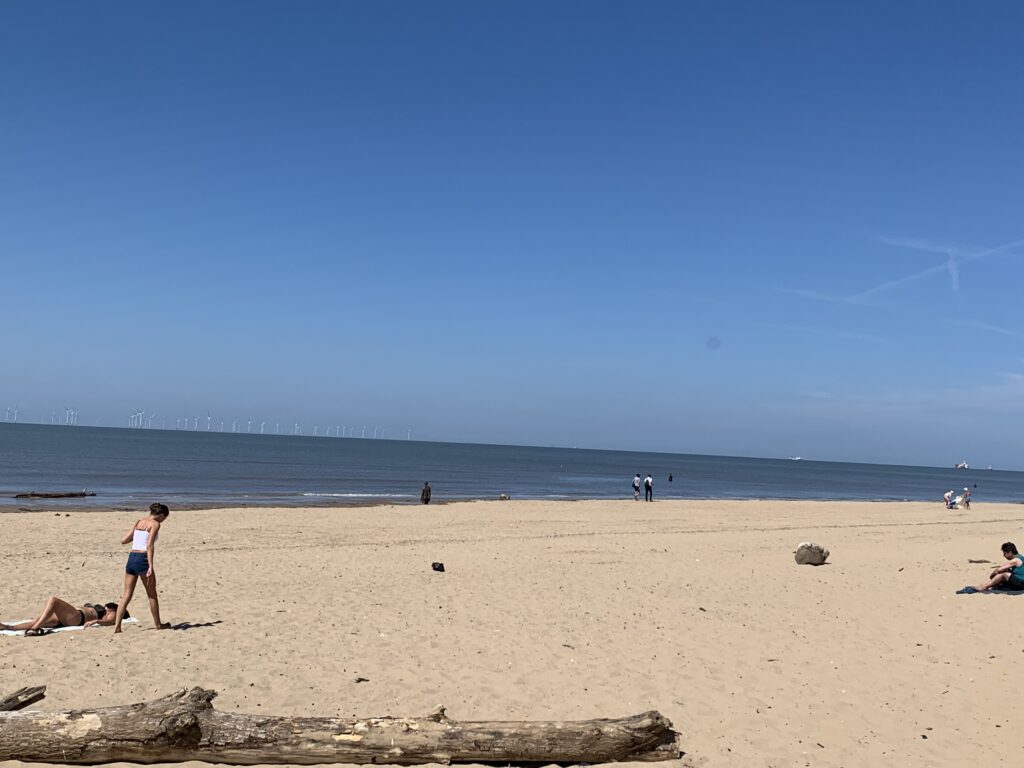
Unlike many of Britain’s better-known coastal resorts, Crosby has resisted commercialisation. There are no flashing arcades, funfairs or rows of souvenir shops competing for attention. Instead, visitors are greeted by an expansive stretch of golden sand, backed by dunes and open grassland, where families walk dogs, children build sandcastles and couples wander quietly along the shoreline. Even on a pleasant day, the beach feels wonderfully spacious, allowing everyone to find their own peaceful corner.
It is within this natural landscape that Antony Gormley’s masterpiece reveals itself.
At first, you may notice only one solitary figure standing motionless in the distance. Then another appears. And another. Gradually, more emerge until you realise the beach is populated by one hundred silent human forms, stretching from the dunes to almost a kilometre out into the sea.
Each sculpture is a cast of Antony Gormley’s own naked body. Has he been flattering to himself, I wonder.
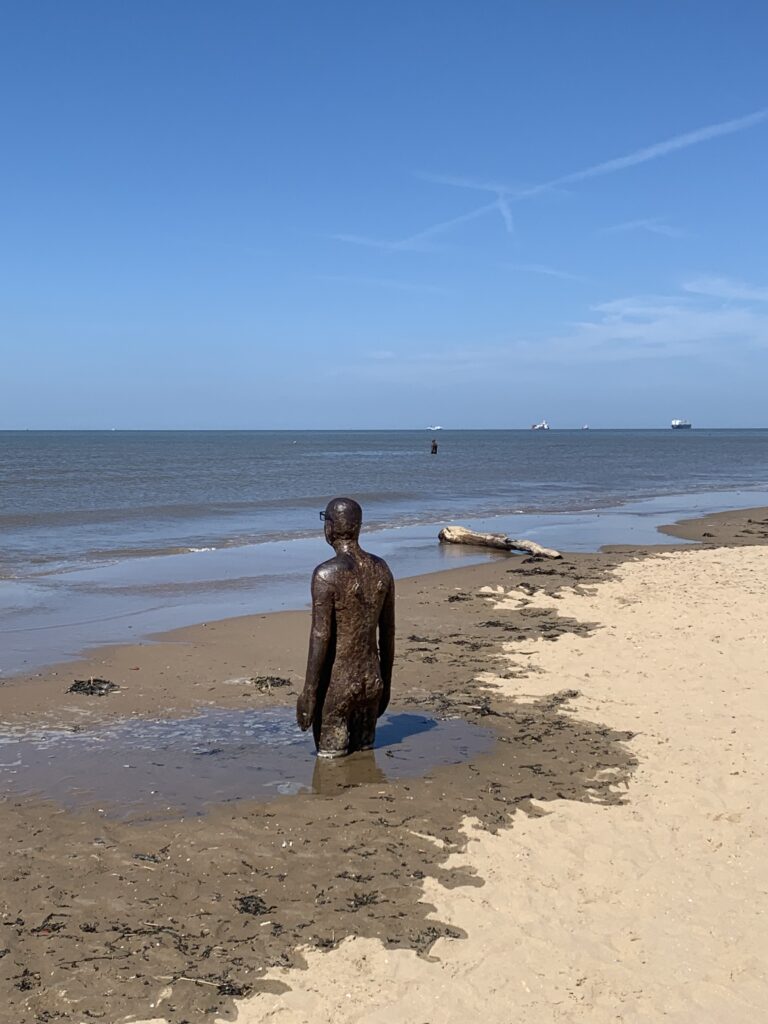
Created in 1997 and permanently installed at Crosby in 2005, Another Place explores humanity’s relationship with nature, time and the changing tides. Depending on when you visit, some figures stand proudly on dry sand while others are partially submerged or almost entirely engulfed by the sea. Twice each day, the tide transforms the installation, making every visit subtly different from the last.
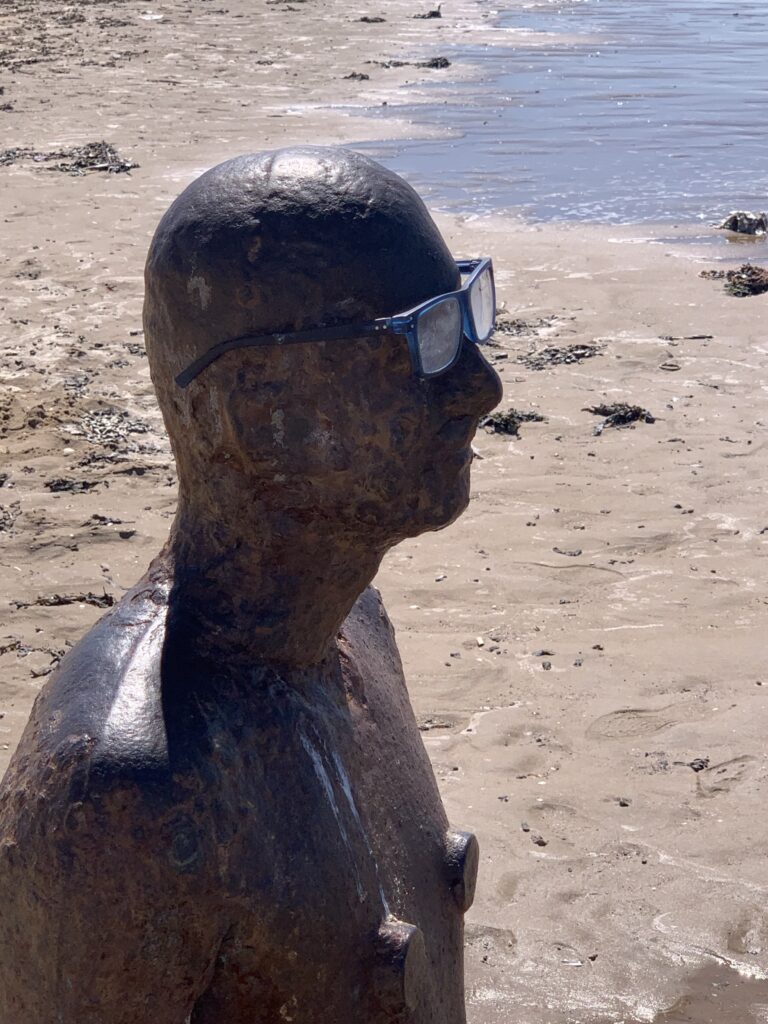
The iron figures have spent so long submerging and re-emerging from the water that they’re home to barnacles, which only serves to increase their connection to their setting. The figures that remain accessible on the beach, even at high tide, tend to acquire accoutrements. At Christmas, one might be embellished by a Santa hat. On the day I visited, a simple pair of spectacles. It’s how people, in addition to the landscape, integrate with the installations.
Gormley is widely regarded as one of Britain’s most influential contemporary sculptors. Born in London in 1950, he has spent decades exploring the relationship between the human body and the spaces we inhabit. His best-known works include the iconic Angel of the North in Gateshead, whose outstretched wings have become one of the UK’s most recognisable landmarks, alongside installations and public sculptures across Europe, America and Asia. Yet there is something particularly moving about Another Place. Rather than dominating the landscape, the figures seem to belong to it.
Standing among them is an unexpectedly emotional experience.
Each sculpture faces the horizon with quiet determination, inviting visitors to pause, reflect and perhaps contemplate their own place in the world. Children weave between the statues, photographers wait patiently for changing light, while walkers simply enjoy the calm rhythm of waves gently washing around the iron figures. The installation somehow manages to feel both monumental and deeply personal.
Because the figures extend out to sea, they gradually submerge as the tide comes in. From a distance, from the shore, it’s as if somebody might have decided to slowly stand there drowning! Indeed, in a 2021 article, the Guardian newspaper reported that members of the public had repeatedly called the coastguard to report people in difficulty.
Adding another layer to the experience is the dramatic backdrop across the Mersey Estuary. From the beach, you can see Liverpool’s skyline in the distance, along with passing cargo ships making their way to one of Britain’s busiest ports. It creates a fascinating contrast between industry, nature and art, all sharing the same horizon.
For photographers, the beach is especially rewarding. Sunrise and sunset transform both the sculptures and the sea into ever-changing works of art, while shifting weather brings entirely different moods. On bright days the statues appear almost heroic against blue skies; under grey clouds they become haunting silhouettes, quietly watching the tide roll in.
Crosby Beach proves that some of the finest visitor attractions don’t require grand buildings or elaborate visitor centres. Here, the landscape itself is the gallery, the sea is part of the artwork and silence is every bit as important as spectacle.
For anyone visiting Liverpool, taking the short trip to Crosby offers something completely different from the city’s famous music, architecture and waterfront. It is a chance to slow down, breathe deeply and experience one of Britain’s most thought-provoking pieces of public art in a setting that is every bit as memorable as the sculptures themselves.


