Some experiences become so closely associated with a city that they almost feel compulsory. In Liverpool, taking a trip on the Mersey Ferry is one of them.
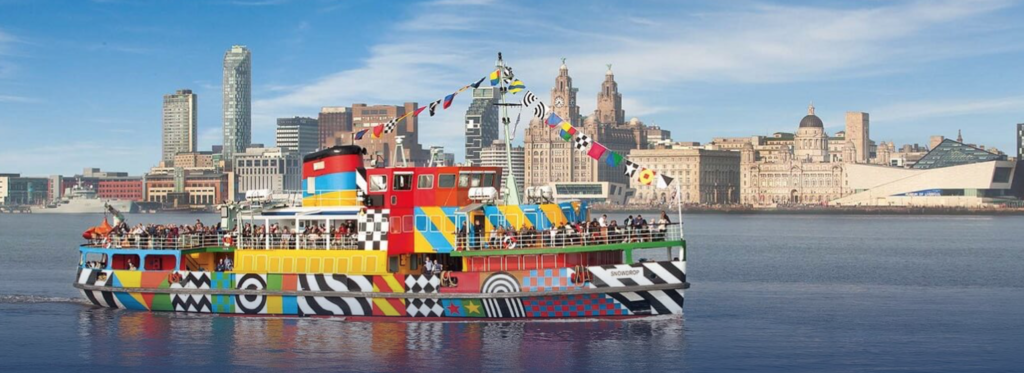
Immortalised in Gerry and the Pacemakers’ 1965 hit Ferry ‘Cross the Mersey, the iconic ferries have been carrying passengers across one of Britain’s most famous rivers for centuries. Today, they continue to connect communities on both sides of the Mersey while offering visitors one of the best sightseeing cruises in the North West.
Our Tuesday morning journey began at the Gerry Marsden Ferry Terminal at Liverpool’s Pier Head, an appropriate starting point given the singer’s lifelong connection with the city and the song that helped make the ferries internationally famous. Sitting proudly alongside the UNESCO-recognised waterfront, the terminal is just a short walk from the Royal Liver Building, the Cunard Building and the Port of Liverpool Building – collectively known as Liverpool’s famous Three Graces.
Rather than simply crossing the river, the 50-minute River Explorer Cruise takes passengers on a leisurely circular journey, revealing Liverpool and the Wirral from an entirely different perspective. It’s a wonderfully relaxing way to escape the bustle of the city streets while learning more about the river that shaped Liverpool’s fortunes.
The vessel itself is impossible to miss, sporting it’s Everybody Razzle Dazzle paintjob. The striking artwork was created by internationally renowned British pop artist Sir Peter Blake, perhaps best known for designing The Beatles’ Sgt. Pepper’s Lonely Hearts Club Band album cover. Inspired by the dazzle camouflage used to confuse enemy ships during the First World War, Blake’s bold geometric patterns transform the ferry into a floating work of art. Bright colours, sharp angles and playful designs ensure heads turn wherever it sails, resulting in one of the most photographed ferries in Britain.
This year sees the launch of Royal Daffodil, the first new Mersey Ferry to be built in over 60 years. The “Royal” prefix has a remarkable story behind it. The original 1906 Daffodil earned the honour after her courageous role in the daring Zeebrugge Raid of 23 April 1918 during the First World War. Requisitioned by the Royal Navy when, along with her sister ferry, the Iris, she helped British forces in their attack on the German-held Belgian port. Although both vessels were damaged, their crews displayed extraordinary bravery, and in recognition of their service King George V granted them the rare privilege of adding the word “Royal” to their names—an honour that has been proudly passed down through successive generations of Mersey Ferries ever since.
The Mersey Ferries have a remarkable story stretching back over 800 years. Records show organised ferry services operating as early as the 12th century, when Benedictine monks transported travellers between Liverpool and Birkenhead. As Liverpool developed into one of the world’s busiest ports during the Industrial Revolution, the ferries became an essential part of daily life, carrying workers, merchants and visitors long before tunnels and bridges linked the two banks. They survived world wars, economic change and the transformation of the city’s docks, becoming one of Liverpool’s most enduring symbols.
Leaving the Pier Head behind, the ferry glides smoothly across the broad river, offering panoramic views impossible to appreciate from land. The Liverpool skyline unfolds beautifully, dominated by the Royal Liver Building with its famous Liver Birds standing watch over the waterfront. Modern architecture sits comfortably alongside Victorian grandeur, reminding passengers that Liverpool has always balanced innovation with heritage.
Posters around the ferry offer passengers a QR Code to scan in order to listen to a commentary through their own phone and earpods with each snippet triggered as the ferry reaches the appropriate point. It’s simply perfect as those of us who are hungry for information can tune in without disturbing those who prefer to ruminate to the sounds of the Mersey as it laps the sides of the vessel.
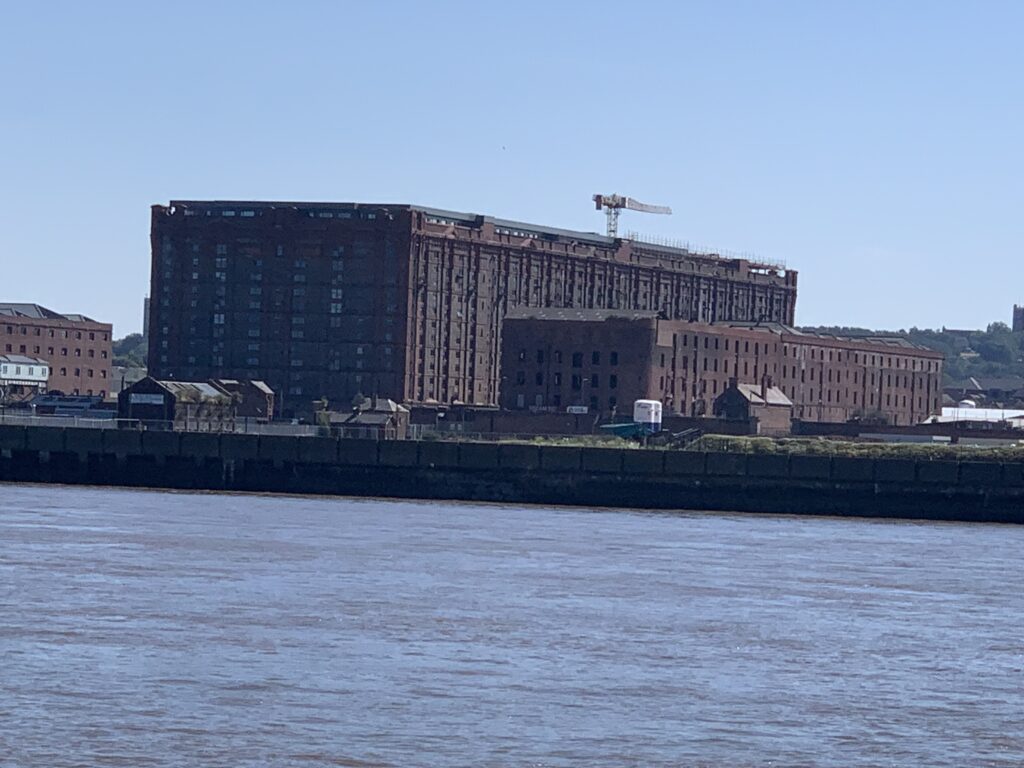
As the cruise heads north, one of the first landmarks to command attention is the vast Stanley Dock Tobacco Warehouse. Completed in 1901, it remains one of the largest brick warehouses ever constructed anywhere in the world. Its immense scale is staggering even today, stretching seemingly endlessly along the dockside. Once the beating heart of Britain’s tobacco trade, the building now stands as one of Liverpool’s greatest industrial monuments while ambitious regeneration plans seek to give it new life.
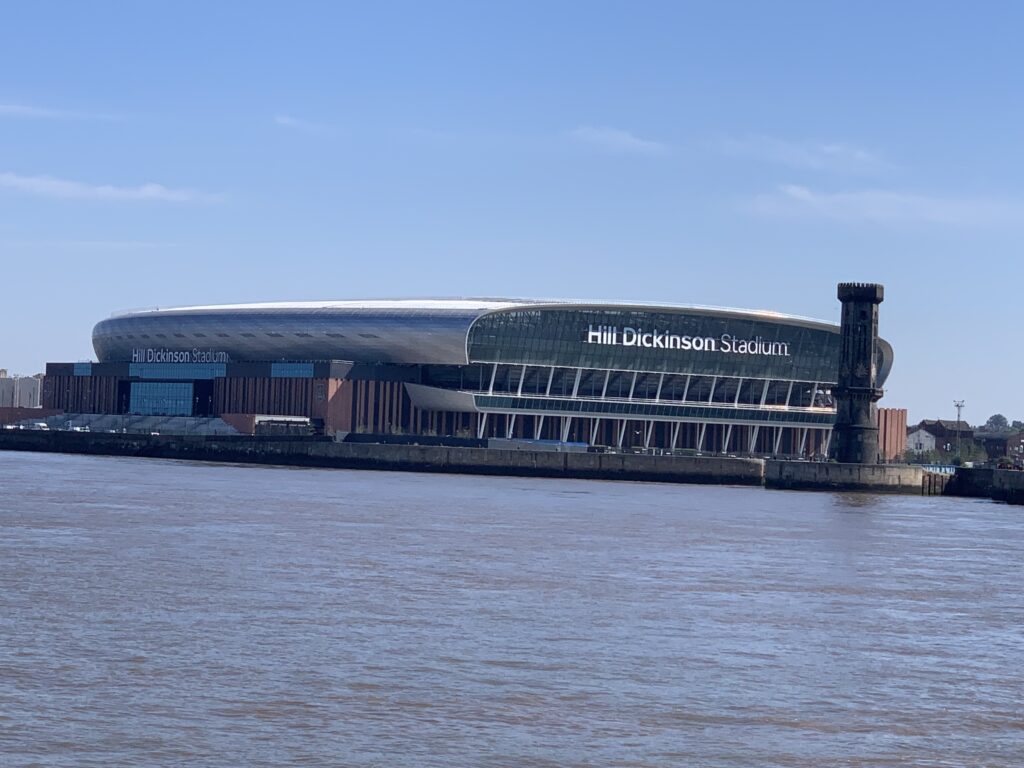
Just beyond sits one of the city’s newest landmarks – Everton Football Club’s spectacular waterfront stadium at Bramley-Moore Dock. Rising dramatically beside the river, the state-of-the-art ground has transformed a historic dock into one of the country’s most impressive sporting venues. Seen from the water, its sheer size and distinctive architecture are particularly striking, making it one of the highlights of the cruise even for those with little interest in football.
Across the river on the Wirral, another chapter of Britain’s maritime story comes into view. The famous Cammell Laird shipyard has been building, repairing and maintaining ships for almost 200 years. Warships, ferries, merchant vessels and research ships have all passed through its docks, and it remains one of the UK’s most important shipbuilding and engineering facilities. Watching cranes tower above enormous dry docks offers a fascinating glimpse into an industry that continues to play a vital role today.
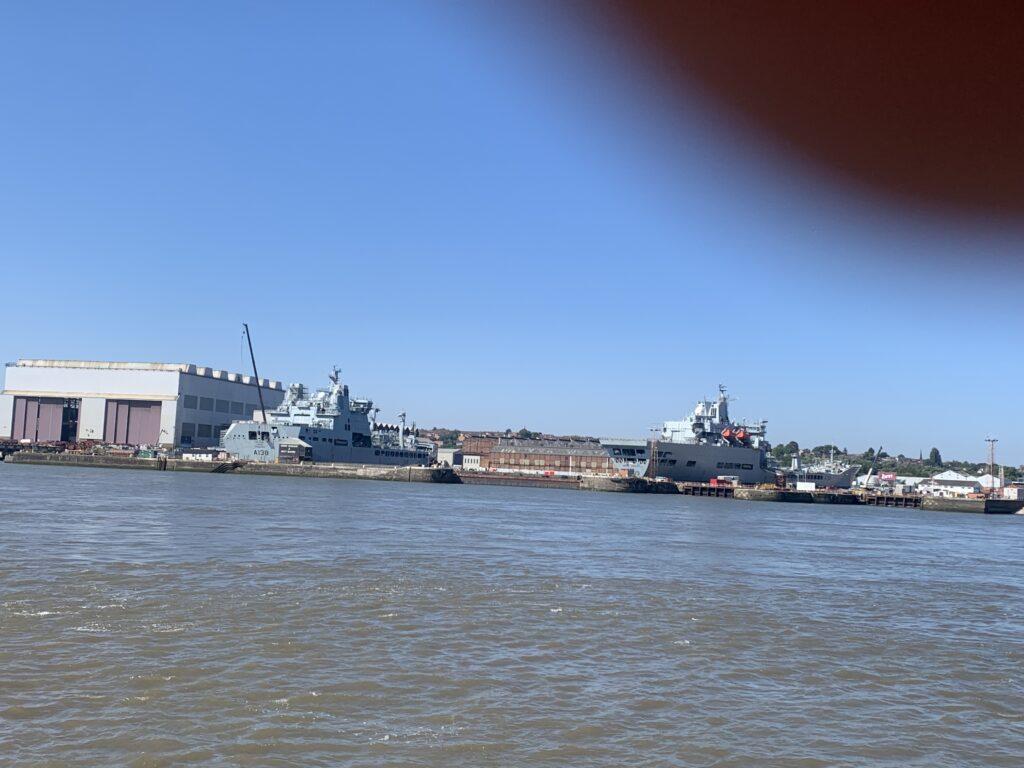
Nearby lies one of the river’s more unexpected sights – the ship recycling yard. Here, vessels that have reached the end of their working lives are carefully dismantled, with huge sections of steel awaiting recycling. It’s a fascinating contrast to the neighbouring shipyard where new life is breathed into vessels, reminding passengers that every ship has its own beginning, working life and eventual retirement.
Throughout the cruise, informative commentary brings the river to life, revealing stories of maritime disasters, wartime bravery, engineering achievements and Liverpool’s extraordinary trading history. Even frequent visitors are likely to discover something they never knew.
As the UK’s second largest port, it’s no surprise that Liverpool is so multi-faceted, welcoming settlers from all over the world and ushering in cross-cultural influences that make the city the vibrant melting pot we visit today.
As the ferry turns back towards Pier Head, Liverpool’s skyline once again fills the horizon, glowing beautifully against the river. It’s easy to understand why this stretch of waterfront remains one of Britain’s most photographed cityscapes.
The Mersey Ferry is far more than a means of crossing a river. It is a moving museum, a sightseeing cruise and a journey through more than eight centuries of history rolled into one. Whether you’re visiting Liverpool for the first time or returning to rediscover the city, spending 50 minutes on the Mersey offers a perspective that simply can’t be experienced on dry land.
Sometimes the best way to appreciate a city is to step away from it for a while. In Liverpool, that means stepping aboard one of its most enduring icons and letting the river tell its story.
More information, timetable and tickets here.


That’s a great point about it feeling almost essential to visiting Liverpool – I completely agree!