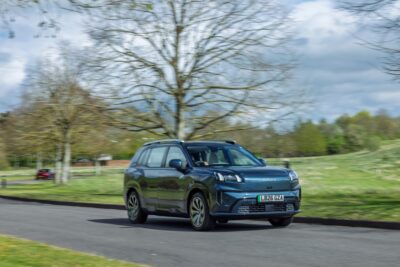
This is the Aion V. It’s not exactly a looker, is it? And, yes, it’s another Chinese brand new to our shores that offers a lot for the money in a rather uninspiring EV body.
Such is the amount of choice in this sector now that cars really have to do something to stand out. Trouncing European rivals in terms of the amount of equipment you get for your money is now becoming inadequate.
And this is where Aion’s USP comes in. The Aion V is being marketed around the “Great 8” pitch, and it offers buyers an industry-bothering eight-year warranty, eight years of free servicing, eight years of roadside assistance, and even eight years of MOTs. And it’s all transferrable to the next owner.
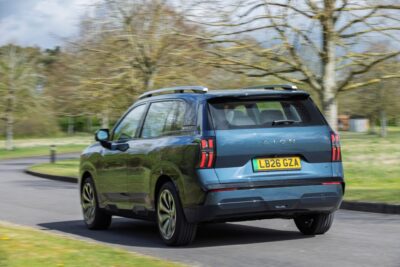
It’s a very smart move in a sector that really needs to find new ways to stand out, and it should at the very least help residuals. Could it sway a buying decision? That would be dependent on whether the Aion V is any good or not.
On the face of it, there’s a lot going for it. There’s a 75.3kWh LFP battery offering an LWTP range of 317 miles. On a long run I managed 3.8 mi/kWh, which is quite impressive. This is partly thanks to it weighing in at a relatively svelte 1,880kg. With only 204bhp on tap, it’s no sports car, but there’s some usable grunt when it’s needed.
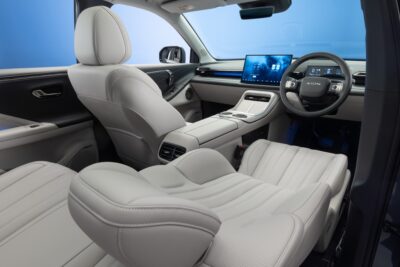
The standard spec is as generous as we’ve come to expect from the Chinese. Acres of soft leather, a minimalist cabin with well imagined storage and a pretty decent central screen. Panoramic roof, heated and ventilated seats massage seats, and a great stereo.
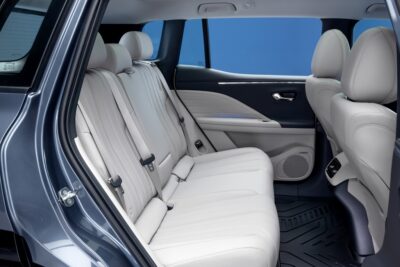
Legroom in the back is very generous, perhaps at the cost of a capacious boot, which feels a little tight at 500 litres, but it’s hardly bottom of the class.
Audible irritations are relatively subdued, which is nice, but the driver attention warning is a little too keen, and some of the key functions are too deeply buried in the infotainment screen to avoid triggering the “pay attention” warning all the time.
Out on the road, the ride is pleasant enough, the steering is great, and it’s actually one of the nicer electric Chinese SUVs to make swift progress in. Although we are talking relative terms, now.
Pricing kicks off at £36,450, which is competitive rather than ground-breaking. There’s a premium trim option which adds some tempting extras, including non-black leather options and a central cool box in the armrest.
But it’s the ownership package that stands out in a way the visual styling simply doesn’t. For a sensibly-priced car, you’re effectively promised completely worry-free driving for eight years, and although the dealer network is what you’re refer to as “embryonic”, it’s all being looked after by AA patrols, who would come to you to fix the car. Not that there’s much to go wrong these days.
This added assurance doesn’t make the car itself any more likeable, but it’s hard to pick too many faults with it in the first place. It’s another solid choice.
What it might do is tempt people away from rivals such as the MG S6, the Changan Deepal S07, or the Leapmotor C10. It’s also vying for attention with the Vauxhall Grandland Electric, the Ford Explorer, Kia EV5, and the Jeep Compass.
Brand familiarity does count a lot to some people, but so does value, which is why the Chinese are slowly gaining ground. And when you place the Aion V against its less mainstream contenders, it does stand out as one of the better options.
|


