When planning a visit to Rome, most of us have a familiar list of places we want to see: the Colosseum, the Trevi Fountain, the Vatican and perhaps the Spanish Steps. But Rome has a fascinating habit of revealing something unexpected around the next corner, and tucked beneath the elegant Via Veneto is an attraction that is certainly unlike any other.
The Museum and Crypt of the Capuchin Friars is not for the faint-hearted, but it is an intriguing, thought-provoking and surprisingly moving place to visit. Here, art, religion, history and mortality come together in a way that is both extraordinary and difficult to forget.
I visited during my recent trip to Rome, and it proved to be one of those experiences that stays with you long after you have returned to the sunshine and bustle of the city.
A little history
The crypt lies beneath the Church of Santa Maria della Concezione dei Cappuccini, a church commissioned in the seventeenth century by Cardinal Antonio Barberini, a member of the influential Barberini family. The convent and church were completed in 1631, following the design of the Capuchin architect Fra Michele da Bergamo.
The Capuchins are a branch of the Franciscan order, known for their emphasis on humility, simplicity, poverty and service to others. Their religious outlook is important to understanding the crypt, because the displays are not intended simply to shock visitors. Instead, they reflect the Christian idea of *memento mori* — a reminder of human mortality and the temporary nature of earthly life.
The crypt was developed partly because space was needed for new burials. The remains of deceased friars were exhumed and their bones arranged in decorative patterns, eventually creating the remarkable displays visitors see today. The crypt contains the remains of thousands of friars, dating from the sixteenth to the nineteenth centuries.
The message is made unmistakably clear by the inscription traditionally translated as:
“What you are now, we used to be; what we are now, you will be.”
It is a sobering thought, particularly when encountered in a place where human remains have been transformed into elaborate works of art.
More than a crypt
One of the things I particularly appreciated about the visit was that it begins with a museum rather than taking you straight into the bone chambers.
The museum provides an introduction to the Capuchin order, its history, spirituality and everyday life. The collection includes religious paintings, vestments, liturgical objects, documents and artefacts associated with the friars. This helps to establish the context before visitors descend into the crypt itself.
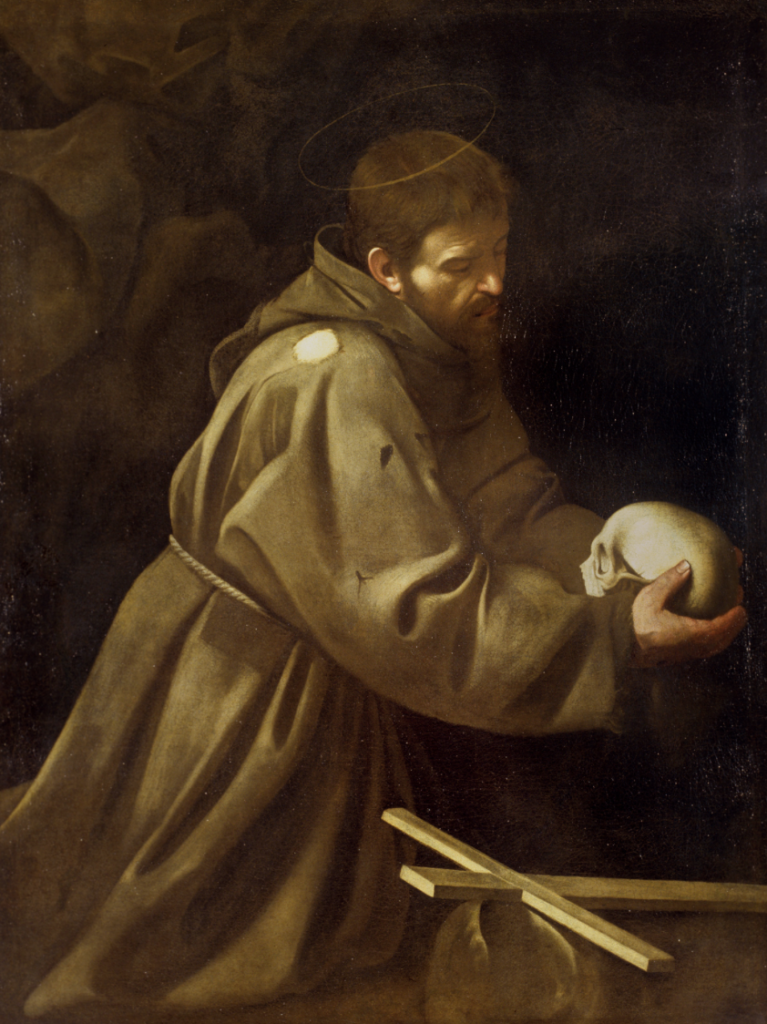
Among the highlights is a painting of Saint Francis in Meditation attributed to the great Italian artist Caravaggio. The work, dating from around 1603, depicts Saint Francis in a moment of quiet contemplation. Its dark, dramatic style and intense emotional quality make it a particularly memorable part of the museum.
Seeing a painting associated with Caravaggio in such an unusual setting adds another dimension to the visit. It is a reminder that this is not simply a macabre curiosity, but a place with a substantial artistic, religious and cultural history.
The museum also introduces visitors to the lives and work of the Capuchin friars, including their missions, traditions and commitment to a relatively austere way of life. Everyday objects and religious artefacts help bring that history to life, making the experience much more informative than simply viewing the crypt in isolation.
The bone displays
Eventually, the route leads down into the crypt.
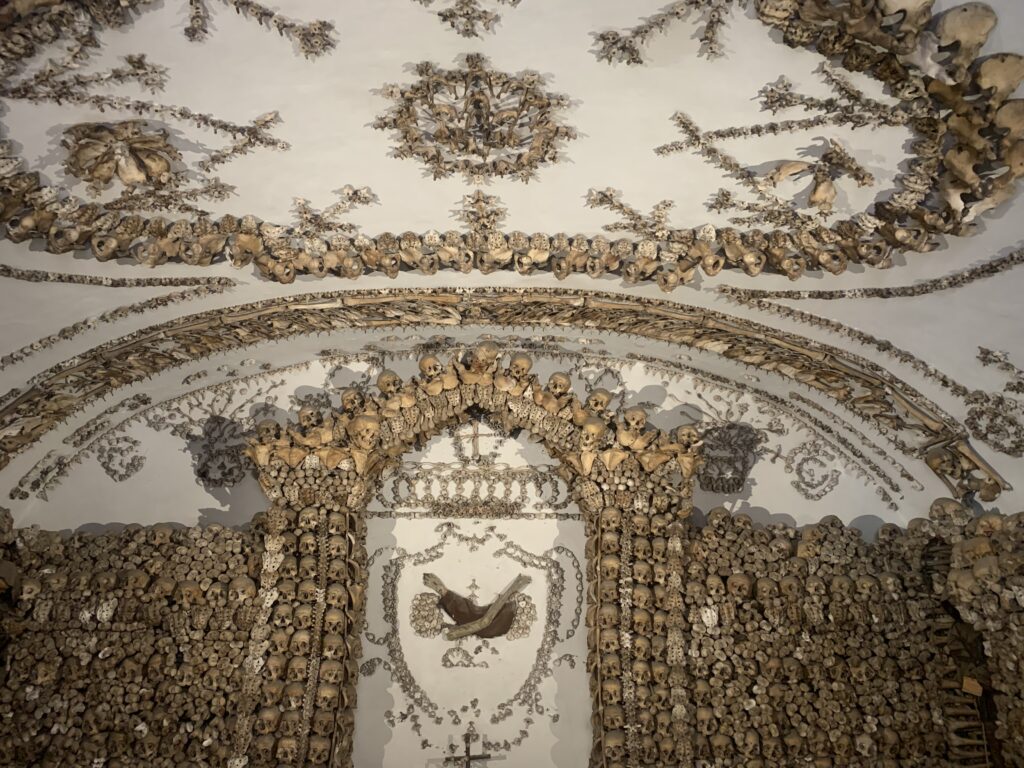
It is difficult to prepare yourself fully for what you will see. The space is relatively narrow and atmospheric, and the walls and ceilings are decorated with human bones arranged into intricate patterns. Skulls, femurs, pelvises and other bones have been used to create ornamental designs, arches, rosettes, crosses and other decorative features.
There are several chambers, each with its own arrangement and character. Some feature elaborate geometric patterns, while others contain skeletons dressed in Capuchin robes. Bones have been incorporated into the architecture itself, creating a strange combination of religious symbolism, artistic composition and undeniable physical reality.
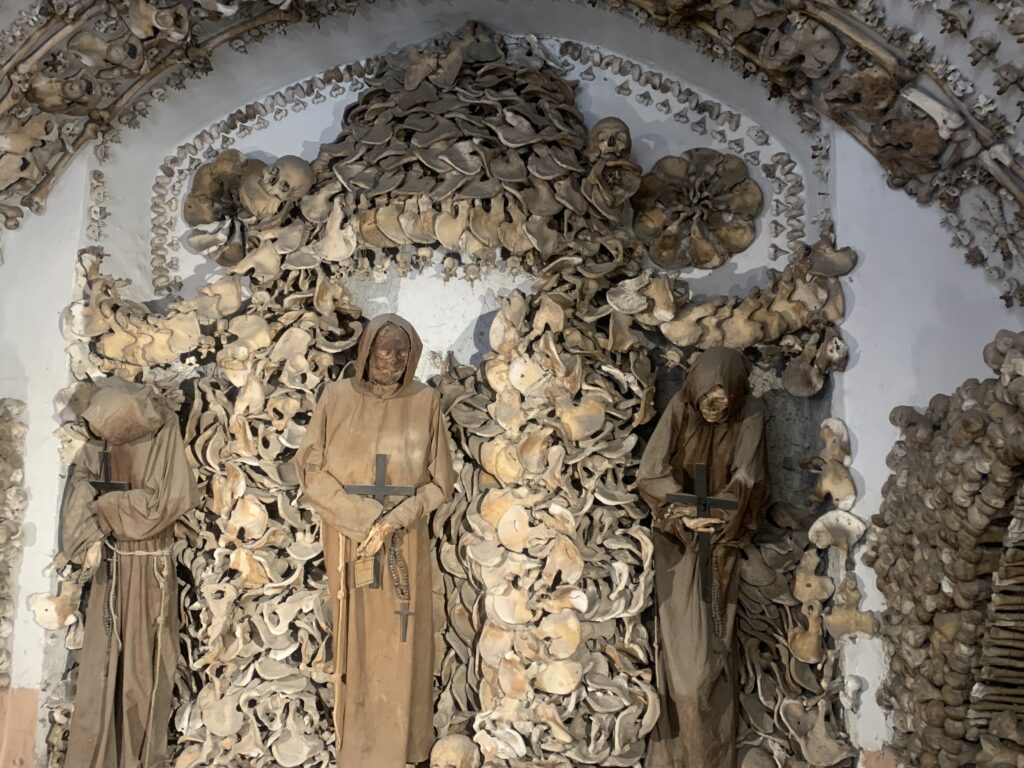
The displays can initially seem macabre, and there is no avoiding the fact that you are looking at the remains of real people. Yet the longer you look, the more apparent it becomes that the intention is not merely to frighten. The arrangements encourage visitors to reflect on the passage of time, the fragility of life and the belief that death is part of a spiritual journey.
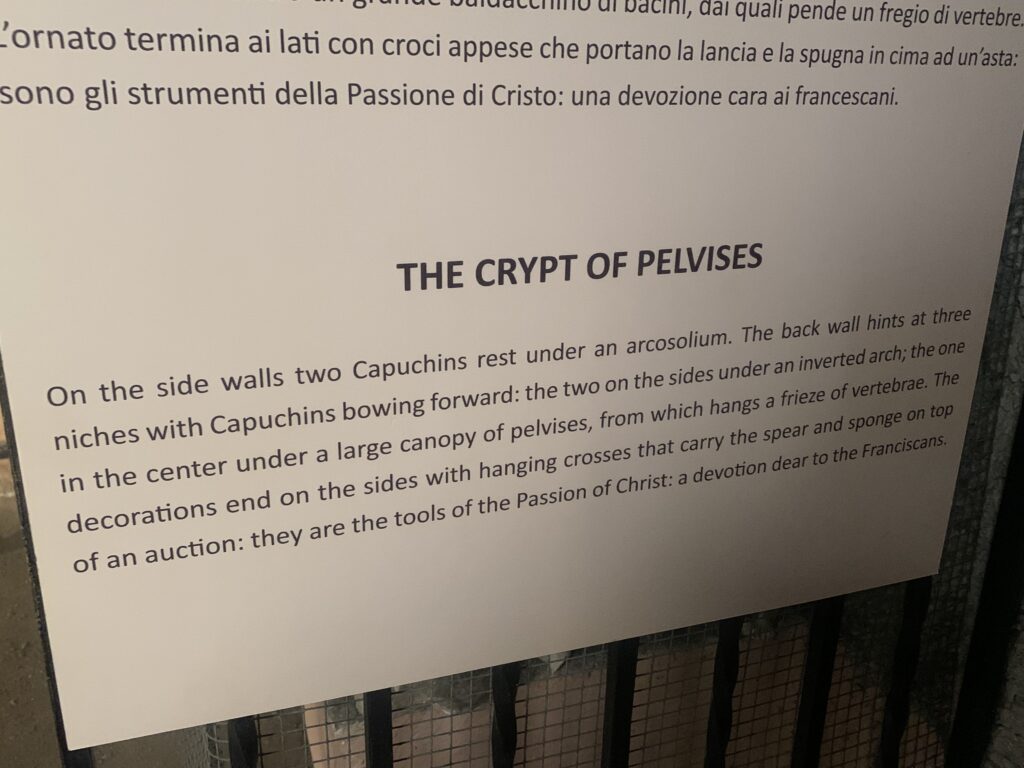
It is an unusual experience because the displays are simultaneously unsettling and carefully constructed. The bones have not simply been piled together; they have been arranged with considerable thought and visual precision.
An excellent audio guide
Another feature that deserves particular praise is the commentary provided on the handheld audio devices visitors are given.
The commentary is clear, informative and well structured, offering useful historical background while explaining the religious meaning behind what you are seeing. Rather than leaving visitors to make assumptions about the displays, it helps explain the Capuchin tradition and the significance of the crypt.
I found this particularly valuable because, without the commentary, it would be easy to focus solely on the unusual visual spectacle. The audio guide encourages a deeper understanding of the place and its purpose. It gives the visit substance, helping to transform what might otherwise seem like an extraordinary curiosity into a more thoughtful cultural experience.
The fact that visitors can proceed at their own pace is also helpful. You can pause to take in the details, listen carefully and allow yourself time to reflect before moving on.
Something different in Rome
The Capuchin Crypt is certainly not a conventional tourist attraction, and that is precisely why I would recommend considering it.
It is not grand in the manner of the Colosseum, nor does it offer the familiar beauty of Rome’s fountains, piazzas and Renaissance architecture. Instead, it presents something much stranger and more intimate: a place where art and religious belief have been created from the remains of the dead.
Some visitors may find it uncomfortable, and it is not an experience everyone will enjoy. However, if you are interested in history, religious traditions, art or the more unusual side of travel, it offers a fascinating alternative to Rome’s better-known sights.
Located on Via Veneto, not far from Piazza Barberini, it is also relatively easy to incorporate into a day exploring the city. Allow enough time to appreciate the museum as well as the crypt, rather than rushing through simply to see the famous bone displays.
My visit left me with a mixture of fascination, reflection and admiration for the historical story behind the place. The Capuchin Crypt is undoubtedly unusual, but it is not unusual merely for the sake of being shocking. Beneath the striking displays lies a message about mortality, humility and the temporary nature of human existence.
And in a city filled with extraordinary sights, that makes it a memorable place to visit.


